Federal judges are, too often, ‘above the law.’ We can stop it.
The Trump administration’s lawlessness is enraging, but judicial misconduct makes me just as angry.
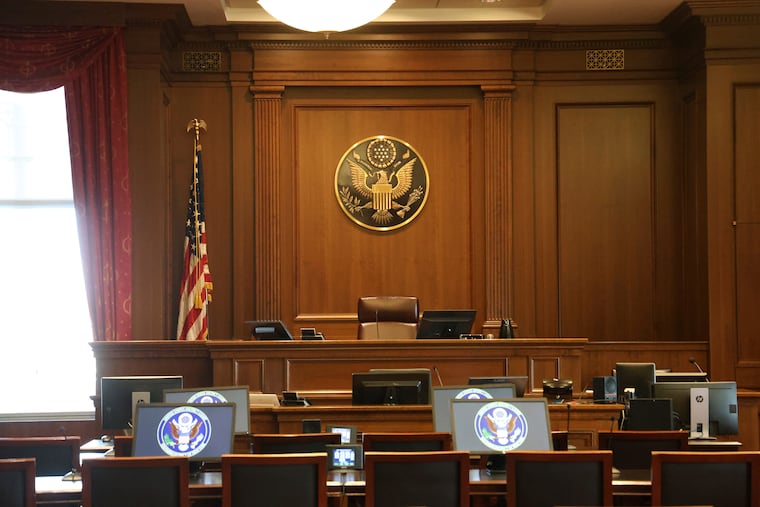
As the lawyer leading the charge against workplace misconduct in the courts, I’m accustomed to criticizing imperious federal judges who are above the law. I don’t mean they act like they are above the law — they are often literally above the laws they interpret.
Some routinely engage in workplace misconduct that would otherwise be illegal. But it’s not, because the tens of thousands of law clerks and other employees who work for federal judges lack even basic protections against discrimination. Which means their employers — federal judges — can mistreat them with impunity.
Judiciary employees support the daily functioning of our courts and ensure justice for those who appear before the courts, all while lacking justice and workplace protections themselves. Judges refer to clerks as “idiots,” treat them like personal assistants rather than esteemed law graduates, and fire them for no reason. And even when judges display worrisome signs they are no longer able to serve, they’re protected by the cloak of life tenure, and pressure staff to conceal their shortcomings.
I hear about mistreatment almost daily from law clerks nationwide. The media, too, has reported numerous instances of judges accused by employees of various abusive behavior, including sexual assault.
It’s antithetical to the rule of law that judges are not subject to many laws.
Lawyers talk about the importance of an “independent judiciary.” But this framing concerns me because “judicial independence” has been weaponized by the courts to argue for exempting themselves from federal antidiscrimination laws. Don’t extend Title VII of the Civil Rights Act — which prevents discrimination based on race, religion, or sexual orientation — because we’re “independent.” Don’t exert congressional oversight because we’re “independent.” And how dare you suggest judges shouldn’t oversee misconduct investigations into their colleagues: that threatens our “independence.”
I hear about mistreatment almost daily from law clerks nationwide.
“Independence” has lost all meaning: The judiciary doesn’t think it’s a branch equal to the executive and legislative branches, which are both subject to federal antidiscrimination laws; it apparently believes it’s the supreme branch, immune from accountability and criticism.
The lack of judicial accountability hurts us all, not just judicial employees. The public cannot have confidence in the judiciary to administer fair and impartial justice when the judiciary’s own policies and practices are unjust. And when judges presiding over antidiscrimination matters are not subject to those laws, how can we trust they don’t harbor a warped view of those laws?
Two bills bring us closer to addressing this systemic injustice.
The recently introduced TRUST Act would prevent judges from evading accountability for misconduct by retiring or resigning. But it wouldn’t solve the biggest issue precluding clerks from filing complaints: fear of retaliation — which, as a recent NPR investigation highlighted, contributes to pervasive, systemic problems. The Judiciary Accountability Act would extend federal antidiscrimination protections, including for whistleblowers, to judicial branch employees, empowering them to sue and seek redress if they are harassed or retaliated against. Implementing actual legal guardrails and penalties won’t deter all judges, but those not deterred could be sued.
Will either bill pass in this Congress? Sadly, probably not. But Congress should use every tool in its toolbox to hold the judiciary accountable — not just legislative provisions, but oversight, appropriations, and the bully pulpit. For instance, the Appropriations Committee could zero out the federal judiciary’s budget, or tie its budget request to meaningful reforms and benchmarks for progress. That would get their attention.
Lawmakers should be furious that the judiciary flouts their authority, obfuscating and refusing to release robust data or answer questions. Yet, Congress has failed at the bare minimum: oversight. In May, Robert Conrad, director of the Administrative Office of the U.S. Courts, testified before the House Appropriations Committee about the judiciary’s 2026 budget. Workplace conduct was the second item in his written testimony, yet lawmakers failed to utilize this rare opportunity to confront him with tough questions.
In a recent workplace conduct survey of judicial employees, hundreds of respondents said they were mistreated in 2023. Yet, just three misconduct complaints were filed by judicial employees in the 12-month period ending September 2023. The Administrative Office of the U.S. Courts must share what steps it’s taking, in light of these results, to foster increased reporting.
Members of Congress nationwide have sounded alarm bells about the Trump administration’s disregard for the rule of law while applauding the courts for upholding it. Yet, the courts, too, flout the rule of law; we just hear less about it, since it behooves congressional Democrats to defend the courts, rather than critique them.
No wonder public trust in the courts is so low when judges are held to so few ethical standards.
The Trump administration’s lawlessness is enraging — dismantling the civil society we hold dear while distracting us from our nation’s significant social, economic, and foreign policy problems. But judicial misconduct makes me just as angry — especially since, while Donald Trump sucks up all the oxygen, the courts may get a free pass on judicial accountability for the next few years.
The solutions to judicial lawlessness exist, if we’re tenacious enough to fight for them.
Aliza Shatzman is a Montgomery County resident, an attorney and activist, and the president and founder of the Legal Accountability Project, a court accountability and clerkship transparency nonprofit leading the charge against judicial misconduct and workplace abuse in the courts.