In Pa. and across the nation, small towns need help to address catastrophic flooding
This summer has been defined by a surge of deadly flash floods across the nation. With FEMA cancelling $3 billion in hazard mitigation projects, smaller communities are now worrying about what's next.
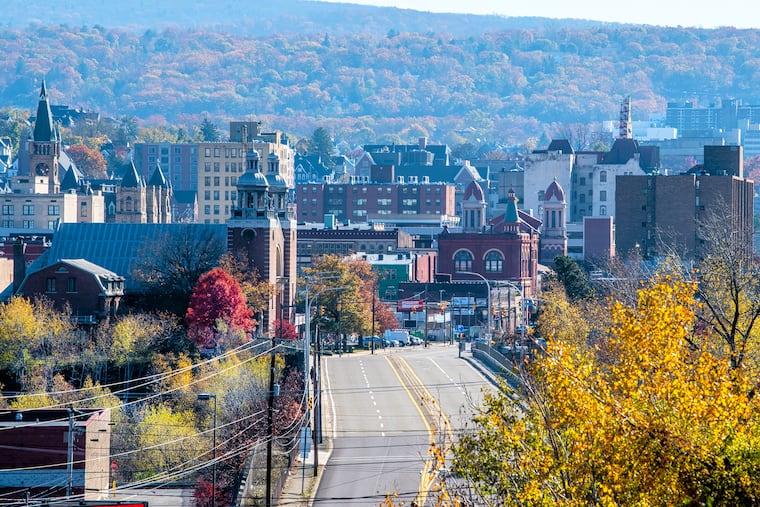
A storm is coming for small towns across America. My city of Scranton is one of them.
We sit in the Lackawanna River Valley, a basin whose easy access to water helped define its heyday as an industrial center. But what nurtures us can also devastate us. On Sept. 9, 2023, up to six inches of rain fell in just 90 minutes on a nearby cluster of mountains where run-off regularly drains into the city.
The waters rose quickly, stranding residents. Our firefighters, out all night in boats, had to rescue people under treacherous circumstances. Two people in a neighboring township died, and the flood damaged 459 homes in our region, causing nearly $25 million in damage.
Scranton is just one locality among many suffering from catastrophic flooding events.
This summer has been defined by a surge of deadly flash floods across the United States, wreaking havoc in New Mexico, New York, Illinois, and parts of North Carolina and New Jersey.
And as I‘ve watched the heartrending news still coming out of Central Texas, I couldn’t help but be reminded of the houses buried in debris and silt, the overturned vehicles, and the traumatized families we encountered in Northeast Pennsylvania that day.
We thought relief was on its way. We had passed our initial review for $2.5 million under a grant from the Federal Emergency Management Agency’s (FEMA) Building Resilient Infrastructure and Communities, or BRIC, program. We had worked hard to submit a comprehensive application, employing strategies learned from peers and from the Local Infrastructure Hub — a national consortium dedicated to helping municipalities compete for necessary federal funds.
With this money — and with a 25% local share — we intended to acquire and demolish flood-prone residential properties and three vacant lots in neighborhoods with recurring stormwater damage. These vital strategies — coupled with a grant to modernize Scranton’s building codes — would reduce public safety risks and avoid future recovery costs.
In April — when FEMA canceled some $3.6 billion in hazard mitigation projects and defunded new ones — those plans were swept away. Even with a preliminary victory this month, after Gov. Josh Shapiro joined a multistate lawsuit, security for America’s localities is far from assured.
Congress must act, and not just to restore BRIC in the short term. Our nation has an obligation to fully equip local governments — with expertise and resources — to confront and defend against disasters. That should be a priority of the highest order.
BRIC wasn’t just another line item on a ledger. It was a national commitment to protect property, prosperity, and people’s lives from crises that grow more severe each year. Since its creation in 2018 — under the first Trump administration — BRIC awarded nearly $5 billion to proactively strengthen infrastructure against hurricanes, deluges, wildfires, and more.
It’s a program built on the simple idea that it’s cheaper, smarter, and more humane to prevent calamities than to clean up after them. The math backs it up: Studies show that every dollar spent on hazard protection saves up to $13 in economic costs, damage, and cleanup. What’s more, mitigation saves more than dollars alone can quantify. These catastrophes are devastating to families, neighborhoods, and shared well-being. They hurt our most at-risk residents and can have dire health consequences that only emerge in the long term.
Congress, heeding Ben Franklin’s adage that “an ounce of prevention is worth a pound of cure,” created BRIC precisely for moments like this. It was our path forward. Without adequate dollars, we’re left warning families that the water will come again, destroy neighborhoods, and put emergency workers in peril. While we are working to replace the BRIC grant funds this time, we can hardly expect local creativity — without adequate backing — to suffice on its own, again and again.
America’s mayors are inherently committed to building cities that can thrive in the face of change — not crumble because of it. Federal funding was a vital investment in that mission. As mayors, we don’t want to act only after bad luck befalls us; we want to safeguard our citizens and courageous responders before the storms, the fires, and the winds are at our door.
My sincere hope is that this will be the hill on which Congress will take a stand. Where they remind the public of their sacred duty to secure their right as legislators — and the lives of their constituents.
Federal officials must listen to America’s local leaders. And should our cities, counties, and villages become the only bulwarks against adversity, then Congress must help ensure we have the capacity to fortify crucial infrastructure ourselves.
It’s time for that ounce of prevention. Because the water will rise, and the rain will come down — whether the nation is ready or not.
Paige Cognetti is the mayor of Scranton.