Getting back to the garden: Philly-area public spaces are essential to civic life
At a time when public life can feel fragmented, gardens offer something increasingly rare: places where people of all backgrounds can gather and connect.
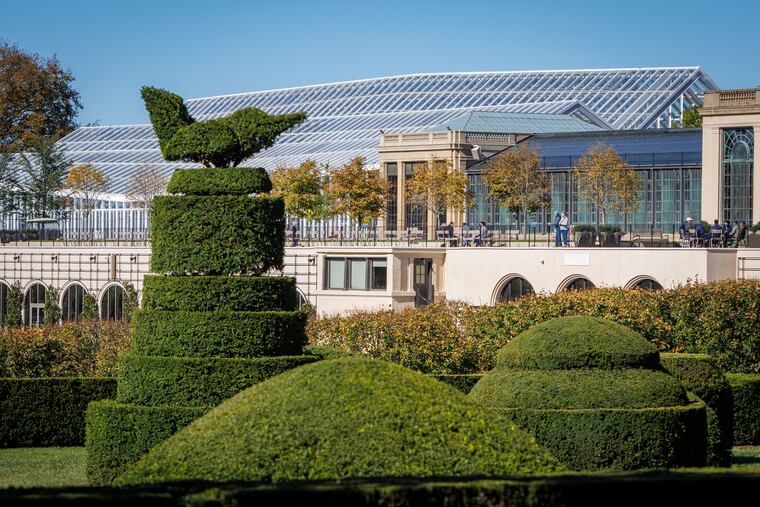
We are fortunate in the Greater Philadelphia region to be surrounded by some of the most extraordinary public gardens in the country. But beauty, on its own, is no longer enough.
Across the field of public gardens, an important shift is underway. For decades, success was measured by attendance, acreage, and the care of living collections. Those measures still matter. But today, gardens are asking a more urgent question: What does it mean to be essential?
The answers are taking shape all around us.
Public gardens are increasingly at the forefront of environmental and agricultural stewardship — serving as living laboratories for sustainability, climate resilience, water management, and biodiversity. They are also contributing to human health. Research affirms what many discovered during the pandemic: Time spent in nature reduces stress, improves mental health, and offers a sense of restoration that is difficult to find elsewhere.
But perhaps gardens’ most important role today is civic.
Shared experience
At a time when public life can feel fragmented, gardens offer something increasingly rare: places where people of all backgrounds can gather and connect. They are spaces of shared experience, something our region, like many others, needs more of. In that sense, public gardens are becoming the 21st-century town square.
Few places illustrate this better than our own region, known as America’s Garden Capital. Within 30 miles of Philadelphia sits the largest concentration of public gardens in the United States. Collectively, these institutions are not only cultural assets, but also economic and educational drivers, welcoming millions of visitors each year, supporting thousands of jobs, and contributing hundreds of millions of dollars to the regional economy.
They are also evolving.
At Longwood Gardens, we have worked hard to expand our role. While nearly 1.8 million people visit annually, our focus has shifted from how many people come through the gates to what they experience, and how those experiences extend beyond a single visit.
That evolution includes investments in new garden spaces and preservation efforts, but also a deep commitment to education. Thousands of students participate in Longwood’s free programs each year, and our alumni network now spans the globe, shaping the future of horticulture and public gardens.
But what’s most encouraging is not what’s happening at any one institution. It’s the growing sense of shared purpose across the region.
Collaborative spirit
Public gardens in Pennsylvania are collaborating more intentionally, recognizing that the challenges we face, from climate change to workforce development, are bigger than any one organization.
The members of PA Gardens, a consortium representing public gardens across the commonwealth, welcome more than four million visitors annually and contribute over $500 million to the state’s economy. More importantly, they are using their collective voice to advocate for the role of plants — and the people who work with them — in our daily lives.
That collaborative spirit is gaining momentum. The recently launched Center for Plant Excellence brings together state government, higher education, and industry partners to strengthen research, workforce development, and the broader plant-based economy — an industry that contributes more than $50 billion annually in Pennsylvania, according to the 2021 Pennsylvania agriculture economic impact study.
Plants and the institutions dedicated to them are no longer on the margins of public life. They are central to how we address some of our most pressing challenges, from environmental sustainability to public health. They are places of resilience, of learning, and of connection. In short, they are essential.
As we mark Go Public Gardens Days from May 8 through 17, we should celebrate the beauty of these spaces. But it’s even more important to recognize the vital role they play in shaping a healthier, more connected, and more sustainable future for our region.
Paul B. Redman is president and CEO of Longwood Gardens and serves on the board of the Center for Plant Excellence.

Inquirer Opinion Newsletter