What Palestinians in Gaza are going through brings back all the trauma of my childhood in Bosnia
In the early 1990s as Serb armed forces besieged towns, the local people and displaced people like me and my family experienced severe and persistent food shortages, writes Emina Ćerimović.
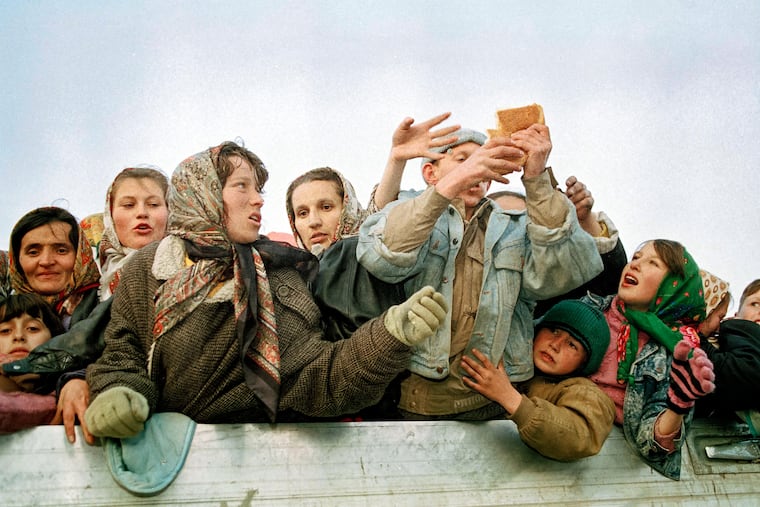
I was 8 when I first experienced hunger — the war in my native Bosnia had started a few months earlier. As Serb armed forces besieged key towns, the local people and displaced people like me and my family experienced severe and persistent food shortages.
I was also 8 the first time I went to an aid distribution site, where I had to wade through the crowd of desperate people — mostly adults — and plead with the humanitarian worker who handed me a loaf of bread. I can’t forget that bread, not even 33 years later — I was proud I got something to take back home to my family. I also felt embarrassment that I had to beg for a loaf of bread.
Food scarcity, hunger, and lack of access to clean water were persistent in the years that followed. Mama employed unconventional means to help us survive. We didn’t have soap so she would collect woodfire ashes, apparently a natural cleaning agent, which we would use to wash our hair. We collected rainwater to wash our clothes. We often ate canned food for which the expiration date had long passed.
At the height of desperation, one day my mother brought home a bag of flour. I watched her in anticipation as she carefully sifted the flour, cup by cup. It was infested with mouse feces that she carefully tried to pick out. Back then, I didn’t care to know. I was just excited that we had bread to eat. I learned the truth about the infestation only a few years ago when she, on a rare occasion, spoke of the war.
While I didn’t care to know the details then, I knew the impact poor nutrition and lack of access to clean water had on our health. In 1993 — a year after the Bosnian war began — my then 10-year-old sister fell seriously ill from jaundice and spent a month in the hospital. One morning shortly thereafter, I woke up feeling terribly sick. I vomited and saw 4-inch-long worms in my vomit. They were likely contracted through lack of access to clean water, inadequate hygiene, or contaminated food — or some combination of the three.
Due to how overwhelmed the healthcare system was at the time — similar to how overwhelmed the healthcare system is today in Gaza — I didn’t have access to any medical treatment, and mostly recovered from the parasitic infection on my own. Already undernourished, I lost even more weight and only fully recovered after we escaped to Sweden in November 1994, where finally our healthcare needs were addressed.
And now, all those decades later, while I am visiting my mama in Sarajevo, where the reminders of the war remain ever-present, I watch her as she cries and her body shakes over the images coming out of Gaza. I am trying to console her, telling her they will survive just as we did.
But I am not sure they will. Countries with significant leverage over Israel are failing to take any meaningful action to stop the government of Prime Minister Benjamin Netanyahu.
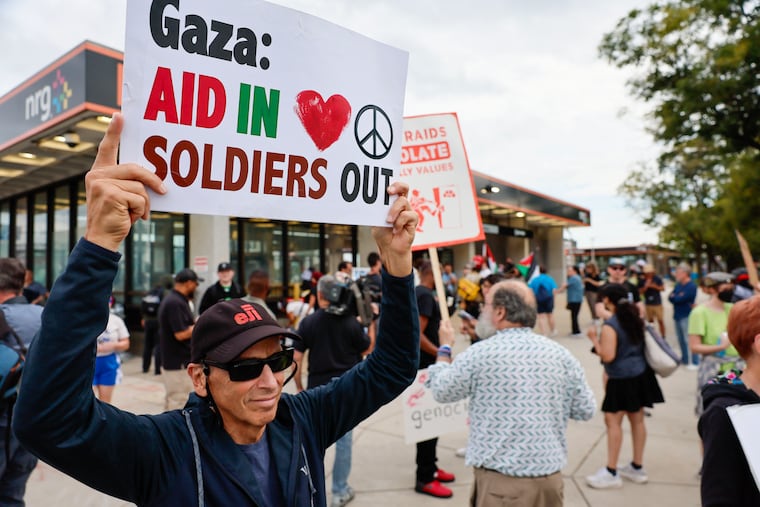
Horrors upon horrors that Palestinians in Gaza have been going through for the last 21 months — well documented and livestreamed to all of us by courageous journalists and others from the ground — have brought back all the trauma of my childhood in Bosnia.
I still remember watching in horror the news on TV as 26 civilians in Sarajevo were killed on May 27, 1992, while waiting in line to buy bread, and 108 others were wounded.
Fast forward to this May, when I first saw footage of hundreds of hungry Palestinians under fire as they jostled with one another to fetch food and aid.
The daily photos from Gaza of mothers clutching their emaciated children, with tiny ribs protruding, and headlines such as, “the latest child to starve to death weighed less than when she was born,” cause my heart — and my mother’s — to break, and make me sob.
On Tuesday, experts on international food insecurity who monitor hunger around the world declared that the “worst-case scenario of famine is currently playing out” in Gaza. Starvation has likely resulted in thousands of deaths over almost 22 months, and is entirely human-made. It’s the product of Israel’s policy to use starvation of civilians as a weapon of war, a war crime that my colleagues at Human Rights Watch, the nongovernmental organization where I work, first documented in December 2023.
Months of research into Israel’s restrictions on aid and services led us to the inescapable conclusion that Israeli authorities are deliberately inflicting conditions calculated to bring about the physical destruction of Palestinians in Gaza in whole or in part, amounting to the crime against humanity of extermination and acts of genocide.
In September 2024, I reported on the higher risks of starvation that children and adults with disabilities experience. It has become impossible for most people in Gaza to find food, let alone for children and adults who are on special diets due to a health condition or a disability. The situation has only deteriorated in recent months, with children’s starvation peaking in June, according to the UN. Gaza’s Health Ministry reports that, as of July 30, 154 people, including 89 children, had died due to malnutrition since Oct. 7, 2023, the majority since July 19.
The International Court of Justice had already ruled in January 2024 that Israel’s actions in Gaza amount to a “real and imminent risk” that irreparable prejudice will be caused to “the right of Palestinians to be protected from acts of genocide.” The International Criminal Court has issued arrest warrants for Netanyahu and former Defense Minister Yoav Gallant for war crimes and crimes against humanity.
Under the Genocide Convention, all states have a duty to prevent genocide as soon as they learn of the risk. That threshold has long been crossed.
The armed conflict in Bosnia lasted from 1992 to 1995 and led to genocide. More than 100,000 of our people were killed and countless left with wounds that won’t heal. It took the Bosnian Serb Military Forces executing more than 8,000 boys and men in Srebrenica for the world powers to finally take action. Failures were recognized, apologies issued, and promises were made to never again let it happen to anyone.
Never again is now, but I don’t see an attempt to fulfill these promises. All I see is the livestreamed extermination of Palestinians.
Emina Ćerimović is associate disability rights director at Human Rights Watch.