Pennsylvania’s leaders are losing Gen Z
Young Pennsylvanians believe the commonwealth’s institutions are slow to respond and are detached from daily realities, according to a survey conducted by a youth observer to the U.N.

In Pennsylvania, just over 2% of Gen Z students believe elected officials act in their best interests. Three-quarters say they don’t.
These findings come from more than 2,800 conversations across 16 colleges and universities in the state. Project 26 Pennsylvania collected them without a script, giving students space to speak freely.
Young Pennsylvanians believe the commonwealth’s institutions are slow to respond and are detached from daily realities. They pointed to artificial intelligence and its workforce implications, social polarization, and global issues that feel increasingly vital to confront on a local and regional level.
In my role with the United Nations Association of the USA, I meet regularly with young Americans across the country. They’re not apathetic — far from it. They know what it looks like when institutions function — and when they drift.
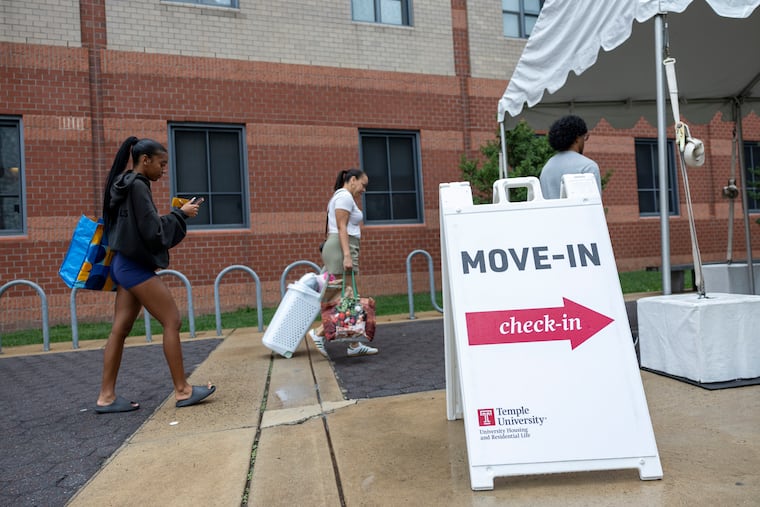
A few weeks ago, I visited a campus in Bethlehem and heard from students who were deeply engaged and informed. They focused on conservation, economic growth, healthcare access, and local governance. But when the conversation turned to institutional performance, their confidence plummeted.
They described government bodies that move slowly, communicate inconsistently, and prioritize politics over problem-solving.
There is a clear contrast between what they see at home and what I see globally.
The U.N. has expanded youth engagement at a historic pace. It created a dedicated Youth Office and invited young people into negotiations. Leaders expect a direct report on the concerns and ideas of young Americans.
Pennsylvania’s institutions should view this as a model if they want to start restoring trust.
That’s because the risk of inaction is more than disengagement; it’s dislocation. Young adults are moving to places that do pay attention to and meet their needs.
A Pennsylvania State Data Center analysis found that almost half of Pennsylvanians moving out of state were between the ages of 18-34. Many of them are opting for faster-growing places like Florida, North Carolina, and Texas.
If a global system of 193 member states that agree on little else can coalesce around the need to build structured pathways for youth involvement, then Pennsylvania’s agencies and local governments can do the same.
This shift does not require a redesign of government — just consistency and intention. There are steps the Keystone State can take now.
Several Pennsylvania cities already show what youth engagement can look like.
Allentown created a Council of Youth by resolution, though all 16 seats appear vacant. Pittsburgh has a youth coordinator who runs its Youth Commission, and Philadelphia operates a Youth Commission of its own. These are promising starts, and all townships and boroughs should follow. But they are often tucked deep into municipal websites rather than positioned as visible civic priorities.
Gov. Josh Shapiro should create a statewide youth advisory cabinet with a direct line to major agencies. States like Iowa, North Carolina, and Massachusetts already run strong statewide youth councils.
In fact, Pennsylvania does have a strong model already in the NextGen Advisory Council, which brings young leaders into decision-making on conservation and public lands. That same approach should be extended across agencies.
These steps are practical. They also reflect respect for young people, who are not the “next” generation, but are active contributors shaping our commonwealth.
They organize events, testify at meetings, vote in local elections, and devote time to issues that affect their communities. They have shaped mental health advocacy, launched small businesses, and pushed for housing initiatives in cities across the state.
If institutions want to restore trust, they need to match that level of seriousness.
Trust does not return through campaign outreach or social media posts. It grows when young people see their work is taken seriously and leads to outcomes — and when institutions welcome their involvement with regularity and purpose.
Pennsylvania has a window to rebuild confidence. The Project 26 findings should not be dismissed as youth discontent, but read as a statement of expectations — and an opportunity.
Half of the students surveyed said they would be motivated to take political action “if they felt it would make a difference.” They are engaged, ready, and eager to help build a stronger Pennsylvania.
The question is whether the commonwealth’s leaders will invite them into the process.
Jarrett James Lash serves as the 14th UNA-USA youth observer to the United Nations and is a municipal planner in Montgomery County.