A bipartisan House vote extended protection for Haitian immigrants. Will the Senate follow suit?
The Trump administration wants to send some 350,000 immigrants back to a violent and collapsing nation. Pennsylvanians in Congress could protect them.
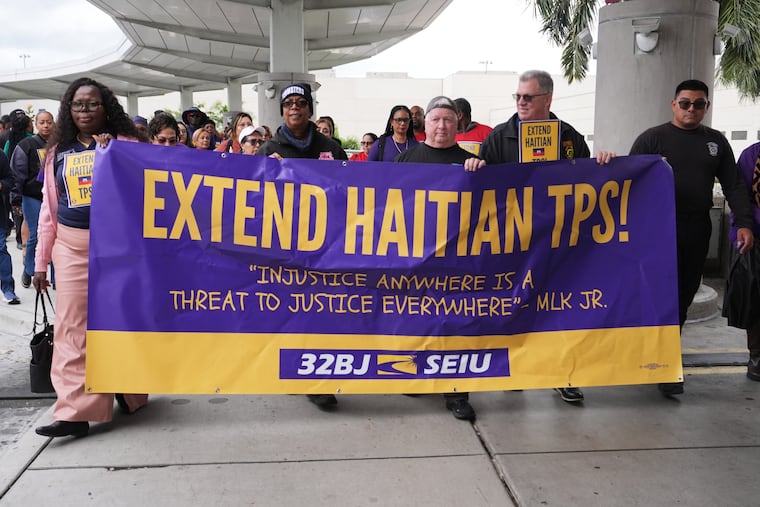
The U.S. Department of Homeland Security (DHS) is trying to smash a proven solution to dozens of problems by terminating Temporary Protected Status (TPS) for Haitians currently living, working, and contributing to communities across Pennsylvania and the United States.
A bipartisan vote in the U.S. House of Representatives on Thursday to extend that protection provides an opportunity to keep this solution in place.
Pennsylvania’s congressional delegation played an important role in the House vote, and now has a chance to have even more impact as the extension bill heads to the Senate.
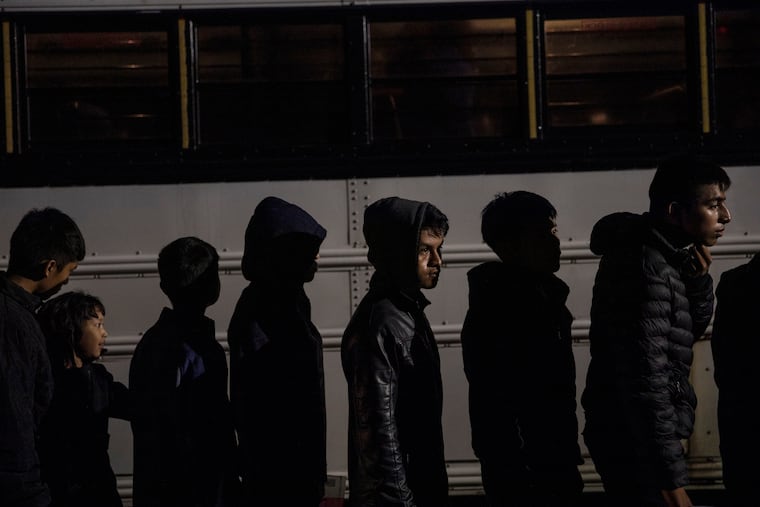
Congress established TPS in 1990 as a special immigration status that allows people from a country facing natural or man-made disasters to stay in the U.S. until conditions make it safe for them to return home. Haiti’s current challenges are exactly why TPS exists: Armed groups control 90% of the capital, Port-au-Prince. Over 1.5 million people — only slightly fewer than the entire population of Philadelphia — have been displaced. Haiti has among the world’s highest rates of hunger and murder.
The U.S. Catholic Bishops concluded that there “is simply no realistic opportunity for the safe and orderly return of people to Haiti at this time.” The U.S. Department of State’s website warns, “Do not travel to Haiti due to kidnapping, crime, terrorist activity, civil unrest, and limited healthcare.”
While the 350,000 Haitians with TPS — including 15,000 in Pennsylvania — stay safe from the horrors back home, they are making important contributions to the U.S. More than 200,000 have work authorization and are often employed in fields that struggle to hire enough workers, including healthcare, food processing, and manufacturing. Three thousand work in Pennsylvania agriculture. TPS holders contribute an estimated $5.9 billion to the U.S. economy, including $235 million to Pennsylvania.
They pay $1.5 billion in local, state, and national taxes, including $31 million in Pennsylvania. Over half belong to churches, and 41% are homeowners. Haitians with TPS have more than 80,000 children who are American citizens.
If Haitian TPS is terminated, U.S. employers will immediately lose 200,000 legal workers. Factories will close, chicken will cost more at the supermarket, and our elderly will lose thousands of skilled caregivers. Families with work-based health insurance will go uninsured and will inevitably depend on emergency rooms for care. The already overwhelmed DHS will have 350,000 newly undocumented people on its plate. Families will face an agonizing choice between exposing U.S. citizen children to Haiti’s hunger and violence or leaving their loved ones behind.
Families could face an agonizing choice between exposing their American citizen children to Haiti’s hunger and violence or leaving them behind.
The announcement by DHS to terminate Haitian TPS inexplicably concluded that “there are no extraordinary and temporary conditions in Haiti that prevent Haitian nationals … from returning in safety.” Two federal judges, appointed by Republican and Democratic presidents, have disagreed. They blocked the terminations after finding that the process DHS used to reach this conclusion was deeply flawed and violated the TPS statute.
Although an appeals court confirmed the most recent court order, the administration has challenged it up to the U.S. Supreme Court, which set an expedited hearing for April 29. The high court has regularly sided with the current administration over lower-court rulings regarding the exercise of executive power, so many observers expect it to green-light the termination of Haitian TPS by early July.
Voters have clearly seen the negative impacts of mass deportation in their neighborhoods, their workplaces, and on their televisions, and this has eroded support for those policies. Even the GOP’s Mike Johnson, speaker of the House, recently advocated a “course correction” from mass deportations to focusing on people with criminal records.
On Thursday, U.S. Rep. Brian Fitzpatrick of Bucks County joined nine other Republican caucus members and Pennsylvania’s seven House Democrats in voting for the extension.
Unfortunately, Pennsylvania’s other Republican representatives — including U.S. Rep. Ryan Mackenzie, whose district includes Allentown, where Haitian TPS holders contribute $197 million to the economy each year — passed up the opportunity to be part of preserving the solution.
U.S. Sens. John Fetterman and Dave McCormick now have a unique opportunity to model bipartisan problem-solving as the TPS extension bill heads to the Senate.
Pennsylvania’s Senate delegation is one of only three in the country to include a Republican and a Democrat. If they quickly — or, even better, jointly — announce their support for TPS extension, they would demonstrate that, as in the House, senators from both sides of the aisle could come together to maintain a commonsense solution for America, instead of imposing dozens of problems on people, communities, workforces, and governments in Pennsylvania and across the country.
Brian Concannon is a human rights lawyer and the executive director of the Institute for Justice and Democracy in Haiti.