The Dow is over 50,000, but healthcare is underwater
In tonight’s State of the Union, expect loud boasts about the stock market and tone deafness to the financial plight of millions of Americans.
“The Dow right now is over 50,000.”
Those were the words Attorney General Pam Bondi used during a recent congressional hearing to justify and/or deflect from any wrongdoing by the Trump administration.
The implication is clear. The United States economy is doing well, so nothing else matters. However, although an elevated Dow helps those with retirement accounts, what does it mean for the 40% of Americans who do not have a 401(k) or any other retirement savings account? How does that translate into affordability for basic items like food, clothing, shelter, and, perhaps most importantly, healthcare?
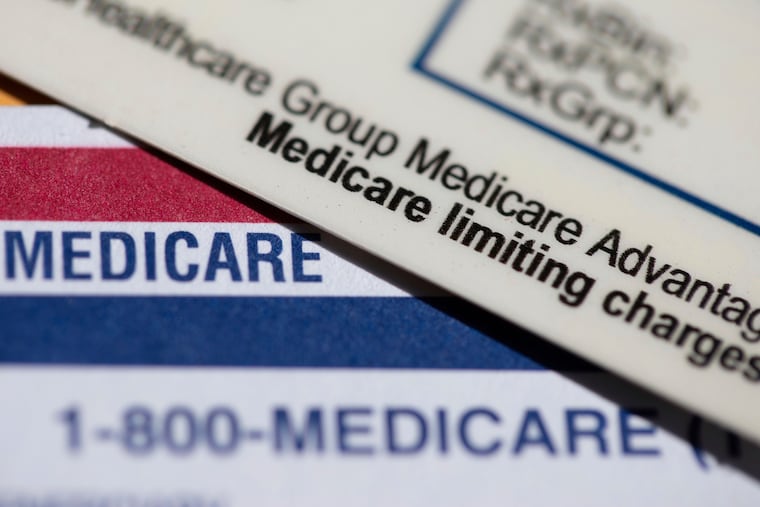
The latter is a huge problem, especially with the Medicaid and Medicare cuts in July, and the expiration of the Affordable Care Act (ACA) subsidies last month. The combination is expected to affect 15 million Americans by 2034. Consider also that 3.14 million Pennsylvanians, which translates to 24.1% of everyone in the commonwealth, were covered by Medicaid in 2024.
Frankly, the cost of healthcare tops the list of the public’s economic anxieties. As people with deep backgrounds in health policy, this also concerns us greatly.
The facts are that health insurance has become increasingly unaffordable for most Americans, and that has a downstream effect. When health insurance premiums are prohibitive, people are more likely to go without insurance or opt for a plan that offers a lower premium but a much higher deductible. Those people are more likely to skip important preventive care, placing them at increased risk for adverse health consequences. This also applies to those whose Medicaid benefits were cut.
President Donald Trump has promised to decrease the price of prescription drugs through the Trump Rx program, but in actuality, the differences will be much smaller than promised.
To his credit, his administration has tried to address the price of drugs by reining in pharmacy benefit managers, the middlemen whose practices serve to increase the cost of drugs. However, the success in that area pales in comparison with the overall detrimental effects of this administration on healthcare.
The fact is that health insurance has become increasingly unaffordable for most Americans.
The most recent problem is the expiration of the federal subsidies under the ACA. Consider the case of Pennsylvania residents Tom and Carol Shaw, who saw their health insurance premiums jump from $1,090 a month to $3,505 a month, largely due to the loss of the ACA subsidies. That’s a 221% increase!
To put that in perspective, the average monthly mortgage payment in York County, where they live, is about $1,300, according to the U.S. Census. The Shaws can afford the increase, but what about those who can’t? The result is that about 85,000 Pennsylvanians have dropped their health insurance in 2026. That amounts to one in five enrollees terminating coverage, which is truly a stunning statistic.
On top of the financial effects, the dismantling of our vaccine infrastructure poses a significant risk to the health of the nation. The science of vaccines has not changed, but the politics have, such that Health and Human Services Secretary Robert F. Kennedy Jr. has been able to spew misinformation and take numerous actions designed to destroy trust in science and physicians without any accountability, no matter how much he mangles the facts and the science. As a result, in 2025, we saw 1,277 measles cases — the highest number since 1992.
Meanwhile, Kennedy continues to insult physicians by stating that the only reason physicians recommend vaccines is to make money. It is difficult enough to take proper care of patients in the limited time allotted without having to dispel the numerous lies coming from this administration.
It is not clear exactly what President Trump will say in his upcoming State of the Union address. We suspect he will address the affordability of healthcare. If he does, we are quite confident he will dismiss it as a nonissue, given his comments in December that the affordability crisis is a hoax.
We are convinced he will cite the Dow while ignoring the fact that 59% of Americans disapprove of his handling of their cost of living. We fully expect a speech that will be tone deaf to the financial plight of many Americans, including his own supporters.
There must be accountability for this administration. The midterm elections are approaching, and healthcare, yours and that of your neighbors, will be guided by your vote.
If we do not address this issue appropriately, we will pay the price, as will our children and loved ones. In fact, we already have.
Mark Lopatin is a physician and the author of “Rheum for Improvement,” a member of Ask Nurses and Doctors, and a coeditor for Doctors for America, a nonprofit that focuses on putting patients over politics. Jeffrey Lerner holds a doctorate in health policy and is the Pennsylvania coordinator of Ask Nurses and Doctors, a bipartisan organization whose mission is to help elect government officials who prioritize U.S. healthcare problems.

Inquirer Opinion Newsletter