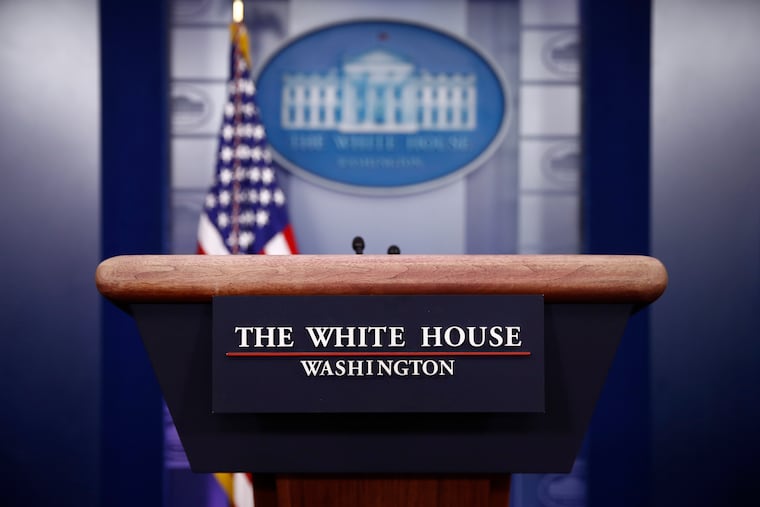
America’s warfare readiness may be a concern, but Hegseth is looking in all the wrong places
Focusing on building cyber warfare readiness must take priority over other matters, writes former Navy vice admiral Joe Sestak.
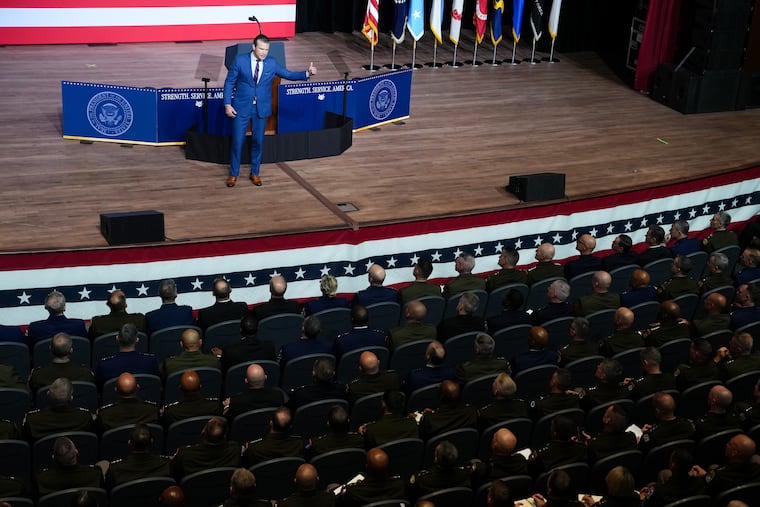
It’s normal for each military service to gather its flag officers, or most senior leaders, to hear strategic guidance from their service chief annually, and in turn they provide their own thoughts in an open forum. One Chief of Naval Operations, Admiral Vernon Clark, was noted for asking his assembled admirals, “What do you believe?”
I’d hoped there’d be a similar type of forum last week when Defense Secretary Pete Hegseth assembled all services’ generals and admirals in command assignments.
Instead, he emphasized changing a “Woke Department” to a “War Department” to ensure a “warrior ethos” for increased “lethality.” His prescription for such is eliminating diversity, equity, and inclusion programs; having one “male” physical fitness standard both men and women must meet; and new grooming criteria regarding no “fat” or facial hair.
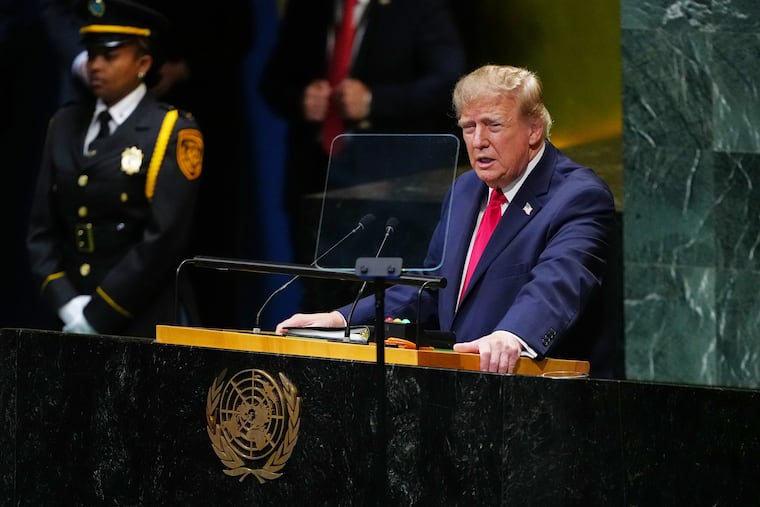
Meanwhile, President Donald Trump, speaking to the same gathered generals and admirals, focused his guidance for the armed forces on the “enemy from within” and deploying our military to cities in the United States.
Both sets of comments are concerning for a variety of reasons, but to me the most salient is a national security one: the president and secretary are looking backward in time instead of offering guidance on, or addressing, the most lethal threat today.
Neither seems to be thinking about China’s evolving approach to warfare — demonstrated in Myanmar after the rebels captured the city of Lashio. Asked by Myanmar’s military junta to evict the rebels, China merely shut down the city’s electrical power and the internet it had been instrumental in financing and building. The rebels left without a fight, the New York Times reported.
Globally, China has built 5G wireless networks that provide it with the capability to surveil or close down anything passing through them for intelligence, military, or commercial purposes. Because of this, the commander of U.S. Africa Command said he was unable to leverage signals intelligence for precision targeting from Africa’s Chinese-built 5G.
If 5G connected the world, 6G will run it as a tool of influence and critical war-fighting capability.
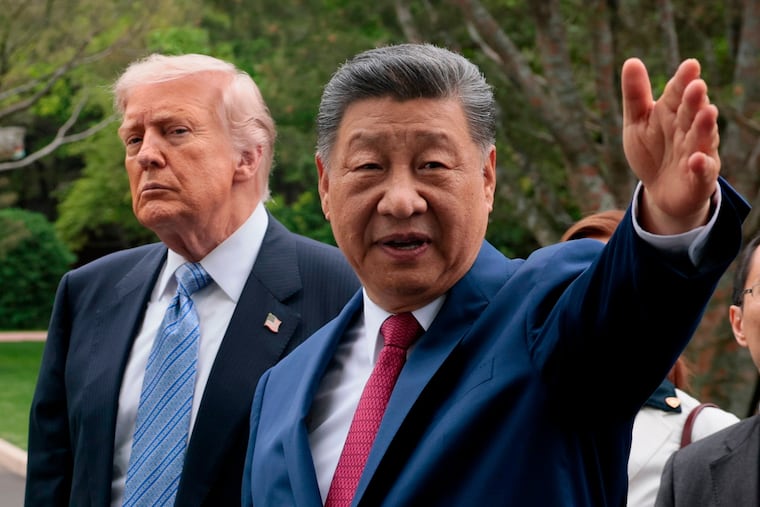
China is leading 6G standards development within multilateral organizations such as the International Telecommunication Union, but the Trump Administration has opted to shun international organizations.
Years ago, Ren Zhengfei, the founder of Huawei, one of the world’s biggest producers of equipment that enables phone networks, warned: “A country without its own program-controlled switches is like one without an army.”
Keep that in mind as you consider China’s “string of pearls” of over 50 global shipping ports it has built, or upgraded, while embedding within them the software capability to close them down.
Many of the cranes in the port of Los Angeles use Chinese software. And in the European Union, stealth communication devices were discovered in Chinese solar panels and storage batteries — preparation for the possibility of shutting them down in “Lashio” style.
It’s why China — having now laid or upgraded over a quarter of the undersea fiber-optic cables connecting the world’s continents, which carry more than 95% of all international communications traffic — should be our primary warfare readiness concern.
China’s Salt Typhoon penetration of U.S. telecom infrastructure permits it to listen to any telephone call a U.S. resident makes — and we remain unable to remove the intruder.
The Pentagon’s Defense Science Board has said it has no confidence that any major weapons system using cyber capabilities is secure for war. And a Cybersecurity Readiness Review found a naval service that is “exquisitely organized, structured, equipped, and cultured for a previous era” as it “is preparing to fight tomorrow’s kinetic war, which may or may not come, while losing the global cyber enabled information war.”
Former Joint Chiefs Vice Chair General John Hyten said China “ran rings around us” in a classified war game where network access was immediately lost. With U.S. forces blind and deaf, the maritime domain is a safe haven for China to quickly achieve its objectives.
In effect, America is held hostage in China’s global digital incarceration, and one day, without warning, our entire now-defenseless digital systems will be rendered completely useless, and our military capability irrelevant as China adheres to the words of Sun Tzu: “Victorious warriors win first and then go to war.”
Simply put, DEI is not what’s hurting real readiness. There were only ever two hours of equal opportunity training for 257 hours of rifle marksmanship training in Basic and One Station Unit training in the Army. Nor are physical fitness and facial hair standards impacting the lethality most needed today.
DEI is not what’s hurting real readiness.
Today’s defenses against corrupting information in the military’s already-compromised systems means that focusing on building cyber warfare readiness must take priority over such matters. Yet, the day Hegseth met with military leaders, the secretary signed a memo “to restore mission focus” by “relax[ing] the mandatory frequency for cybersecurity training.”
Top brass have long agreed that readiness isn’t a matter of mere physical fitness. Gen. Chance Saltzman of the U.S. Space Force — after noting that China’s arsenal of space weapons is “mind-boggling” — has said he wants recruits who can “analyze and debate new ideas and perpetually challenge the status quo … [who] have the courage and persistence to experiment, adapt … and innovate,” and not reject such recruits, even with asthma.
If Secretary Hegseth truly wants to increase lethality, he should also review for “lessons learned” the Pentagon’s decision to decrease the combat training hours for our most sophisticated aircraft — the F-35.
Its “Fully Mission Capable (FMC)” rate should be 90% but was only 52% when the contractor recently requested a second $500 billion in “unanticipated costs” (as allowed by the Pentagon’s “cost-plus” contracting system). This doubled the aircraft’s original $1 trillion lifetime price while reducing its FMC readiness even further. This is just one example. We have gone from 52 major defense contractors at the end of the Cold War to only five today — they all get “cost-plus” contracts and it’s an oligopoly that needs to be changed.
Warfare readiness truly is a concern for the United States armed forces, but, unfortunately, the Defense Secretary seems to be following Johnny Lee’s ballad by lookin’ for it in all the wrong places.
Joe Sestak is a former Navy vice admiral, a former U.S. representative for Pennsylvania’s 7th Congressional District on the House Armed Services Committee, and director for defense policy of the National Security Council staff.