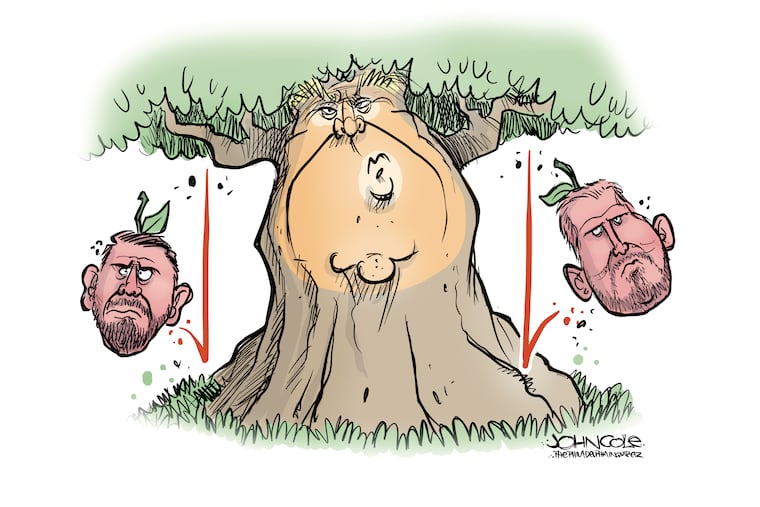
Where did higher education go wrong? Turning its back on diversity.
The Trump administration’s authoritarian dismantling of universities’ domestic diversity initiatives and insistence that a single culture holds all the answers is corrosive and pernicious.
As a former college president who spent decades leading schools in the U.S. and abroad, I have witnessed, with some distress, the growing attacks on higher education by pundits and politicians. Seeking to blame students and schools for various social crises, such attacks undermine every major achievement American universities have made in the last half-century.
Campus diversity initiatives and freedom of expression for students and faculty are special targets. Recently, “Secretary of War” Pete Hegseth has revoked graduate school tuition support for enrolled service members if they attend “woke” universities, worried these schools will work against his “warrior ethos.” His boss, President Donald Trump, has exhibited unbecoming glee while illegally slashing government grants for research he fears more than understands. Secretary of Education Linda McMahon denounces university diversity initiatives as “pervasive and repugnant race-based” discrimination against white and Asian people, and so, in keeping with Trump’s priorities, seeks to dismantle all schools’ efforts to promote equity.
Some educators inadvertently reinforce such shortsighted attacks by claiming universities have “lost sight” of “core purposes” by focusing more on justice than on job skills. And the growing cohort of tech billionaires wonders aloud if we will even need universities in a future driven by artificial intelligence, even as their products offer one-dimensional answers to complex problems and demonstrate an alarming vulnerability to ideological manipulation, the very opposite of cultivating conversation and diverse perspectives.
Learning to listen
My half-century in higher education has convinced me, by contrast, of something many college graduates will also recognize: The real promise of higher education isn’t found in textbooks or laboratories, and certainly not in large language models (LLMs) and chatbots. It’s found in something more fundamental and experiential in college life: in learning to listen to and connect with others, in collaborative problem-solving, and in the daily practice of navigating a complex world.
True education depends on the ability to weigh, learn from, and evaluate diverse perspectives.
True education depends on the ability to weigh, learn from, and evaluate diverse perspectives. That promise is much larger and more important than workforce preparation. Such education prioritizes ethical over artificial intelligence. It promotes resilience, adaptability, and a productive, rather than a destructive, approach to change. It offers an antidote to the Trump administration’s prevailing preference for dropping bombs instead of building bridges to cultural understanding.
To justify their aggressive interventions into university admissions, curriculums, and research priorities, the administration claims diversity poses a threat to American cultural values. But the achievements of American higher education from World War II to the present refute such claims.
In the wake of that global conflict, educators and policymakers alike recognized the power of education to strengthen connections between countries and across cultures. In 1946, the U.S. established the Fulbright program to fund international research, foreign language instruction, global public outreach, and scholarships for American students to study abroad. Over the last year, the administration has thrown the Fulbright and similar programs into a state of financial and ideological turmoil. The Trump administration’s authoritarian dismantling of universities’ domestic diversity initiatives is equally pernicious.
Addressing inequality
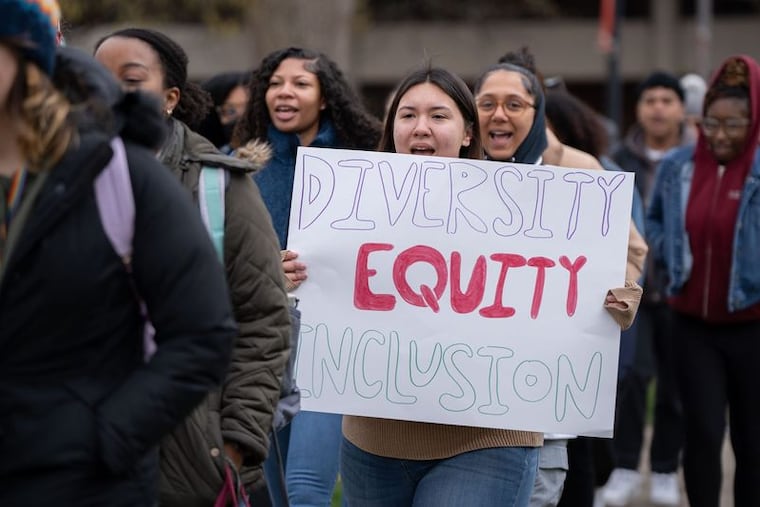
For nearly two decades in the 1990s and early 2000s, I was privileged to serve as president of Swarthmore College. I came to that job in the immediate aftermath of the Rodney King beating and the Los Angeles riots. I realized then that one way to address the ongoing effects of inequality in America was to strengthen support for student diversity, giving students — regardless of background — the opportunity to listen and learn from classmates whose lived experiences might seem radically different from their own.
Such celebrations of our diversity also allow students to recognize their classmates’ common humanity. Increasing the number of Black and Latino students at Swarthmore and funding programs to support gender equity and diversity made for a richer learning environment. The misguided dismantling of DEI denies the reality and value of our diverse experiences and imperils democracy itself.
Similarly, the administration’s full-frontal assault on immigration has had profound consequences for international student enrollment, something that has been a particular strength of our colleges and universities for decades.
International focus
Beyond dwindling enrollments lies something harder to quantify but equally vital. Every empty seat that might have been filled by an international student represents missed opportunities for individuals, universities, and communities to expand the human connections that foster empathy and collaborative problem-solving across the world.
International education routinely sends foreign students home with a meaningful understanding of American society, just as American students who learn abroad develop more complex views of the world — and of themselves. In an era of rising global tensions, these personal connections matter.
International cooperation in higher education exposes the shallowness of the idea that a single heroic nation or culture can produce all the knowledge it or the larger world will need. Ours is not the only country to advance healthcare, to solve engineering problems, or to create beautiful works of art. When humanity joins in those efforts, we pool cultural resources and benefit from wisdom gleaned in different historical trajectories. When nations isolate, our resources diminish as our perspectives become increasingly narrow.
The world over, universities — and the young people who come of age within them — have led and continue to lead the way toward a more just and peaceful world. Whether in the U.S. or overseas, students have shown me time and again how we are more connected than ever — economically, technologically, socially, and existentially — and responsible to one another.
The challenges we face, like the challenges our parents and grandparents faced, will not have easy solutions. They will require wisdom, an understanding of history and culture, and the humility and willingness to listen to and collaborate with others if we are to find solutions. Empathy and excitement born of seeing the world from multiple perspectives allow us to join with fellow inhabitants in securing a sustainable future for our entire planet.
That is higher education’s most important mission.
Alfred H. Bloom served as president of Swarthmore College from 1993 to 2009 and as the first vice chancellor of NYU Abu Dhabi from 2008 to 2019.