AI is preserving Holocaust survivor stories. But should it be trusted?
AI is already entering Holocaust education, whether the field is ready for it or not. The question is not whether to use these tools, but how to use them with the seriousness the subject deserves.
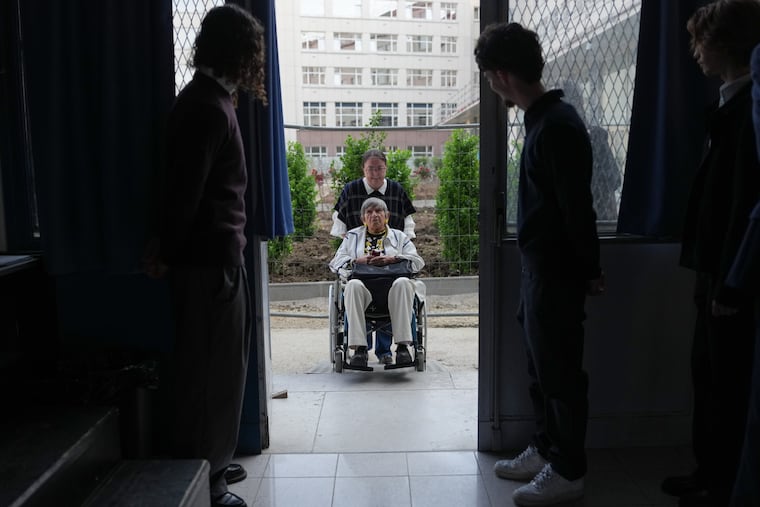
My phone rings, and a Holocaust survivor is on the line. She is 91. She wants to know if her story will still matter when she is gone.
I do not know how to answer that honestly, so I tell her what I know for certain: We are working on it.
That work has brought me into conversations I never expected to have, including ones about artificial intelligence. Because the uncomfortable truth is that AI is already entering Holocaust education, whether the field is ready for it or not. The question is not whether to use these tools. It is whether we will use them with the seriousness the subject demands.
Philadelphia has a deeper stake in this than most cities realize. The Philadelphia metro area is home to about 1,500 Holocaust survivors, just under 1,000 of whom live in the city itself. Most are in their late 80s and 90s.
At the same time, Holocaust knowledge is eroding in alarming ways, with nearly half of Americans unable to name a single concentration camp and many students reporting little to no classroom exposure. Pennsylvania is not exempt from this. The commonwealth does not have a strict statewide mandate requiring Holocaust education, as the bill that was introduced is dead and has not been passed. It is time for a bill to be passed mandating Holocaust education in Pennsylvania.
Into that gap, technology is rushing. Some of what is arriving is extraordinary. Some of it should concern us deeply.
I lead a nonprofit, The Blue Card, which serves Holocaust survivors in need. Our organization has helped develop a hologram program featuring Sonia Warshawski, a Holocaust survivor whose testimony has been preserved and made interactive for students. When a student asks her a question and she responds in her own words, the room goes quiet in a particular way. Something real is happening.
But what makes it real is precisely what makes it different from so much of what is being built right now: The system does not generate. It retrieves.
If Sonia never said something, the system does not say it for her. It pauses. It stops. That silence is not a limitation. That is the whole point.
Generative AI works on a different principle. It predicts what should come next. It fills gaps. It is extraordinarily good at producing language that feels authentic, even when nothing authentic underlies it. In most domains, that fluency is a feature. In Holocaust testimony, it is a serious risk.
We are not talking about getting a few facts wrong. We are talking about the possibility of fabricating witnesses. Of building systems that speak in the voices of people who survived genocide and putting invented words in those voices because the technology can, because it sounds right, because students find it engaging.
The road to that outcome is paved with good intentions and not enough caution.
This is not theoretical, and Philadelphia makes that painfully clear. In 2025, a U.S. House committee launched an investigation into allegations of antisemitism in the Philadelphia School District, citing reports that incidents were “rife” and going unaddressed in classrooms. The Anti-Defamation League (ADL) tracked 465 antisemitic incidents in Pennsylvania in 2024, the fourth highest in the nation, showing a 140% rise in physical assaults.
For the survivors that The Blue Card serves in this region, this is not a distant political story. It is a reopening of wounds that never fully closed.
And there is a particular indignity worth naming: Until late 2025, Pennsylvania remained one of only four states that still taxed Holocaust reparation payments as personal income. An exemption was finally signed into law in November 2025, decades after the federal government stopped taxing such payments in 2001. That basic discrepancy endured so long, and it says something about the context in which survivors in this city have led their compensation for persecution.
That context matters when we discuss what we owe them in the realm of memory.
Survivors choose their words deliberately. They decide what to tell, what to withhold, how to describe things that resist description. That choosing is part of the testimony. A system that completes their sentences, that invents the parts they left out, that generates responses to questions they were never asked, is not preserving memory. It is replacing it with something more convenient and less true.
Survivors choose their words deliberately. They decide what to tell, what to withhold, how to describe things that resist description.
There is a version of AI in Holocaust education that is genuinely valuable. It can extend reach, bring testimony into classrooms that would never host a survivor, make voices accessible across languages and geographies.
None of that requires fabrication. All of it requires restraint. The technology that earns a place in this work is technology that knows what it does not know. That admits the limits of the record. That treats the gaps in testimony not as problems to solve but as facts to honor.
The survivor on the phone is asking whether her story will matter when she is gone. The answer depends entirely on what we build, and what we refuse to build, while she is still here to tell us what she actually said.
Masha Pearl is the executive director of The Blue Card, a nonprofit that provides financial assistance to Holocaust survivors in the United States.