HUD funding shift would disregard proven solutions to homelessness and destabilize programs
Shift in funding priorities indicates an administration willing to gamble with the futures of our most vulnerable neighbors — unless people make their opposition known, and lawmakers work to stop it.
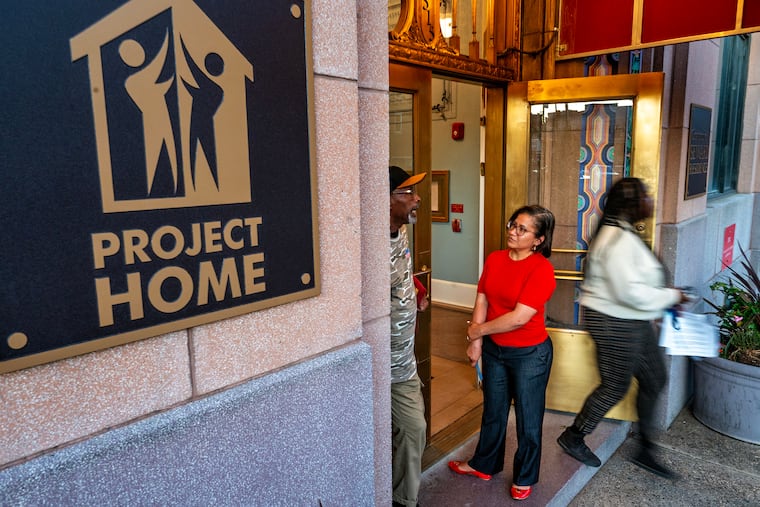
Organizations providing homelessness services were thrown into crisis mode last month when the U.S. Department of Housing and Urban Development announced an extreme shift in funding priorities.
The department has since withdrawn the notice, but it offered a stark preview of an administration willing to gamble with the futures of our most vulnerable neighbors and the crippling changes that could still be coming — unless neighbors make their opposition known, and lawmakers work to stop it.
HUD’s fiscal year 2025 Continuum of Care Competition Notice of Funding Opportunity brought widespread changes and signaled a drastic shift away from proven permanent supportive housing solutions to combat homelessness in favor of transitional housing.
We at Project HOME immediately recognized the danger this posed to Philadelphia’s communities and the people we serve. The outcry from fellow organizations on the front lines and elected officials was swift and fierce. Gov. Josh Shapiro even joined a multistate lawsuit challenging HUD’s move.
While HUD has temporarily paused the Notice of Funding Opportunity, the department remains intent on reshaping funding requirements to reflect new priorities. For now, organizations have been spared the chaotic rush to adjust grant applications based on the changes. But make no mistake: The administration’s intentions have been revealed, and if future funding notices are similar, the consequences could be devastating.
» READ MORE: At Project HOME, providing shelter is just one link in a chain that restores dignity and offers hope | Philly Gives
The changes would disregard proven solutions and could destabilize established programs, putting people’s homes — and their lives — in jeopardy.
The reality is, permanent supportive housing is a proven and effective approach to breaking the cycle of homelessness. Per the Urban Institute, “Rigorous studies consistently show that it is the most effective solution to increasing housing stability and reducing chronic homelessness.”
At Project HOME, we witness the transformative power of permanent supportive housing every single day. Our model has leveraged permanent supportive housing as the foundation of our H-O-M-E model in tandem with opportunities for employment, medical care, and education services. The most critical step in a person’s journey to break the cycle of homelessness is to have a safe and stable place to call home.
Homelessness is the defining crisis of our time.
Consider David, who spent 25 years experiencing chronic homelessness before finding stability and hope in our community. With access to housing and supportive services through our H-O-M-E model, David rebuilt his life — moving into permanent supportive housing, pursuing adult education, and securing employment through our social enterprise program.
Today, David is a pillar of our community: He organizes an annual back-to-school barbecue for neighborhood children and continually looks for ways to help others still struggling on the streets. Whether he’s distributing coats, offering comfort at memorials, or lending a helping hand, David embodies the power of proven solutions to break the cycle of homelessness, restore dignity, and inspire lasting change.
Stories like David’s are not isolated — they are why we remain steadfast in our commitment to permanent supportive housing.
Critics point to a rise in homelessness nationwide as a failure of permanent supportive housing approaches, but the real culprit is a nationwide shortage of affordable housing.
According to the National Low Income Housing Coalition (NLIHC), there were only 35 rental homes that were affordable and available for every 100 extremely low-income households in 2024. That’s a shortfall of 7.1 million rental homes across the country. Without pathways to affordable, permanent supportive housing for people at risk of homelessness, the crisis would be so much worse, and more unsheltered people would be on the streets.
We recognize it is not the administration’s intention to increase rates of unsheltered homelessness in Philadelphia and countless other communities nationwide. No one wants to see more people living on the streets — not neighbors, not service providers, not civic and business leaders, and certainly not the administration. Yet, if these changes go forward, that could very well be the outcome.
» READ MORE: Trump’s executive order on homelessness and mental illness discards what works | Opinion
The reduction in permanent supportive housing threatens to have a drastic effect on people like David. They’d risk falling back into the cycle of homelessness, and local businesses and neighborhoods would be forced to grapple with the effects.
Homelessness is the defining crisis of our time. Yes, we must always strive to improve our response and evolve best practices. But change must be rooted in evidence, not theory.
Philadelphia has made steady progress over three decades and has been on the front line of developing best practices that work.
We don’t want to go backward. We must hold our elected officials accountable and demand proven solutions that benefit communities and honor the dignity and progress of every person.
Donna Bullock is the president and CEO of Project HOME.