How do you prove you’re American?
We are living in the era of the ICE militia, where enforcement and fear trump everything. These are the days when a 5-year-old faces the consequences of not being able to prove he belongs.
“Oohhh Loorrrd, they sent me the one that don’t speak no English.”
I was a young doctor in a North Philadelphia emergency department, and I had just stepped into a patient’s room. I had not even had the opportunity to introduce myself with my usual preamble and open-ended questions.
Instead, I started with: “I speak English. And I’m your doctor. How can I help you today?”
I am an emergency physician, public health expert, healthcare executive, associate professor, and a South Philly neighbor. I’m also the daughter of naturalized United States citizens from India, was born in Delaware, and have lived in Philadelphia for 25 years — longer than anywhere else in my life.
My whole life is here. I was born in the U.S. I studied and earned several degrees here. I built my career in this country. I created my family here. I am American in every way.
Yet, I often have to answer the questions:
Do you speak English?
Yes, very well.
Where are you from?
Philly.
No, I mean originally?
Delaware.
What do they do in your country?
This is my country.
My husband is from Italy. He left the Tuscan sun for me — or us — when I was in the midst of my medical education and training in Philadelphia. Every time we went to the immigration office for him to do interviews or paperwork, I was the one who was questioned.
The underlying question is clear in every instance: Do you belong here?
In most cases, I shake it off. Disregarding the subtext, I feign a smile in place of rolling my eyes or shaking my head. My inner dialogue is usually a bit more sharp-edged.
But until the last few months, the questions never really evoked fear or a lack of safety.
In the America I have known my whole life, belonging wasn’t something you had to prove in real time. Citizenship carried a presumption: that you could move through your day without interrogation and without having to explain your existence to strangers or the state.
Times are different.
What changed was not the question itself, but what it now implies. Instead of innocent until proven guilty, the questions precede evidence. Instead of being governed by laws, we are ruled by suspicions. Everything feels backward.
We are living in the era of the U.S. Immigration and Customs Enforcement militia, where enforcement and fear trump everything. These are the days when a 5-year-old, standing alone with a blue bunny snow hat and Spider-Man backpack, faces the consequences of not being able to prove he belongs.
When an intensive care unit nurse, who cares for the sickest veterans, offering critical care to heal them back to life, is attacked and shot while trying to help someone else. When merely voicing dissent and disagreement, or being called a b—, is enough to risk being shot to death.
If service, citizenship, and care do not protect you, then it seems we are accepting a hierarchy of who deserves safety — and who does not.
In movies or on the news, people in other parts of the world or other times in history had to carry their identification documents at all times, but not here. Here, my Americanness was something I carried in my saunter or stroll — the confidence that I can exist in public space without explanation.
But maybe that was until now.
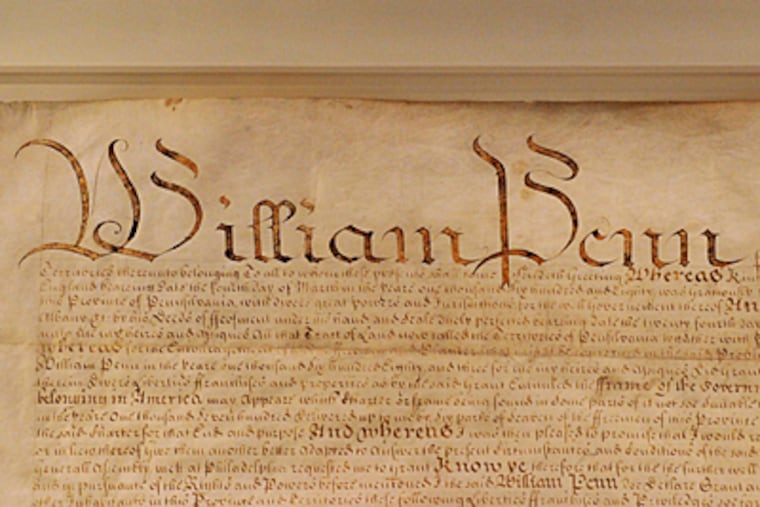
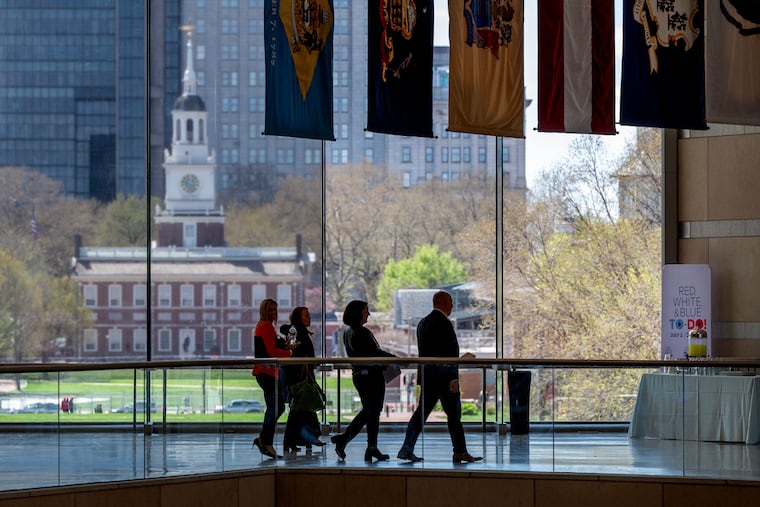
I live on the same street where the U.S. Constitution was signed. In my hometown, I am reminded daily about how this country came to be — through determination, courage, intention, and a defiant line in the sand of what would be tolerated.
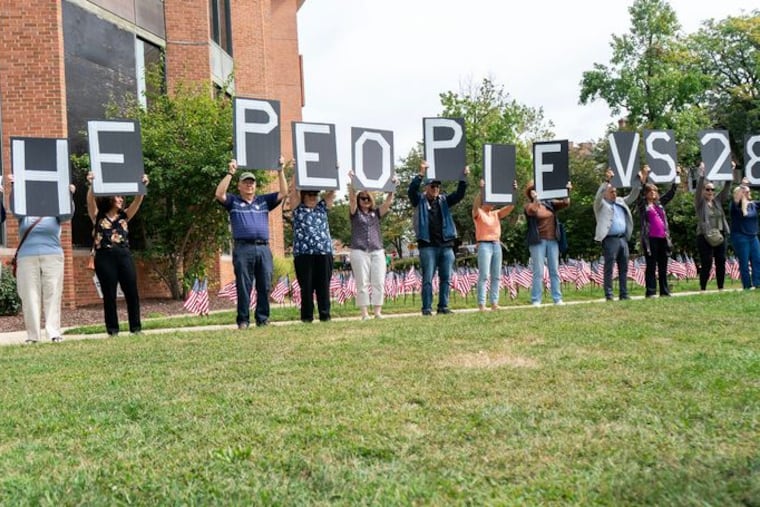
I believe in “We the People,” in civil liberties, and in the rule of law. I believe that we all deserve equal protections, regardless of race, origin, or religion. I do not believe power should go unchecked or that authority can reign in isolation or concentration.
And despite being incessantly fed a narrative of how deeply divided the United States of America has become, I believe in civilian supremacy — that force exists to serve the people, not silence them.
Being American was never about how you look or sound. It’s about how you demonstrate your beliefs through your actions. We speak, write, protest, and make our voices heard through every avenue.
We vote and hold our elected officials accountable for their actions — including their silence and complicity. We show up, socially and morally, for our neighbors. I spend my money in businesses whose owners share my values and beliefs.
I believe in and honor those who have fought for the freedoms I have always enjoyed. And I am prepared — as I think my city around me is — to defend that freedom and the principles that make us Americans, even when fear might tempt us to look away or cede our power.
I was born in the land of the free and the home of the brave. And I’m ready to prove it.
Priya E. Mammen is an emergency physician, healthcare executive, and public health specialist who helps the nation’s most impactful companies integrate clinical integrity at scale.

- How do you prove you’re American?
- We are at a generational inflection point in healthcare. It’s time for Gen X physicians to assert themselves as the stewards of our profession.
- Have we decided health is a perk?
- As our central source of scientific guidance loses credibility, other experts step up
- Who will write our history?

Inquirer Opinion Newsletter