‘The Talk’ — about how to stay safe when dealing with law enforcement — now involves ICE
Immigration arrests have forced parents to prepare children for separation and survival.

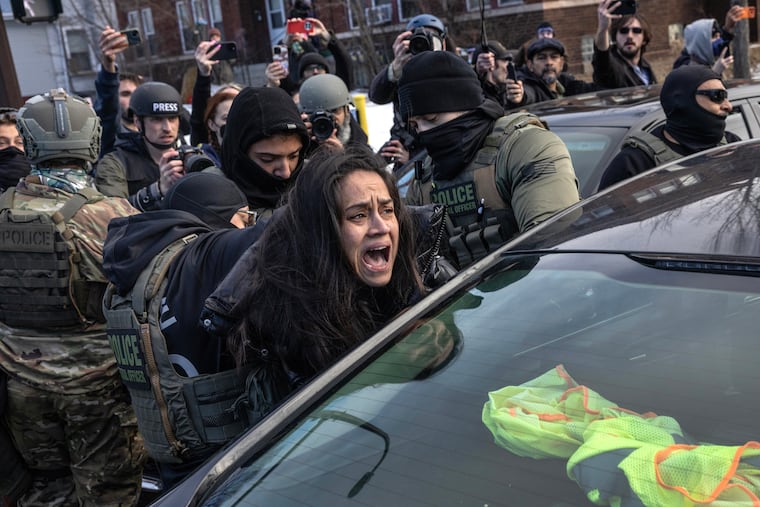
Black parents call it “The Talk” when they tell their children how to interact with police. But now, with immigration arrests surging by 600% last year, and with 32 people dying while they were in U.S. Immigration and Customs Enforcement (ICE) custody last year, according to the Guardian, those talks have taken on new meaning in the Latino community and beyond. As of March of this year, that number is already at 46 — the highest in 20 years — according to a KFF report.
These talks — las charlas in Spanish — have quietly become family disaster plans. Who will care for the children if parents get detained? Do children know an adult to call? How can we access information about their medical conditions, vaccinations, allergies, medications, favorite foods, and indispensable stuffed animals that new caregivers need to know about?
In my professional life, I care for immigrant families and work to uplift immigrant communities. I’m also a first-generation immigrant myself: a fiercely proud Latina and American.
My mind these days is heavy with the talks happening — and needing to happen — in our community.
Who will care for the children if parents get detained?
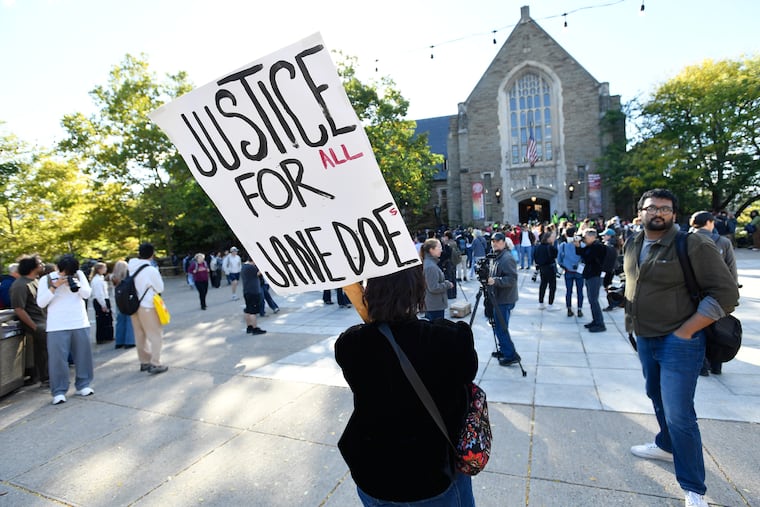
We need to make sure everyone knows their rights and, as a community, collectively support affected families. Federal law requires ICE agents to give detained parents the right to decide how to keep their children safe. The National Immigration Law Center and the Center for Law and Social Policy have published guidance on what detained parents should know if they get separated from their children.
Many issues involve school. Immigrant parents may fear going outside, even for those with long-standing, stable residency status. Many are not taking their children to school — or fear driving to them — because of the possible presence of federal agents.
As a result, parents may need to think through new emergency contacts for administrators and consider who can pick up their children from school if they are detained.
When immigration raids sweep through a community, the impact shows up fast in schools. During the surge in immigration raids last year, student absences jumped 22% in California’s Central Valley, a Stanford study found.
The raids also hurt the students who show up. Test scores fell last year among students in Florida who speak Spanish at home — most of whom are American citizens, according to economists with RAND and the University of Rochester. The largest declines occurred in middle and high school, suggesting older students’ education may be most affected by aggressive immigration enforcement.
When virtual schooling isn’t an option, a perfect storm is created that, if unchecked, will leave our kids with very few options. As a result, schools may need to consider intentional policies that keep children safe and minimize trauma.
Families must also grapple with how to talk to their children amid the toxic stress that has now become a daily sludge in their lives. How should we reassure children in this era of physically aggressive enforcement when safety feels fragile? When lethal violence is captured on cell phones and spread on social media for all to see?
Talking to children about immigration enforcement has become such a public health issue that the American Academy of Pediatrics recently issued recommendations to help parents navigate these conversations at home.
Because children see and hear everything.
At the end of the day, I am also a mother. And so these discussions — which are often painful — are also happening at home.
The other day, my sons and I were picking up groceries for families who were too scared to shop.
My 9-year-old said: “Mami, we’re brown, too, and you’re an immigrant. Aren’t you worried?”
“Yes,” I told him. “But I have privileges these families don’t.”
I didn’t mention that, like many others who can, I now carry my passport with me, just in case.
Instead, at home, we talk about how this era of enforcement has arisen, in part, because of the myths many people believe about the immigrant community.
Because it is not criminals who are being targeted. It is our community.
In fact, over 75% of immigrants hold a legal status. Research shows that immigrants commit crimes at lower rates than U.S.-born individuals, and contributed $1.7 trillion to the economy in 2023. They open more businesses and file more patents than U.S.-born people, as well.
We also tell our children that our mother tongue is beautiful, and we will keep speaking it. That our culture is rich and makes our country far more interesting. We speak about the musical prowess in my homeland and our world-renowned arepas. That we will do everything in our power to keep our families safe. That, as the culture-shifting artist Bad Bunny recently reminded us, the only thing more powerful than hate is love.
As of two months ago, almost three-quarters of those detained by ICE in the past year have no criminal conviction.
This is why the dialogue I’m describing is so crucial. We must check in with our children, our families, and in the places we work and congregate.
Because it is not criminals who are being targeted. It is our community.
Conversation reduces trauma and promotes resilience, especially in children. So we will keep having las charlas. And we hope leaders will act to maximize safety and offer families support.
Diana Montoya-Williams is a neonatologist at Children’s Hospital of Philadelphia and CHOP PolicyLab, and a senior fellow of the Leonard Davis Institute of Health Economics at the University of Pennsylvania.