‘Nobody wants to flee their home’: Guinean asylum-seekers in Philly are in limbo, and homesick
As Trump’s immigration executive orders render immigration statuses unclear, Guineans in Philadelphia continue to monitor the dangerous situation in their homeland.
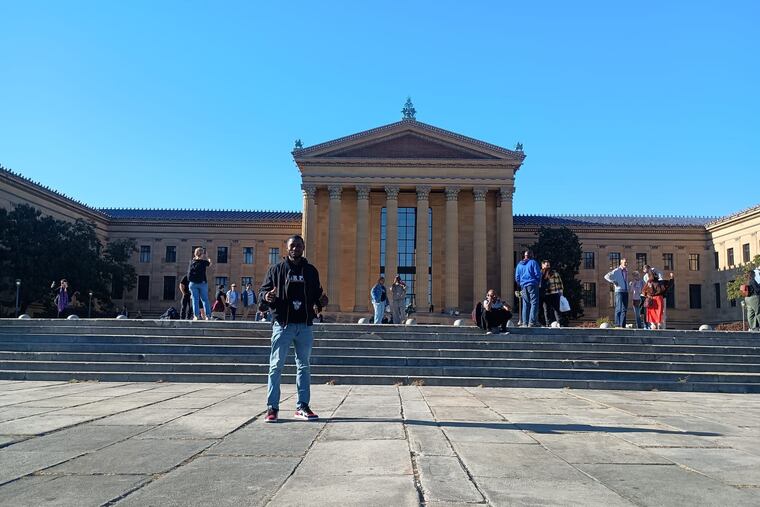
In 2023, Philadelphia welcomed approximately 1,000 West African asylum-seekers to the city. Many of these new arrivals, the majority French-speaking, were from the small nation of Guinea — sometimes known as Guinea-Conakry — a place of great natural beauty and rich culture, and the birthplace of Yarrow Mamout, the subject of a Charles Willson Peale painting at the Philadelphia Museum of Art.
Guinea has seen political turmoil since the 2021 coup d’état led by Mamady Doumbouya. Initially welcomed by some Guineans, the military junta Doumbouya leads promised to restructure the government with a focus on national unity. Over time, however, Doumbouya’s regime started curtailing freedom of speech, restricted access to the internet, and has allegedly used violence, torture, and imprisonment to quash opposition. Members of opposing parties and activists have faced the difficult choice of whether to remain where they and their families are at risk, or to leave the country and find safety elsewhere.
Like Philadelphia. But 4,000 miles does not cut the ties you have to home and the people you risked your life for. Here, Guinean political asylum-seekers like Mamadou B. and Mamadou L. — for confidentiality reasons, I’m using only the initial of each surname — navigate the complicated process of seeking asylum in the United States during an administration change while also watching the human rights violations perpetrated in their country from afar.
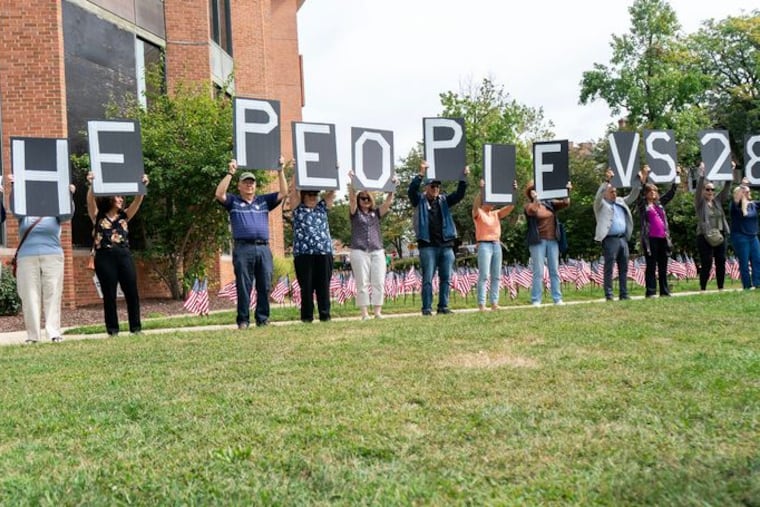
Mamadou B., 33, a shop owner in Guinea and mobilization secretary for his region’s grassroots division of the UDFG (Union des Forces Démocratiques de Guinée), arrived in the United States in 2023. He became politically active in 2009, after the Sept. 28 massacre in Conakry, Guinea’s capital, in which more than 150 people were killed, injured, arrested, or were the victims of sexual violence. He joined the UFDG in 2016 to take part in the fight against human rights violations.
Mamadou L., 24, a political organizer and retailer in Guinea, also arrived in Philadelphia in 2023. He was a member of the Société Civile Guinéenne, whose mission is to promote democracy, fair governance, and peace. A gifted student, he started university at the age of 16 and was inspired to pursue political science by the legacies of Nelson Mandela and former President Barack Obama.
“It was in 2022 that I understood [Doumbouya] didn’t want to go,” Mamadou L. told me in French. The junta leader had started imprisoning individuals without due process and abducting opposition leaders. Activists Oumar Sylla and Mamadou Billo Bah, who were abducted, are still missing.
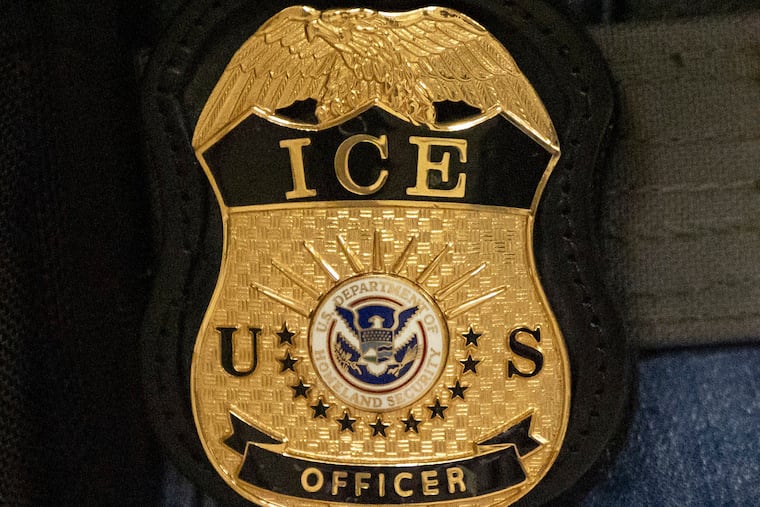
Both Mamadou B. and Mamadou L. are seeking protection through the defensive asylum process — meaning they arrived at the U.S.-Mexico border in 2023 without documentation, and immediately expressed that their lives were in danger. They were detained by U.S. Immigration and Customs Enforcement (ICE) and subjected to a “credible fear interview” by an asylum officer, assessing the reliability of their claims.
You’ve been in prison. You’ve been tortured. You arrive [in America], and you don’t even have the time to rest because the clock is ticking.
If the asylum officer deems the fear credible, an asylum-seeker has the right to enter the country and receive a work permit and Social Security number through the Immigration and Nationality Act. This process is legal and has been codified in U.S. law for decades.
Asylum-seekers have one year to claim asylum once released from detention. In that year, they must file paperwork, find a lawyer, locate safe and stable housing, survive until their work permit comes in, learn a new culture, and navigate language barriers.
Mamadou L. is still waiting for his permit.
Mamadou B. waited for over a year for his work authorization. During that time, he volunteered at Lutheran Settlement House’s food pantry and Love Your Park, and took English classes at Beyond Literacy, relying on the community for his necessities.
“All the journeys that you have to take,” he told me, “going through Mexico, arriving at the border. All of the difficulties. You have too much stress. You’ve left a family behind. You’re thinking about all of it. You’ve been in prison. You’ve been tortured. You arrive [in America], and you don’t even have the time to rest because the clock is ticking.”
President Donald Trump’s recent executive order — “Protecting the American People Against Invasion” — directly targets asylum-seekers like Mamadou B. and Mamadou L. who, while navigating the asylum process, may be without documentation. This order has also halted new asylum applications.
“I’ve done all I was supposed to do,” Mamadou L. said about the legal process. “It’s now in the hands of God.” Courage, friendship, and community keep him going. “As long as there’s life, there’s hope,” he told me, but it has been particularly challenging feeling so physically removed from family and friends.
As long as there’s life, there’s hope.
Thankfully, modern technology has allowed him to keep in touch with those he left behind in Guinea. He tells the young people he speaks to in his home country that Guinea is a treasure, that they should fight for justice and stay on the right side of history.
Mamadou B. also thinks frequently about the situation in Guinea. He describes it this way:
“You’re in a boat, and there are two levels. Those on the lower level have no water to drink. The ones on the upper level do. The lower-level passengers ask for water, but the upper-level passengers deny them. Eventually, the lower level decides to pierce the side of the boat to get water because they are so thirsty. If they pierce the boat, will the boat not sink? And who will be to blame? In the same way, if we remain silent and say nothing until Guinea goes up in flames, everyone will suffer the consequences, and no one will escape the disaster.”
Then he added: “Nobody wants to flee their home. I was about to get married, but my life was in danger. The military came to my house and threatened my family. We decided together that I had to leave because it wasn’t the first, second, third, or even the fourth time.”
Louisa Benatovich is a social work master’s student at Temple University and case manager at Asylum Pride House, a housing program for LGBTQ asylum-seekers. She was also a bilingual intake coordinator at Beyond Literacy, where she met many Guinean asylum-seekers.