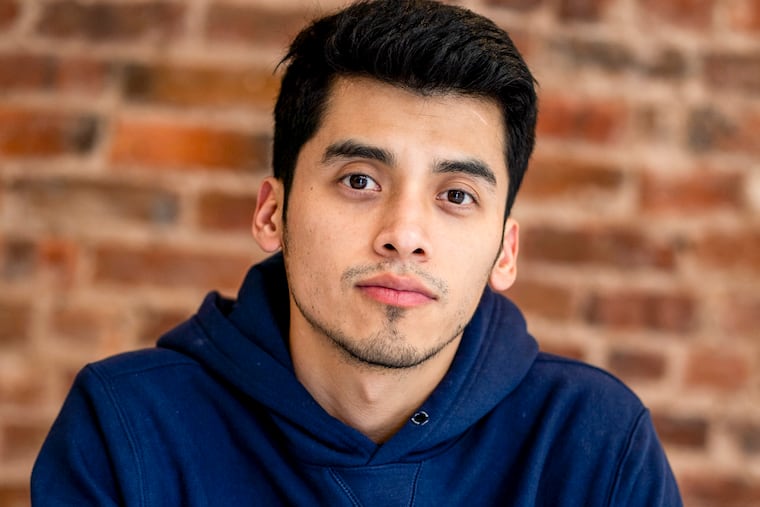
I’m a Philly native living in Dubai. As fighting rages on around my adopted home, I realize the war I grew up in never made the headlines.
It wasn’t until bombs started falling in Iran that a son of Germantown fully grasped that the gun violence he witnessed while growing up was anything but normal.
Where I grew up, in Germantown right by Chew and Chelten, you learn early how to read the energy of a block before you even understand why.
You know when something feels off. You know when to move, when to stay quiet, when to mind your business. That kind of awareness doesn’t leave you. It just becomes part of how you exist.
I didn’t realize how much I carried from there until I left, and now, 10 years into living in Dubai, United Arab Emirates, it’s showing up in ways I didn’t expect.
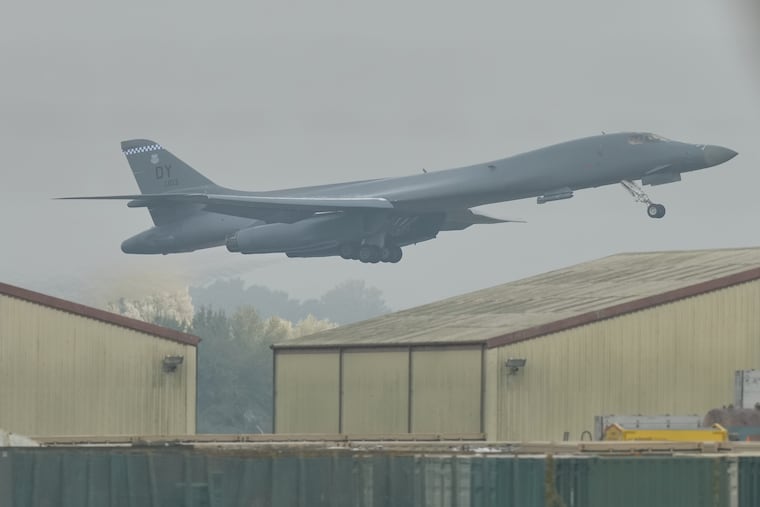
Since the first bombs started falling in the Iran war a month ago, people have been asking me if I’m safe. They see the headlines, and they assume the worst.
My phone’s been going off more than usual. Family, friends, group chats, everybody checking in like I’m in the middle of something falling apart. And I get it.
From the outside looking in, that’s what it probably looks like. But the reality on the ground feels very different. There’s tension, sure. You can feel it in conversations, in how people pay a little more attention than usual, in how news spreads fast and sometimes not always accurately.
But the city itself is still functioning. People are working, praying, creating, moving. Life hasn’t stopped.
And that’s the part that’s been sitting heavy on me, because I come from a place where life doesn’t stop, either, even when it probably should.
What I didn’t expect was how this moment would force me to compare two realities that aren’t supposed to feel similar, but somehow do.
In the first couple of weeks of the war, as the region dealt with a totally unexpected change in the geopolitical landscape, the reported death toll was still in the single digits. Seven U.S. service members had been lost through March 11; six more have died since then. And one life is too many, always. That’s not something to gloss over.
But I can’t ignore what that number means to me, coming from Philadelphia: Seven people … that’s a weekend back home. Sometimes it’s less, sometimes it’s more, but it’s not unusual. Those deaths — too often involving guns and too often impacting young Black men — don’t stop the city. They don’t dominate global headlines. They barely shift the rhythm.
That realization doesn’t sit right with me. It never has.
Over the past six years, Philadelphia has averaged more than 400 homicides a year. At the height of the pandemic — from 2020 to 2022 — the city averaged 525 homicides annually. Whole neighborhoods carrying that weight quietly. An undeclared war wiping out generations of young people. Families adjusting to loss in ways that don’t get international attention.
It becomes something people learn to live around. You hear about it, you react for a moment, and then life keeps moving. That’s the part that’s hard to explain to people who haven’t experienced it. The normalization of it. The way something that serious becomes part of the background.
So now I’m here, in a place the world is labeling as unstable right now, and I’m walking through a city that still feels structured, still feels controlled. The government of Dubai has built systems where safety isn’t something you question every day. It’s expected. Crime is low. Order is visible. You see it in the smallest details. People leaving their belongings without worry. Families out late. A general sense that things are being managed, even when there’s pressure around the region.
That contrast is hard to process. If I’m being honest, it’s emotional in a way I didn’t expect. Because part of me feels like I’m comparing two things that shouldn’t be compared. A war and a city. A region and a neighborhood. But the numbers don’t lie, and the feeling doesn’t, either.
It forces you to ask uncomfortable questions.
Why does one situation get labeled as a crisis while the other becomes routine? Why do we accept certain levels of violence as just part of life, depending on where it happens? Why did I grow up thinking that was normal?
And I still carry pride for where I’m from. Germantown made me who I am. It gave me awareness, resilience, the ability to navigate spaces that aren’t always built for you.
But it also gave me a version of reality I didn’t question until I stepped outside of it. Until I saw what it looks like when systems actually protect people at scale. When safety is designed, not left to chance.
That doesn’t mean everything here is perfect. It’s not. There are moments when the tension feels closer than you’d like. Moments when conversations shift, and people are clearly paying attention to what’s happening beyond the borders. You don’t ignore that. You feel it. You carry it in a different way.
Why do we accept certain levels of violence as just part of life depending on where it happens? Why did I grow up thinking that was normal?
But it’s not chaos. Not even close.
And maybe that’s the hardest thing to explain to people back home: that I can be in a region experiencing real geopolitical tension and still feel a level of day-to-day safety that I didn’t always feel growing up. That’s a complicated thing to say out loud. It sounds wrong if you don’t understand it. But it’s real.
My Islamic faith was a large part of what called me to Dubai. Islam wasn’t something I discovered later in life. It was already around me, in the rhythm of Germantown, in the discipline, in the sense of accountability that follows you even when nobody’s watching.
That foundation is part of why I eventually moved to the United Arab Emirates, not just for opportunity, but to be in an environment where my faith wasn’t something I had to carve out space for. I wanted alignment. I didn’t fully understand what that meant at the time, but I knew I needed it.
Ten years out here has changed how I see everything. Not just the world, but Philadelphia, too. It made me realize that what we accept as normal doesn’t have to be. That there are different ways to build cities, different ways to prioritize people, different outcomes that are possible when things are structured intentionally.
I still think about Germantown all the time. The people, the energy, the talent that’s there. That doesn’t go anywhere. But I also think about what could change if more people had the chance to step outside of it, even for a moment, just to see something different.
Because sometimes, perspective is the thing that hits you the hardest.
Not the headlines. Not the noise. Just the quiet realization that what you survived wasn’t supposed to be normal in the first place.
Albert M. Carter is a music entrepreneur, author, and podcaster who cofounded Hip Hop University, the Emirates Music Summit, Wave Sound Studio, and AudioSwim Music Distribution. He is also a member of the Recording Academy (Class of 2024).