Cancer patients have one more thing to worry about: the war in Iran
While oil and energy dominate headlines, the impact of this conflict on access to medical care deserves equal attention.
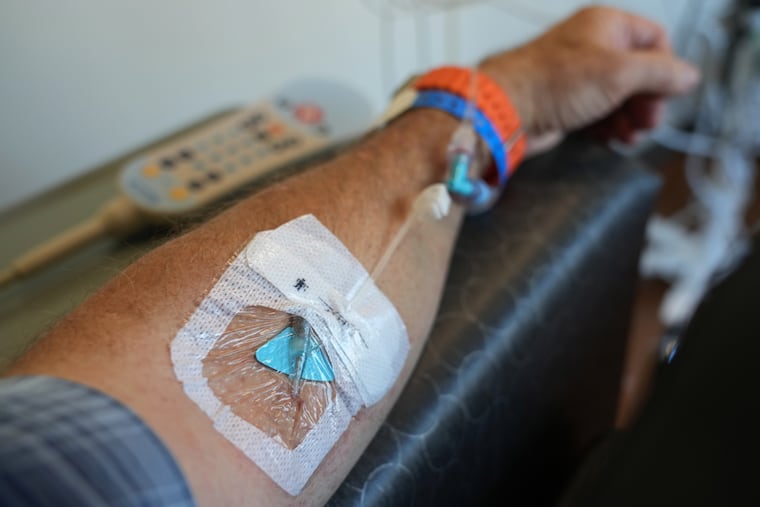
Charlie, a 65-year-old retired sergeant major, looked at me as I administered an IV infusion. The bag contained a biosimilar — a highly complex, engineered medicine designed to target and destroy cancer cells.
He had driven more than 60 miles to receive the treatment keeping his Stage 4 colon cancer at bay. Yet, it may soon be a war oceans away that determines whether Charlie and patients like him continue to receive timely cancer care.
The raw materials used for a range of medical products, from the IV bags to the biosimilars used to treat Charlie’s cancer, are moved through the Strait of Hormuz. The same strait — currently throttled by war — that sees nearly one-fifth of the global oil supply and other critical resources modern health systems rely on.
American cancer patients have now become entangled in the disaster of this conflict via the delicate balance of the global supply chain.
While shortages have not begun, if the conflict continues, scarcities of multiple components may impact Americans’ access to critical care.
» READ MORE: Let experienced international doctors practice in Pennsylvania | Opinion
Biosimilars are a standard part of treatment for many major cancers, including those of the breast, lung, and blood. Many of the ingredients and finished medicines behind these therapies move through Gulf logistics hubs and the Strait of Hormuz. As the war in the region forces delays, rerouting, and outright pauses in shipments, the oncology supply chain starts to look increasingly brittle.
Biosimilars are particularly vulnerable to delays, as they are profoundly temperature sensitive. If these disruptions persist, early analyses warn that hospitals and cancer centers could start to see shortages and treatment delays for temperature‑sensitive cancer drugs within a matter of weeks.
Oncologists across the country rely heavily on drugs such as these to help cure or control cancer. Any delays in timely arrivals can erode the effectiveness of chemotherapy, and disruptions to the timing of cancer treatments have been shown to be deadly.
Considering up to 40% of Americans get cancer in their lifetime, it is likely that someone you love is alive because of timely access to a drug whose supply chain is now at risk of disruption.
Moreover, any single-use plastics — IV bags and sterilization packaging — required for 21st-century cancer care rely on Gulf-origin hydrocarbons. Single-use plastics are essential because they ensure sterile, contamination-free delivery of chemotherapy — protecting patients from life-threatening infections. Yet, the U.S. healthcare system operates on a “just-in-time” inventory model, often carrying no more than about a 30-day supply under normal conditions — leaving almost no margin when disruptions strike.
Another consideration for how this conflict hurts patients at large is how oil shortages will impact Americans’ access to cheap generics. Most prescriptions in the U.S. are generic, and nearly half of those are made in India, which relies on the Strait of Hormuz for about 40% of its crude oil. That oil feeds the petrochemical base of India’s pharmaceutical manufacturing, helping keep these generics affordable.
Affordable generics are critical choices for Americans who want to avoid a cancer-related bankruptcy. Medicare offers a vital chemotherapy for $1,700 per month, while the same therapy as a generic drug is $13.18 a month.
To be sure, there are no current shortages, and many providers operate with minimal but adequate stocks of supplies, drugs, and cancer treatments. However, the exact timeline of how the war with Iran could impact American medical access is nearly impossible to predict — not because the system is resilient, but because it is already so dysfunctional.
The war is stress-testing a society that already has difficulty providing its people with fair drug prices and adequate access to cancer care. Currently, drug prices are controlled by opaque negotiations between drug companies and pharmacy benefit managers, middlemen who may prioritize their own profits over what’s best for patients.
» READ MORE: 10 questions about the war with Iran | Opinion
While drug prices are likely to rise as the oil crisis pushes up transportation and manufacturing costs, how much those added movement costs will ultimately hit the bottom line will remain murky under the current system.
Moreover, patients — particularly those in rural areas — already face cancer care structured on scarcity: Two of every three U.S. counties have no easily accessible oncology providers, and nearly 2% of cancer patients decline treatment altogether because of the time required to access care.
These existing gaps make it difficult to measure how global disruptions will surface in practice. But that does not make the risk any less real. While oil and energy dominate headlines, the impact of this conflict on access to medical care deserves equal attention.
No matter the direction of the war — or our president’s hand in the current global crisis — one cannot forget America’s cancer patients. They deserve access to a global supply chain that supports their survival rates.
Nitya Thummalachetty and Pramod Pinnamaneni are founders of the Nau Project, an advisory firm to help navigate the complexities of the healthcare system. Pinnamaneni is a practicing oncologist.