Moving beyond supervision: It’s time to rethink juvenile probation
Philadelphia’s upcoming Juvenile Probation Accountability Coalition will help redefine accountability and safety for young people across the nation.
Most people hear the phrase “juvenile probation” and think of second chances. They imagine a young person avoiding detention and getting the support they need to stay on track. It sounds compassionate, reasonable, and like progress. But for thousands of young people in Philadelphia and hundreds of thousands across the country, juvenile probation is not freedom; it’s a trap.
For many youths, probation is not an opportunity to grow, but feels like walking through life with a countdown clock. Every interaction carries risk. Every mistake, no matter how small, can be interpreted as defiance or as a violation of probation. Instead of stabilizing young people, probation often destabilizes them, pulling them deeper into systems that punish rather than support.
What is described as a “community-based alternative” becomes a constant reminder that freedom is conditional and fragile.
Juvenile probation places youth under a long list of conditions that most adults couldn’t realistically follow. There are weekly check-ins, strict curfews, school mandates, drug tests, random home visits, and the constant threat of detention if they mess up.
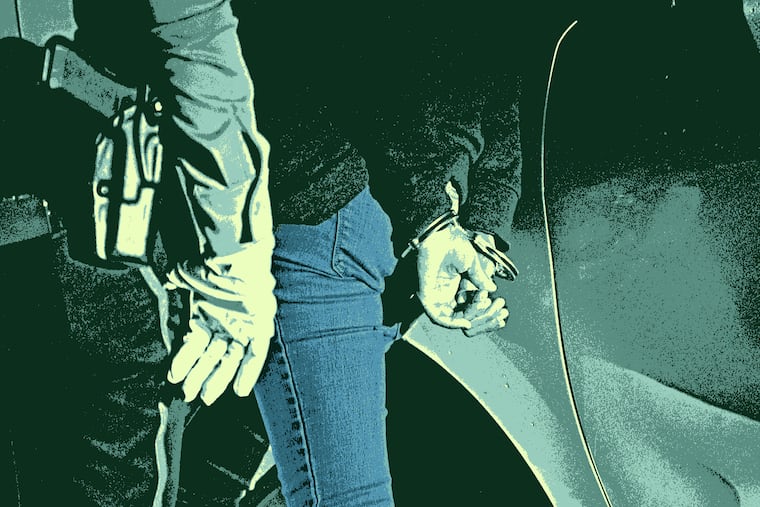
Missing an appointment, being late, skipping school during a crisis, or being around a family member who is also under supervision can all be labeled “technical violations.” These violations, while not new crimes, can send a young person straight to juvenile detention or state secure placement.
The public rarely sees this reality, but young people and their families do.
We both work at YEAH Philly (Youth Empowerment for Advancement Hangout), which has worked with more than 300 Philadelphia youth involved in the legal system, and we see the harm every single day.
Probation doesn’t work the way people think
A common narrative around juvenile probation is that it was designed to divert youth from incarceration and connect them to guidance and resources. The reality is different.
Instead of being a short-term intervention, probation has become a default response applied broadly, regardless of a young person’s actual risk or needs. What was meant to be rehabilitative has become expansive, punitive, and deeply entangled with punishment.
Across the country, more than 150,000 kids are on juvenile probation, many for minor or “status” offenses like skipping school or missing curfew, not violence. Black youth are disproportionately targeted, placed on probation more often, kept on longer, and violated more quickly.
In a large study of over 18,000 youth placed on probation for the first time, about 15% broke a probation rule without committing a new crime. Black youth, who made up just over half of the group, were written up sooner than white youth and were more likely to be violated at any point during supervision.
The system claims to be rehabilitative, but the numbers tell a different story. In many states, more young people are punished for technical violations than for new offenses.
Youth on probation often remember only a fraction of the rules they are expected to follow, yet remain under court supervision for months or years after any public safety benefit exists.
A Pew Charitable Trusts study found that in one state, after the first 10 months of probation supervision, there were more arrests for technical violations than for new offenses, and Black youth were more likely to be placed on probation rather than diverted to non-court services, even when offense severity was comparable.
This is what researchers describe as “net-widening,” where more youth are pulled into the system, more rules are imposed, more pipelines to jail and prison, and more opportunities for failure without improved outcomes.
What we see at YEAH Philly
Every week, young people come to us terrified of making a mistake. They are trying to navigate a system built on compliance while also surviving poverty, school instability, community violence, and unmet mental health needs.
We work with teenagers who miss appointments because SEPTA was delayed, or because they have no reliable way to travel across the city. We see youth violated for missing school when the real issue was a lack of clean clothes, food insecurity, or an unsafe home environment.
We support young people placed on probation not because they caused harm, but because they needed help; help that juvenile probation was never designed to provide.
These are not failures of individual responsibility; they are failures of a system that confuses surveillance with support and punishment with accountability. Juvenile probation wears the mask of care, but it operates through control and coercion.
Why probation can’t be ‘reformed’
Cities have tried for decades to tweak juvenile probation with fewer conditions, shorter terms, or trauma-informed training. While these reforms may reduce some harm, they do not change the core structure of probation itself.
Juvenile probation still polices adolescence instead of supporting it. It punishes normal teenage behavior, responds to trauma with surveillance, and relies on the constant threat of incarceration to enforce compliance.
A system built on control cannot be transformed into one rooted in care through policy tweaks alone. There must be a complete overhaul to create something better.
YEAH Philly’s approach through our Violent Crime Initiative and healing-centered youth support model shows what is possible when young people are surrounded by genuine care rather than constant monitoring.
When youth have trusted adults, access to transportation, meals, basic needs, job opportunities, therapy, mediation, and a safe place to go every day, they grow. They build accountability because they feel connected, not controlled.
Community-based models across the country show the same results, where healing and restorative approaches reduce reoffending more effectively than supervision ever has.
Ending juvenile probation is not a radical idea.
People hear “end juvenile probation” and fear it means “end safety.” But abolition does not mean abandoning young people. It means abandoning systems that have consistently failed them.
Abolition means replacing surveillance with support, punishment with opportunity, control with care, and isolation with belonging.
Crafting a new vision
In the coming months, YEAH Philly and the Gault Center, alongside youth, families, and researchers, will launch the Juvenile Probation Accountability Coalition.
The coalition will expose the harms of juvenile probation through youth-led research, hold systems accountable for the trauma they create, elevate community-based accountability models, and push for policies and models that move us beyond probation.
Our goal is a national blueprint for real public safety rooted in dignity and care.
Philadelphia has an opportunity to lead the nation in redefining accountability and safety for young people. We can build systems that help youth grow instead of continuing to invest in systems that wait for them to fail.
Ending juvenile probation is not a radical idea. It is an overdue commitment to young people’s futures.
It is time to move from supervision to support, and from punishment to possibility.
The Juvenile Probation Accountability Coalition is coming — and this is just the beginning.
Kendra Van de Water is the cofounder and co-CEO and Mona Baishya is the Violent Crime Initiative research director at YEAH Philly. For more information about the Juvenile Probation Accountability Coalition and the forthcoming work, please contact Van de Water (kvandewater@yeahphilly.org) or HyeJi Kim (hkim@defendyouthrights.org).