Resolve to save a life in the new year. Register as an organ donor.
According to the National Kidney Registry, more than 90,000 people in the United States are currently waiting for a donor kidney. In the Greater Philadelphia area, that number hovers around 5,000.
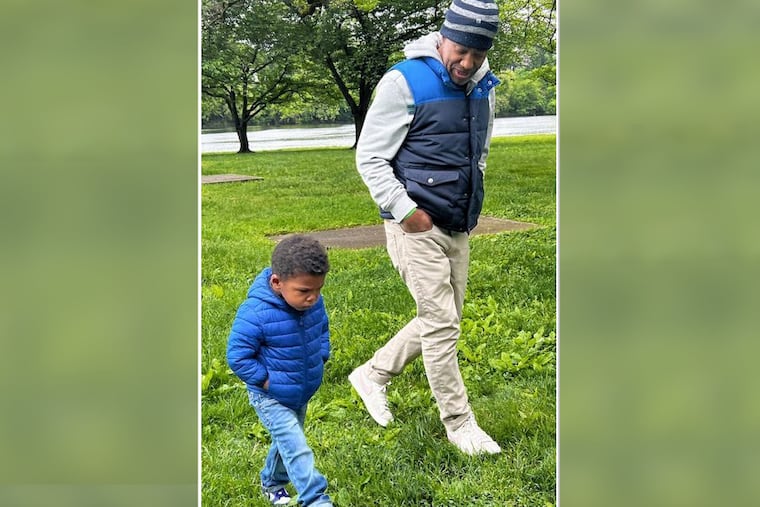
My husband, Phil, a New Jersey native, father of three children under 7, and former Penn State University football receiver, needs a kidney.
According to the National Kidney Registry, more than 90,000 people in the United States are currently waiting for a donor kidney. In the Philadelphia metropolitan area, that number hovers around 5,000.
My husband suffered an acute kidney injury in December 2023 caused by liver rejection medicine, a complication that affects 4% of transplant recipients.
Chronic kidney disease is common in the U.S., affecting one in seven adults. Most people don’t feel symptoms at first, but if it gets worse, it can lead to kidney failure and serious health problems. Dialysis is a lifesaving treatment for kidney failure, but requires the patient to be hooked to a dialysis machine for hours at a time, often for several days each week.
The small joys and normalcy of daily life quickly shift around dialysis schedules and doctors’ appointments.
It’s been nearly two years since we were placed on the transplant list, and our three small children rely on us to keep their world from being turned upside down even more than it already is.
They see the dialysis boxes stacked taller than they are in the front room, the catheter that we have to be careful of during playtime with their dad, and the frequent hospital visits because of a weakened immune system. Our daughter is even able to set up the peritoneal dialysis machine with help from Phil.
As a partner of someone on the transplant list, my grief is silent and omnipresent. I find myself torn between supporting my sick husband, bringing my best self to the classroom each day, and ensuring our three little ones can simply be kids.
When I drive to work, I see the billboards off I-95 for others who need a kidney; the wives and husbands and grandchildren and parents who are feeling just as overwhelmed and hopeful as I am. Maybe there is a match out there; perhaps someone will see their billboard, car magnet, or transplant profile and respond.
Like so many other families with someone on the transplant list, I help the best way I can. I work to know what the weekly lab numbers mean, whether my husband’s sluggishness is due to low iron and blood count, and if there are early signs of an infection.
Each December, his weakened immune system seems to lead him to the hospital, where he spends more time than our family would like. There is also guilt in not being able to know everything, and how best to help him in every critical time of need.
Throughout this journey, Phil remains ever the optimist. Always looking on the positive side, while struggling to stay awake or suffering from terrible headaches and exhaustion. He remains diligently waiting and hoping things will turn around.
But it has been two years, and we are still waiting.
There are ways to help; for example, getting a donor match screening, as my friend, Meredith, did. She donated with extraordinary grace to a stranger last April, and this year, her family member received a kidney thanks to her advanced donation.
To become an organ donor, you have a few options:
Join your state’s registry. Visit the Donate Life America website to sign up for your state’s online donation registry.
Use your driver’s license. Declare your intentions to be an organ donor on your driver’s license.
Start the donor screening process. On the Donate Life America website, you can also scroll down to “Start the donor screening process.”
Donate through the National Kidney Registry. If you want to donate a kidney to someone in need, you can visit the National Kidney Registry.
Hesitation about organ donation, whether during life or after death, can stem from cultural beliefs, religious views, or medical mistrust. Many common myths about organ donation have long been disproven, but becoming a living organ donor is a demanding process, with a full return to normal taking eight weeks.
According to the United Network for Organ Sharing, 11 people die every day waiting for a kidney.
The truth remains simple: You have the power to save a life, to restore a family, and to give someone like Phil the most extraordinary gift of all.
Morgen Perdue-Collins is a Philadelphia teacher, and her husband, Phil, is still looking for a match. You can visit his kidney donation page here. And visit the National Kidney Donation site here.