Want to understand OpenAI becoming a public benefit corporation? Look to ‘KPop Demon Hunters.’
OpenAI isn’t HUNTR/X or even the Saja Boys after its recent corporate restructuring. It’s more like the soul-stealing Gwi-Ma, who wins by pretending to deliver good.
For anyone trying to follow OpenAI’s latest corporate restructuring, here’s the breakdown from a professor of entrepreneurship who studies social enterprises.
The nonprofit OpenAI Foundation controls a for-profit company that just restructured into a public benefit corporation (OpenAI Group PBC). The company says this new form will “benefit everyone” by allowing OpenAI to cure diseases and build “resilient AI.”
Sounds noble, right? Stick with me, and I’ll explain what is really happening.
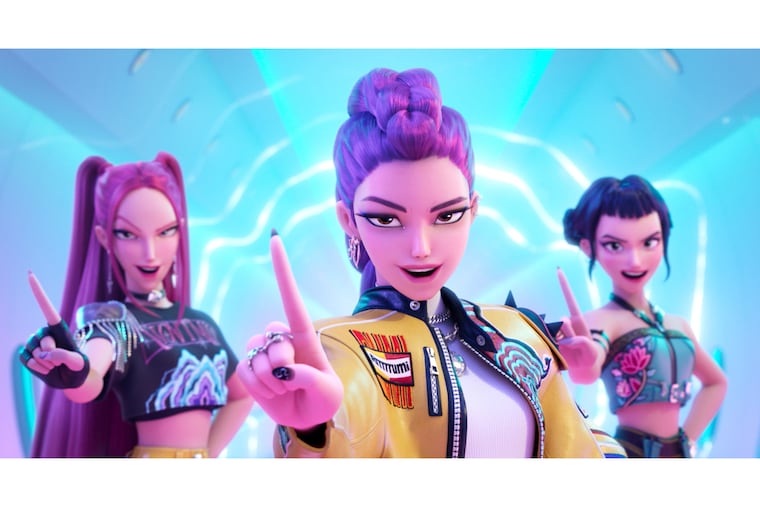
Let’s use the analogy of KPop Demon Hunters, a recent megahit movie by Netflix. It’s an age-old story in which it’s up to the brave to fight evil for the good of humanity, but this time told using catchy K-pop songs and pastel animations.
In the movie, the demons disguise themselves as a boy K-pop group, the Saja Boys. The girl K-pop group, HUNTR/X, are the saviors who need to slay the demons — but instead are dazzled by the Saja Boys’ talent and smooth dance moves. The Saja Boys end up sucking the souls of all humans and lead the population into misery as the girl group remains helpless to the boy group’s whims.
So in our analogy, OpenAI sees itself as HUNTR/X, and it is here to save the world from the demon, which in this scenario is artificial general intelligence (AGI).
Unlike today’s generative artificial intelligence (e.g., ChatGPT, Claude, Gemini), artificial general intelligence would actually think and reason like a human. Some data scientists see it as having the ability to become superior to human intelligence. (Think of Terminator’s Skynet, an AI that becomes self-aware and launches nuclear war against humans. Some call that science fiction fantasy, whereas others say it is a possibility.)
“AI resilience” is OpenAI’s way of controlling the market.
AGIs are not yet possible, but OpenAI, the maker of ChatGPT, wants to be the first to introduce them to the general market. So, like the girl group HUNTR/X, OpenAI sees itself as the savior by building “resilient” AI to harness the evil AGI.
To have the power to fight evil, HUNTR/X needed K-pop songs, whereas OpenAI just needs capital, and lots of it. For example, it just signed a $38 billion deal with Amazon. However, OpenAI is more like the Saja Boys than HUNTR/X, by disguising itself as a public benefit corporation that allows it to make profits while saying it is focusing on the public good.
It’s important to our story to know that a PBC is a for-profit corporate entity that legally commits to pursuing one or more declared public benefits in addition to generating profit for shareholders. Being a public company, it can raise funds through selling shares. By investing in a PBC, shareholders understand profits will be diverted to a public good.
OpenAI promises profits will flow back to its nonprofit, funding “AI resilience.”
It sounds altruistic until you realize: If it’s all for the public good, why does a nonprofit need to own the for-profit version of itself — and what is AI resilience anyway?
Back to our analogy: OpenAI wants to be the market leader in building out AGI (fight evil demons). It can’t do it without capital (catchy songs). Representing itself as a public benefit corporation (Saja Boys), it can collect the cash (human souls) that is then diverted to the nonprofit (demon king), which will control how AGI is used and marketed (rule the world).
“AI resilience” is OpenAI’s way of controlling the market. This is a form of “Big Tech extraction.“ Another benefit of this shell is that it pays less taxes as a nonprofit.
Some may say my analogy is too simplistic. I’ll counter that every “save the world” story needs a hero and a villain. The twist? The villain always insists they’re the hero. When a $500 billion company says it’s saving humanity, it’s worth asking why it needs a legal shell game to do so.
This is the same company being sued for copyright infringement and for lack of safeguards for suicidal ideation.
These are hardly the marks of altruism.
OpenAI isn’t HUNTR/X or even the Saja Boys. It’s the soul-stealing Gwi-Ma, the demon king who wins by pretending to deliver good.
Investors, beware: You’re being Gwi-Ma’d. Many will be OK with that. The rest should question the deception of Big Tech.
Rosanna Garcia is the endowed chair of innovation and entrepreneurship at Worcester Polytechnic Institute in Massachusetts and a public voices fellow on technology in the Public Interest with the OpEd Project.