Sleeping giants awake: Target boycotts and the legacy of civil rights leader Leon H. Sullivan
The current state of the country warrants a closer examination of the Rev. Sullivan’s self-help vision and demands for corporate responsibility to provide pathways to prosperity for all Americans.
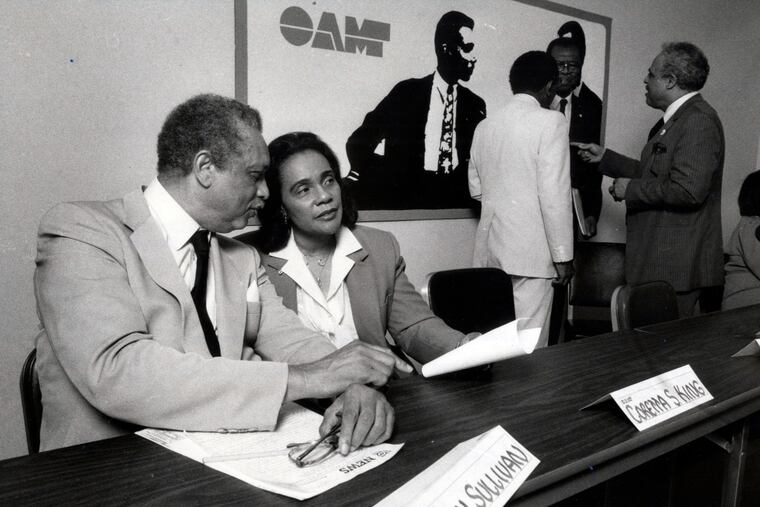
“Big business is like democracy,” the Rev. Leon H. Sullivan, the iconic civil rights leader and social justice activist, once said. “It’s got to help people or one day we’ll lose it.” If only he could have known how prophetic his words would prove to be.
In the wake of the police murder of George Floyd in 2020, Target Corp. and other large companies made knee-jerk pledges to advance equal opportunity. Now, five years later, they are summarily scrapping them in response to the anti-inclusion policies of the second Trump administration, which is serving up a volatile stew of resentment politics to the GOP’s MAGA base.
In February, a week after Target announced its elimination of programs to advance Black employees and businesses, Minnesota activists, led by civil rights lawyer Nekima Levy Armstrong, launched a national boycott.
Other groups quickly joined, including a consortium of Black churches led by Pastor Jamal Bryant. Unfortunately, they lost steam.
Target acknowledges reputational damage and revenue loss, but has not met the demands of boycott organizers, including restoration of diversity, equity, and inclusion initiatives, and honoring a $2 billion pledge to Black businesses. As boycott leaders bickered over who was in charge, Target undercut their efforts, for example, by donating $300,000 to the National Baptist Convention, the nation’s largest denomination of Black churches.
» READ MORE: I’m going to miss shopping at Target | Jenice Armstrong
While the Target boycott’s momentum has slowed down, we can learn much about effective economic action by looking to the legacy of Sullivan, who ran the most successful consumer boycott in U.S. history, and changed the trajectory of the civil rights movement from sitting in to standing firm.
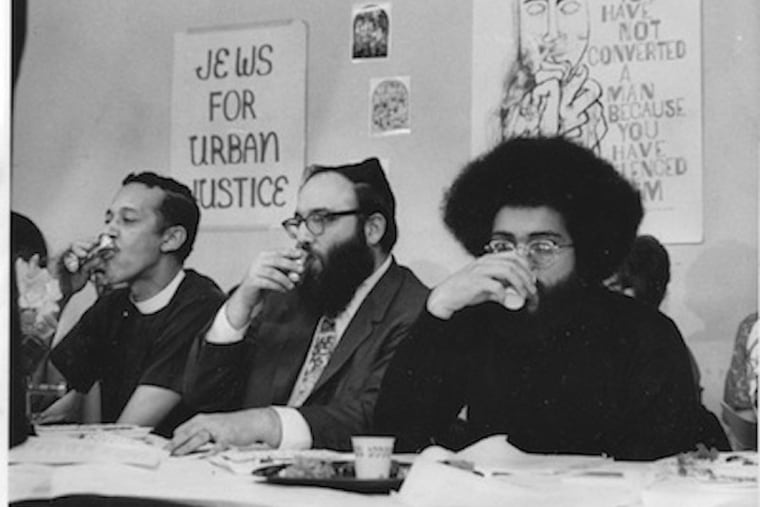
From 1960 to 1963, Sullivan, who was the pastor of Zion Baptist Church in North Philadelphia, led the Selective Patronage campaign, in which 400 regional Black ministers urged their congregations — some 300,000 people — to boycott companies across the city that did not comply with demands for fair job opportunities. Its watchword was: “Don’t buy where you can’t work.”
After 29 consumer-facing companies, such as Gulf Oil, A&P, and Breyer’s Ice Cream, buckled under economic pressure, many more changed their practices simply to avoid boycotts — overall, nearly 300 organizations ended up changing their policies.
Sullivan was asking, “Why not jobs?” at a time when less than 1% of U.S. business and entrepreneurial wealth belonged to Black Americans.
The Rev. Dr. Martin Luther King Jr. was listening. He invited Sullivan to meet with Southern Christian Leadership Conference ministers, such as Ralph Abernathy, and lay leaders at Paschal’s restaurant in Atlanta in October 1962. They wanted to know how Sullivan pressured a Northern metropolis like Philadelphia to open economic opportunities to Black Americans.
This luncheon sparked SCLC’s Operation Breadbasket, so named because the campaign initially targeted Atlanta’s bread makers. As its point man, Abernathy, observed, “Not every Negro is able to go to jail, but every Negro can stop buying a particular brand of bread or milk or gasoline.” King said, “If you respect my money, then you must respect me.”
According to the journalist and academic Phyl Garland, Operation Breadbasket was “the single most innovative economic program to grow out of the civil rights movement.”
The Rev. Jesse Jackson, who rose to prominence directing the program in Chicago, wrote in his foreword to Sullivan’s book, Moving Mountains, that Sullivan’s efforts ushered in the most mature stage of the civil rights movement, economic franchise, or “the right to our share of the growth, wealth, and prosperity in this country.” In 1974, he told the Wall Street Journal that Sullivan “comes as close as any man to being my idol.”
Sullivan demonstrated how coordinated Black economic power could effectively apply pressure to corporate America. Rather than appealing to the sympathy and charity of white people, he engaged Black people — poor, middle class, wealthy, men and women, young and old — in their own economic emancipation, and sought structural changes to institutionalize it.
Like Booker T. Washington, Sullivan drew from the self-help, pro-business tradition of Black leadership. He grew out of poverty in Jim Crow Charleston, W.Va., and devised jobs programs to enhance confidence, dignity, and self-respect, so people could use their “own hands” to advance.
Sullivan was an integrationist, yet he believed Black Americans must solve their own problems. His vision of “economic emancipation” extended to creating enterprises and generating jobs. He wanted Black people “to … become producers, rather than just consumers.”
Why did he target large corporations? Necessity. For most of U.S. history, governments demonstrated hostility or apathy to the rights and well-being of Black citizens. What other sectors could step in? Sullivan, a proponent of the social justice gospel, envisioned capitalism with a conscience — profits with principles.
In 1971, Sullivan joined the board of General Motors, becoming the first Black director of a major U.S. company. Ebony magazine observed: “[J]ust another, though major, step in a direction he has traveled for many years. A prophet of pragmatism, he has preached the gospel with the Bible in one hand and an accounting ledger in the other …” Now an insider, Sullivan’s intentions were clear: “Humanitarian rather than financial dividends.”
The current state of the country warrants a closer examination of Sullivan’s self-help vision and demands for corporate responsibility to provide pathways to prosperity for all Americans.
King had a dream, Sullivan had a plan to realize it. Call and response: Our nation can’t afford to forget either of them.
Omari Scott Simmons is a professor at the George Washington University Law School in Washington, D.C., and a leading expert on the intersection of civil rights and corporate governance.