What it means that LL Cool J chose to stand in solidarity with District Council 33
It’s admirable that the hip-hop icon has chosen to stand with District Council 33, understanding that the negotiations are about more than dollars and cents.
On the night before he died, April 3, 1968, the Rev. Dr. Martin Luther King Jr., who had traveled to Memphis to support striking sanitation workers, called the labor negotiations a matter of justice.
“The issue is the refusal of Memphis to be fair and honest in its dealings with its public servants, who happen to be sanitation workers,” he said. “Now the other thing we’ll have to do is this: Always anchor our external direct action with the power of economic withdrawal … As Jesse Jackson has said, up to now, only the garbage men have been feeling pain; now we must kind of redistribute the pain.”
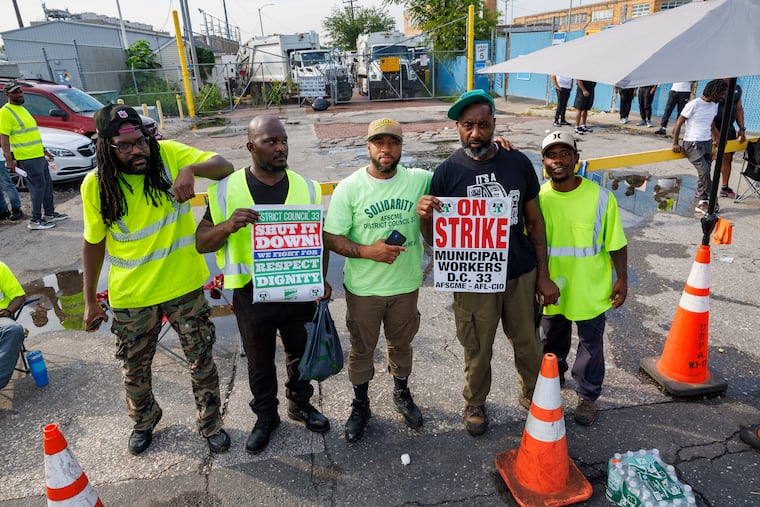
On July 3, in response to the current public workers’ strike by AFSCME District Council 33 workers in Philadelphia, hip-hop icon LL Cool J took to social media to announce that he would not be headlining the Wawa Welcome America concert for the Independence Day celebration.
“There’s absolutely no way I can perform, cross a picket line, and pick up money when I know that people are out there fighting for a living wage,” he said.
LL understood the power of economic withdrawal and redistributed some of the pain. Best believe that pain isn’t just felt by LL Cool J’s fans, it’s also felt by the Parker administration, along with a healthy dose of embarrassment.
Similarly, failing to pay crossing guards, facilities personnel in charge of city pools (especially during the summer), and sanitation workers, who do a job many of us wouldn’t do unless absolutely necessary, is also an embarrassment.
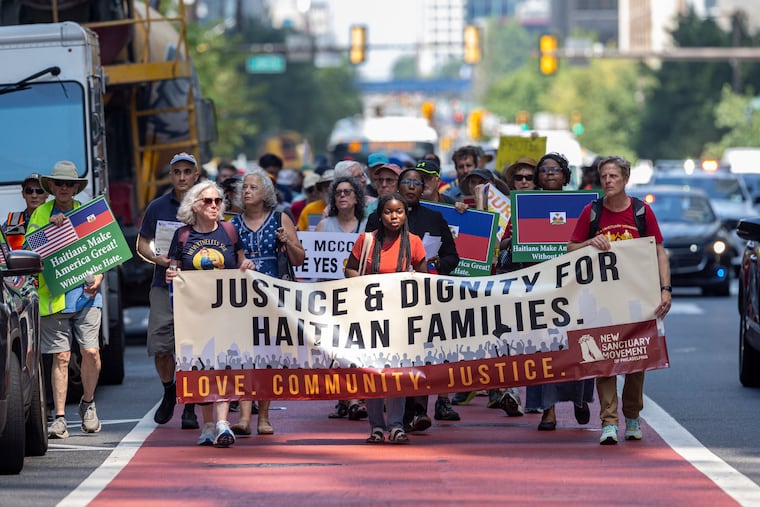
DC 33 has demanded an 8% annual raise, citing that many members earn an average of $46,000 a year, well below the estimated $60,000 needed for a single person to live in the city comfortably.
As the strike begins its second week on Tuesday, the pressure is on the city to reach a deal, because even if their negotiations are conducted in good faith, this work stoppage will only look and feel worse for everyone as trash accumulates on city streets.
But if there is a silver lining, it is this: An entertainer put their money where their convictions are, and it matters that it was a Black entertainer who stood up.
For so many entertainers, philanthropic gifts offer the chance to “do something” without losing anything but money. When done out loud, it’s a performance to build their brand. For Black entertainers, it’s standing on the stage while loudly proclaiming that they “did it for the culture.”
It’s an empty platitude.
However, what LL Cool J did was actually something for the people. He did give up the chance for a check, but he positioned himself on the side of workers who perform an essential job that we all praise.
Maybe our praise is performative, as well.
King, at a time when he was at his most unpopular, stood with sanitation workers in their quest for a living wage. His determination to fight on behalf of those the Christian theologian Howard Thurman called the disinherited — those whose backs are against the wall as a result of the strains of racism, capitalism, and militarism — cost him his life.
To be sure, the stakes were infinitely lower for LL Cool J, but he lost out on money, potentially a few of his fans, and any apolitical posture that might have secured him additional work in the future. But he’s in good company.
He operated in the tradition of Harry Belafonte, James Brown, Aretha Franklin, and a host of other Black stars who used their platform and money to fight for justice.
El-Hajj Malik el-Shabazz, the activist who earlier in his life was known as Malcolm X, warned against viewing Black celebrities as leaders within the Black community.
He was concerned that the access to wealth and power that celebrities enjoy might keep them from ever being truly connected to the challenges faced by many Black Americans.
» READ MORE: For GOP voters feeling the pain of Trump’s cuts, a realization dawns: We’ve had our pockets picked | Opinion
Everyday people, like the members of District Council 33, know those challenges all too well, and have taken a stand against their exploitation.
It’s admirable that LL Cool J has chosen to stand with them. Perhaps he understands, just as King did, that the negotiations with the Parker administration are about more than dollars and cents. It’s about justice.
Rann Miller is an educator and freelance writer based in South Jersey. His Urban Education Mixtape blog supports urban educators and parents of children attending urban schools. Miller is also the author of “Resistance Stories from Black History for Kids,” which was reissued in 2024. @RealRannMiller