Philadelphia can’t be ‘safest, cleanest, and greenest’ without basic data
The city’s open data list just 14,000 vacant properties — 6,300 vacant lots and 7,700 vacant buildings — leaving nearly two-thirds of previously identified vacant properties unaccounted for.
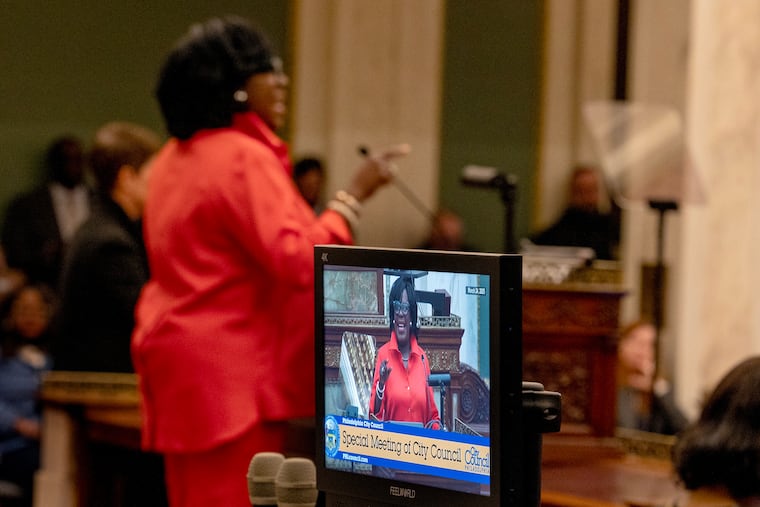
Mayor Cherelle L. Parker ran for office promising to make Philadelphia “the safest, cleanest, and greenest big city in America.” Her administration launched PhillyStat360, a sleek data dashboard to track the city’s progress toward these goals. With her HOME plan, she proposes to expand access to affordable housing via a $2 billion investment. But there’s a fundamental problem: Parker’s administration has stopped collecting the vacant property data essential to achieving these very goals.
We know this because we’ve been tracking that information for more than three years, as the founder and the executive director of Clean and Green Philly, a nonprofit that uses data to help Philadelphians improve neighborhood quality of life by strategically tackling vacancy.
We combine city vacancy data with statistics on gun violence, blight, and quality of life to identify 7,500 high-priority vacant properties where targeted action could spark cascading improvements in safety, neighborhood stability, and local investment.
Our tools are used by nonprofits, community organizations, residents, and developers, proof that Philadelphians want clear, impactful information on vacancy. But our workflow depends on the city’s accurate reporting of vacancy, so when these data disappeared a year ago, we noticed immediately.
For nearly a decade, the city of Philadelphia estimated the number of vacant properties citywide based on administrative data like code violations, utility disconnections, and tax assessments. The total consistently hovered around 40,000 properties, including 27,000 lots and 13,000 buildings. Yet, in June of 2024, the number abruptly dropped to 24,000 total reported vacancies.
Today, the city’s open data list just 14,000 vacant properties — 6,300 vacant lots and 7,700 vacant buildings — leaving nearly two-thirds of previously identified vacant properties unaccounted for.
City sources confirmed to us this isn’t a data error. Instead, the process of collecting and publishing vacancy estimates was quietly discontinued after Parker took office, without explanation or replacement.
When these data disappeared a year ago, we noticed immediately.
Research clearly shows that vacant properties are major contributors to Philly’s issues with illegal dumping and gun violence. It’s linked to depression, asthma, and deadly heat exposure. In Philadelphia, more than 10% of vacant properties are owned by repeat offenders — landlords and developers who control five or more such properties — including nearly 1,000 properties owned by just four developers.
These vacancies drag down property values and cost the city billions a year in lost tax revenue, while squandering opportunities to build desperately needed housing.
And Mayor Parker knows this — she explicitly cites all this same research in her signature HOME plan, which she describes as “values-based, data-driven,” and pledges to address both private and publicly owned vacant properties. Yet, her administration has simultaneously eliminated the very data collection system needed to implement these evidence-based solutions.
The immediate solution is straightforward: The city should resume collecting vacancy data on both publicly and privately owned properties using the methods employed for the past decade. While imperfect, this system provided essential baseline information for decision making. And these data must remain publicly accessible so community members, not just City Hall, can act.
But Philadelphia shouldn’t stop there. The year is 2025, not 2015, and better solutions exist.
At Clean and Green Philly, we developed a prototype machine learning model that uses only the city’s own data to identify likely vacant properties, with over 80% accuracy. This approach is more precise than the old method, more scalable, and more cost-effective. It’s proof that, when used well, data can help advance the mayor’s agenda — not hinder it.
Parker has made ambitious commitments to improve quality of life in Philadelphia. Achieving these goals will require a strategic, collaborative approach that’s impossible without accurate information about vacancy. The infrastructure to track these data already exists. Instead of abandoning it, the administration should ask how to use modern tools to maximize the impact of every dollar it invests in housing and neighborhood revitalization.
Cities that succeed in the 21st century embrace data — they don’t fear it. And Philadelphia deserves better than billion-dollar investments guided by guesswork.
The mayor’s office must restore vacancy data collection immediately. Parker’s promises to make Philadelphia safer, cleaner, and greener depend on it.
Nissim Lebovits and Amanda Soskin are the founder and executive director, respectively, of Clean and Green Philly. Clean and Green Philly’s website, data, and code remain available for free under an open source license at github.com/CodeForPhilly/clean-and-green-philly.