Philly’s troubled history of militarized policing
The Lanzetta family in South Philly seemed to be living the American dream in the 1920s — until Mayor W. Freeland Kendrick recruited a Marine general to clean up the city.
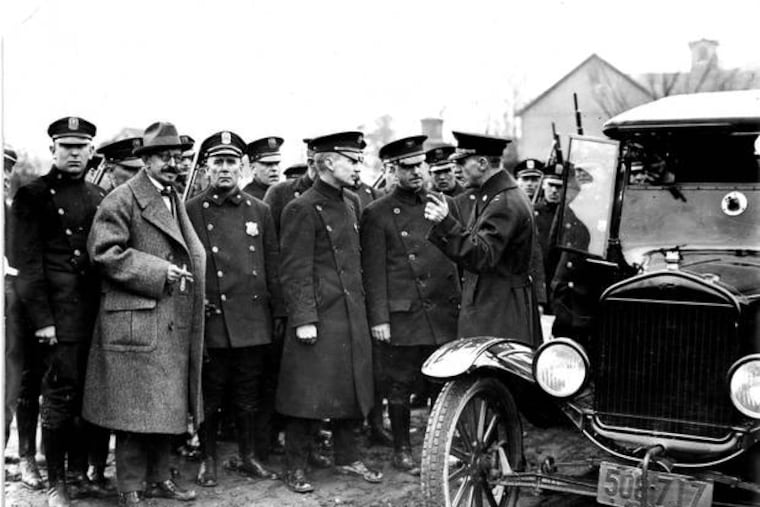
More than a hundred years ago, the Lanzetta family seemed to be living the American dream in South Philly.
Immigrants from Italy, the family patriarch, Ignazio, worked hard at local restaurants, while his wife, Michelina, tended to their growing family, which included six boys by the early 1920s.
They lived in the heavily Italian Our Lady of Good Counsel parish, where neighbors described them as “religious” and “such nice people.”
But times were hard in 1920s Little Italy, and some native-born Americans scapegoated the recent arrivals for much of Philadelphia’s woes.
Mayor W. Freeland Kendrick, a Republican, decided to recruit a U.S. Marine general to “clean up” the whole city, where, he claimed, “vice and crime [were] rampant” and “disregard of law and order [was] almost unbelievable,” as the New York Times put it in July 1924.
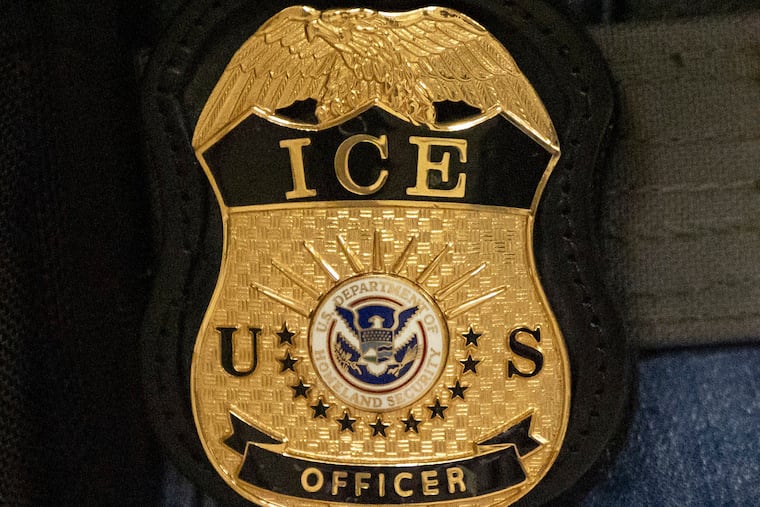
This required White House approval, ultimately causing clashes between local and federal officials — not unlike the ones we are seeing today, with National Guard troops and U.S. Immigration and Customs Enforcement and Border Patrol agents on the streets of many U.S. cities over the objections of state and municipal authorities.
Just last month, federal law enforcement made over 130 arrests in Charlotte, N.C.
Democrats — including Gov. Josh Shapiro, who is often mentioned as a 2028 presidential candidate — have denounced President Donald Trump’s use of federal man power.
“I think the way the President has chosen to deploy the [National Guard] … is extremely dangerous,” Shapiro said in October, as two dozen states tried to block what critics call Trump’s “militarization” of urban police work.
Long forgotten today are the travails of immigrants like the Lanzettas. They and other newcomers to the United States were branded as undesirable and accused of turning Philadelphia into a city where “banditry, promiscuous sale of poisonous liquor, the sale of dope, viciousness and lawlessness of all kinds are rampant,” as Mayor Kendrick put it, according to The Inquirer in 1923.
President Trump has used even harsher rhetoric to justify deploying federal agents and troops to Washington, D.C., Los Angeles, and Memphis, while threatening to do the same in Philadelphia.
Back in the Roaring Twenties, city officials were particularly worried that organized crime, fueled in part by Prohibition, would mar the citywide Sesquicentennial celebrations marking America’s 150th birthday in July 1926.
When President Calvin Coolidge finally gave the go-ahead for Brig. Gen. Smedley Darlington Butler to suspend his Marine duties in January 1924, the West Chester native and Haverford graduate swiftly established his authority as the city’s director of public safety.
“You have a cesspool in Philadelphia,” declared Butler. “If necessary you should pass laws taking [Philadelphia’s] government away if they don’t know how to run it.”
Butler had two decades of experience in Latin America, the Philippines, the Boxer Rebellion in China, as well as France during World War I, earning two Medals of Honor and eventually rising to the rank of major general. Only a tough, experienced Marine could tame Philly, Mayor Kendrick and local reformers believed.
And while Butler didn’t have soldiers to command, he was later quoted as saying that his ideal job title would be “martial law commander of Philadelphia with 5,000 Marines under me. Then I would not be hampered by writs and magistrates hearings.”
During Butler’s two-year tenure, as many as 17,000 Philadelphians were arrested for various offenses, big and small.
“Cleaning up Philadelphia,” he later lamented, “was worse than any battle I was ever in.”
By the end of 1925, even Kendrick had come to see some of Butler’s more authoritarian initiatives as “intolerable.” Criticisms of any federal role in combating local crime grew louder and louder.
J. Hampton Moore, who preceded and then succeeded Kendrick as mayor, called the Butler controversy a “spectacular misuse of the White House.”
According to an Associated Press article from Nov. 4, 1925, a congressman bluntly asked Kendrick: “Would you favor the president designating an Army or Navy or Marine to do police work in every one of the big cities of the country?”
“Mine is an exceptional case,” Kendrick responded.
To which the congressman snapped, “Some of us don’t see it that way.”
Butler ultimately agreed and returned to the Marines.
Though largely forgotten, this controversy has clear lessons — and warnings — for today.
Polls show Americans are highly skeptical of recent ICE raids and National Guard patrols — a problem Republicans could have avoided if they stuck to their long-standing preference for local rather than federal solutions.
But Gov. Shapiro should also remember that Trump won the 2024 election, in part, because voters didn’t trust Democrats on urban crime.
This is no mere philosophical discussion.
Consider Michelina and Ignacio Lanzetta, those striving South Philly immigrants. Their sons were pulled into “every vice and crime of the day,” historian Celeste A. Morello has written, and two of them were ultimately murdered.
With the nation’s 250th birthday almost upon us, Philadelphia might finally guide Americans toward a resolution to these long-standing conflicts over local crime and federal power.
Tom Deignan has written about history for the New York Times and the Washington Post. He is working on a book about violence in and around Philadelphia in the 1920s.