In these times, what would Martin Luther King Jr. do?
As we honor his life and legacy, we should reflect on his stand against injustice and tyranny.
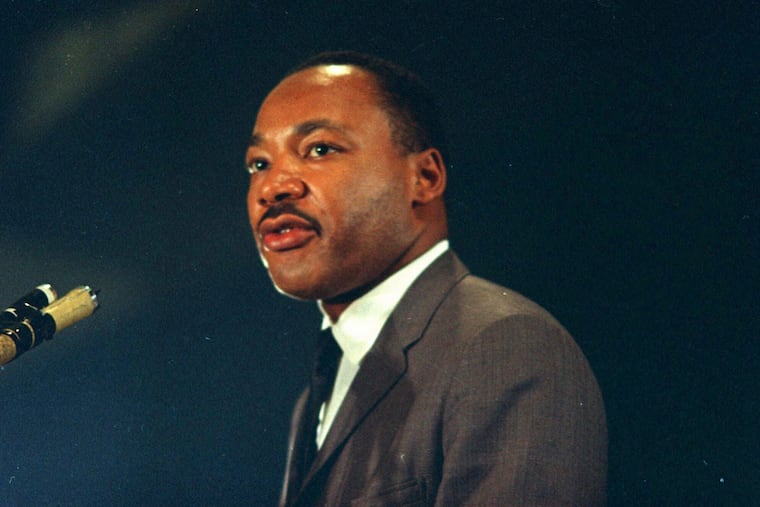
For 90 years after the Civil War ended, life for many Black Americans saw little change. They were discriminated against, segregated, and denied the right to vote.
In 1954, after the Rev. Dr. Martin Luther King Jr. received his doctorate from Boston University, he could have led an easy life as a pastor by joining the ministerial leadership of Ebenezer Baptist Church, much like his father had done. He could have led a comfortable, well-respected, middle-class existence in Atlanta’s Sweet Auburn neighborhood. Instead, King chose to start his ministry, independent of his father, as the spiritual leader of Dexter Avenue Baptist Church in Montgomery, Ala.
Before King’s arrival in 1954, the Rev. Vernon Johns led that church, but his tenure was cut short, as the congregation was not ready to have an activist minister unafraid to stand up to racial discrimination that confined African Americans to second-class citizenship. Church leaders assumed that King, son and grandson of strong Baptist ministers, would know his limits and not upset the racial status quo.
King didn’t initiate the Montgomery Bus Boycott, but he quickly became its public voice and de facto leader. King and the Southern Christian Leadership Conference, which he helped found, were not the organizers or heavily involved in 1960’s sit-ins and 1961’s Freedom Rides, but they supported them. However, he led the demonstrations in Birmingham, Ala., that confronted that city’s political power structure, which violently reacted, and pressured it to change its racist policies.
A few weeks later, President John F. Kennedy delivered his most forceful statement on civil rights. Two weeks later, King met with Kennedy, who asked King to cancel his planned march on Washington. King refused and led that massive, peaceful march.
After Kennedy was assassinated, President Lyndon B. Johnson made passage of the 1964 Civil Rights Act his top priority and used his intimate relationship with every senator to ensure it passed. A year later, Johnson secured passage of the Voting Rights Act, despite knowing his beloved Democratic Party would no longer have a strong hold on voters in the South.
At that point, King could have rested on his laurels and continued as a congregational minister, or capitalized on his well-deserved fame and earned hundreds of thousands from the lecture circuit. Money was never on King’s mind, as can be seen from his donation of the $54,600 in proceeds ($570,000 today) from his 1964 Nobel Peace Prize award to various causes promoting peace and civil rights.
After receiving the prize, King should’ve been considered the main leader of the mid-1960s civil rights movement, but the leadership of the various movement organizations had radically changed and marked King as a persona non grata. Some of that backlash came from his limited opposition to the Vietnam War. Before 1967, he wasn’t considered a major player in the anti-war movement.
King was highly conflicted. The successful passage of the Civil Rights Act and the Voting Rights Act was facilitated by Johnson, the same man who ordered the escalation of the Vietnam War. King owed those successes to Johnson, yet as a man of peace, he knew he must publicly and forcefully confront an unjust war. On April 4, 1967, at New York’s Riverside Church, King gave a powerful sermon attacking the war and expressing his opposition. He never again met or spoke with President Johnson, his former champion.
Why aren’t today’s religious leaders — of every denomination — in the streets protesting the president’s imperialist policies?
Much has changed since Jan. 20, 2025, when President Donald Trump declared a false national emergency.
Since then, he has bullied law firms into doing pro bono work; pressured universities to end their diversity, equity, and inclusion programs; pardoned thousands of criminals involved in the failed Jan. 6, 2021, insurrection; exceeded the constitutional powers of his office while encroaching on those reserved for Congress; and dispatched troops to multiple American cities.
He has ordered the murders of over 100 sailors in the Caribbean and Pacific without evidence of their crimes; eliminated DEI in all federal and military programs; ordered the FBI and the U.S. Department of Justice to investigate and prosecute his enemies; and restored the Confederacy to a place of honor at Army bases and Arlington National Cemetery.
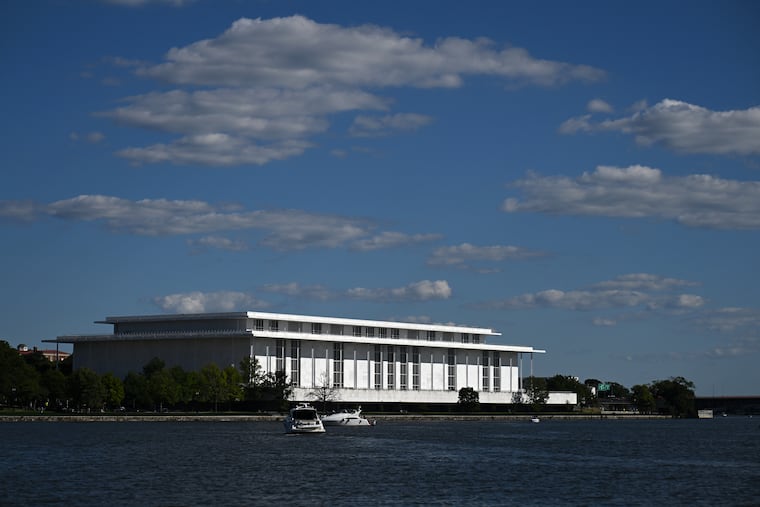
He has also upended our healthcare and education systems, insulted reporters, threatened lawsuits to enrich himself, disparaged former political friends, renamed the Kennedy Center for himself, and invaded a sovereign country in a quest for black gold.
Why aren’t today’s religious leaders — of every denomination — in the streets protesting the president’s racist and imperialist policies? Why aren’t they asking themselves WWMD — What Would Martin Do?
As we celebrate what would have been the Rev. Dr. King’s 97th birthday, let’s honor him by becoming what he called “drum majors for justice, for peace, and for righteousness.”
Paul L. Newman is an amateur historian of African American history. He’s working on a miniseries about the African American civil rights movement of the first half of the 20th century.

Inquirer Opinion Newsletter