Are Native Americans birthright citizens? It’s no April Fools’ joke.
Indigenous people have fought throughout modern history to gain, and defend, the dual citizenship rights that determine access to government benefits and the right to vote.
“Imagine going before the Supreme Court to attack birthright citizenship and being unable to say Native Americans are American citizens.” So wrote U.S. Rep. Teresa Leger Fernández (D., N.M.) on Wednesday, following Solicitor General D. John Sauer’s muddled testimony defending President Donald Trump’s 2025 executive order on birthright citizenship before the U.S. Supreme Court.
Justice Neil Gorsuch had asked Sauer whether Native Americans would be considered birthright citizens in the government’s calculus. Sauer answered: “Uh, I think so? I mean, obviously they’re granted citizenship by statute,” a reference to the 1924 Indian Citizenship Act that granted citizenship to all Native Americans, whether they wanted it or not.
No joke
But when Gorsuch pushed him by asking, “But aside the statute, you think they’re birthright citizens?” Sauer responded: “No. I think the clear understanding that everybody agrees in the congressional debates is that the children of tribal Indians are not birthright citizens.”
It was no April Fools’ Day joke.
Sauer later added, when Gorsuch asked him again if Native Americans were birthright citizens: “I’m not sure. I have to think that through.”
Sauer’s use of the archaic term “tribal Indians” and his inability to clearly answer Gorsuch’s questions speak to the Trump administration’s lack of understanding of Native Americans’ sovereign and citizenship rights.
It appears highly likely that the justices will rule that the administration’s effort to ban birthright citizenship is unconstitutional, ending the matter. But other pending high court decisions loom large in the debate over Native people’s ability to exercise their American citizenship to protect their Indigenous citizenship, a dual citizenship codified in the 1924 Indian Citizenship Act.
Native people have fought hard throughout the 20th century and into the 21st to first gain, and then defend, those dual citizenship rights — rights that determined access to GI benefits and other federal aid available to white citizens, but especially the right to vote in state and federal elections. When Navajo code talkers returned to their homes in Arizona, they were denied the right to vote because of Arizona state law.
Tens of thousands of other Native men and women who served their country during World War II were denied access to the polls on the basis of such discriminatory legislation. Native veterans waged a different kind of battle after the war to gain that basic constitutional right in seven states, a battle that lasted until 1957, when Utah became the last state to give Indigenous citizens the national franchise.
Voter suppression
Nearly 70 years later, Indigenous citizens continue to face state-level voter suppression efforts, especially in states with large Native populations such as Arizona, Montana, South Dakota, and North Dakota. Later this year, the Supreme Court will decide the case of Turtle Mountain Band of Chippewa Indians v. Howe, which has broad implications for Native Americans’ ability to contest those voter suppression efforts. The plaintiffs claim that North Dakota’s adoption of a new voting map in 2021 diluted the state’s Indigenous citizens’ voting power, which they had wielded in 2012 by helping to elect Democrat Heidi Heitkamp to the U.S. Senate.
At stake for Native people is their ability to challenge threats to long-standing treaty rights which preserve their ancestral homelands, cultural identity, and religious freedom.
In a related case, Louisiana v. Callais, the Supreme Court will decide whether race‑based redistricting under Section 2 is legal under the equal protection clause of the Constitution. The issue is not a technical dispute over maps, but whether the Constitution still affords Indigenous citizens equal protection under the law.
In 2026, these decisions will determine whether Native communities can continue to challenge vote dilution and thus protect both their constitutional rights as U.S. citizens and their tribal sovereignty. At stake for Native people is their ability to challenge threats to long-standing treaty rights, which preserve their ancestral homelands, cultural identity, and religious freedom, and their ability to be both Native and American.
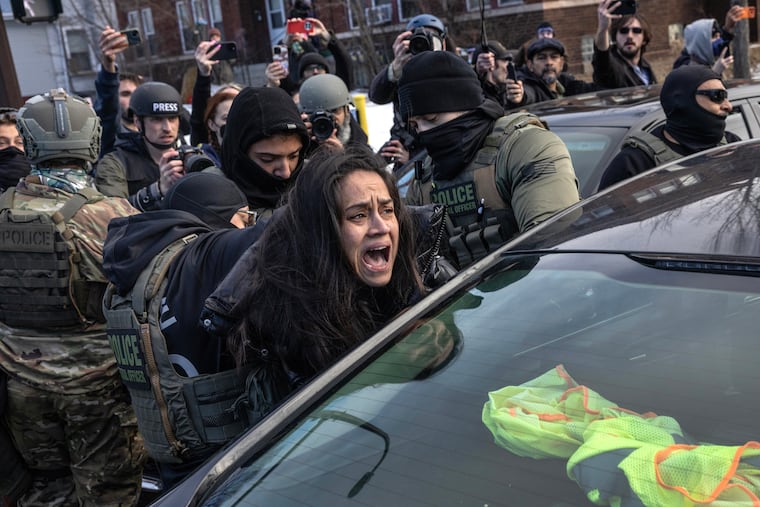
From Minneapolis, where Native people were harassed and arrested by U.S. Immigration and Customs Enforcement agents, to the Supreme Court, Indigenous Americans’ citizenship remains conditional and contested, a new chapter in a long history of being told they do not fully belong.
Paul C. Rosier is a professor of history and director of the Lepage Center for History in the Public Interest at Villanova University. His book, “Indigenous Citizens: Native Americans’ Fight for Sovereignty, 1776-2025,” was published by W.W. Norton and Co. in March.

Inquirer Opinion Newsletter