Why parents should read articles (like this one) with their teenage children
As our nation celebrates Civic Learning Week, it is important to recognize that news literacy is a key aspect of civic education.
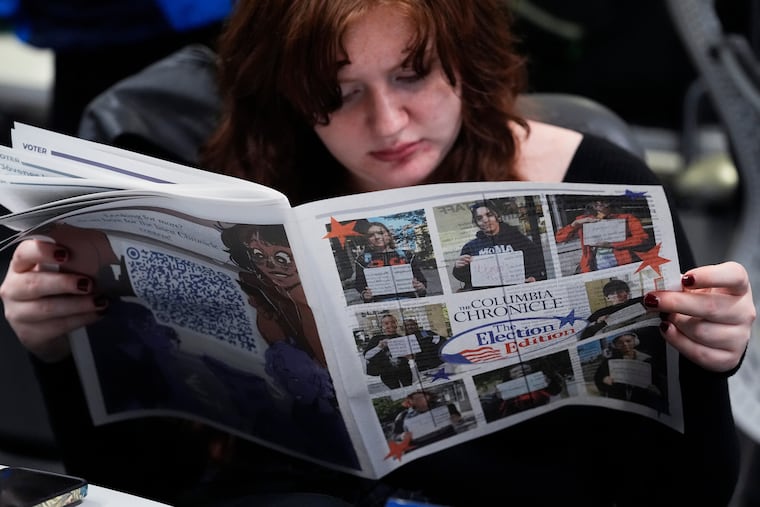
There are many debates and much consternation surrounding America’s youth culture and its relationship to news. What type of journalistic content (if any) are young people being exposed to? Do teens have the skills needed to distinguish news from opinion? Can they identify machine-generated, deepfake content?
The teenage years are crucial to the formation of media habits that will last a lifetime, and parental news habits set a foundation for children’s news consumption.
Our recent research concerning the news habits of teens and their parents indicates an extinction-level event is unfolding that requires immediate attention.
Our team at the Annenberg Public Policy Center conducted a national, probability-based survey of more than 1,300 parents and their 13- to 17-year-old children last fall and asked, “Which of the following statements best describes your news habits?” We offered respondents three choices: “I actively seek out news to stay informed,” “I keep up with the news without really trying — it tends to find me,” and “I don’t really keep up with the news.”
Only a little over a quarter of the parents said they were active news consumers and a meager 5% of teens said the same. When we matched the responses from adults with their respective teens, we found that just 3% of the parent-teen household combinations said they were active news consumers.
» READ MORE: How student journalists can help save universities — and journalism | Opinion
To put that dismaying statistic in perspective, the margin for error for this survey is +3.5 percentage points, meaning that the size of this group is so small that it falls below the margin of error. As a result, we are unable to differentiate this percentage of active news family pairings from zero.
Parental news habits set the ceiling for teen news habits. It is rare for a child to develop better news habits than a parent. Three-quarters of the parents we surveyed are not active news consumers and that needs to shrink before we’re likely to see an improvement in teen news habits. Poor news habits are linked to a weakening of political interest, lower levels of political knowledge, and increased cynicism.
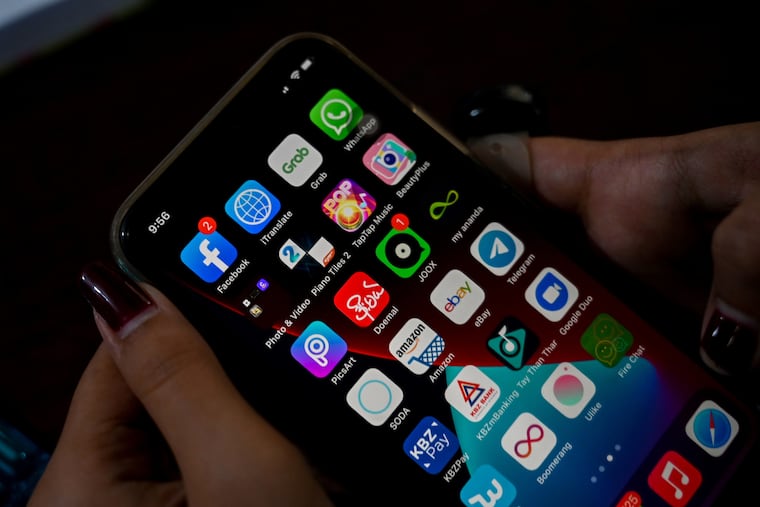
So, what can be done to rectify this problem? Parents need to begin to engage with the news in a manner that allows their children to see them consuming news. So much of today’s news exposure is through a smartphone, and a child seeing a parent on a handheld device can’t tell whether that adult is reading or watching news, scrolling through social media, or shopping.
Today’s information environment has reduced the number of shared spaces where members of a household gain insights about the news habits of the other people they live with. Kids need to see their parents consuming news.
In addition, parents can engage in the co-consumption of journalistic content with their children. Put simply, they can read, watch, or listen to news together.
Our past research has shown that few parents use the media to help socialize their children to the nation’s political culture. It is important for parents to consume the same news content as their children and that media co-consumption leads to discussion.
» READ MORE: How local journalism empowers voters in an age of misinformation and political discord | Opinion
The sharing of news content via email, text, or social media direct messaging is insufficient and rarely leads to discussion. The coordination of multiple individuals to engage the same news content synchronously requires movement toward actively seeking out this content. In short, news co-consumption promotes active news use.
There is not much time left to try to stave off the extinction of active news consumption. There is much valuable work being undertaken by organizations like News Hour Classroom and the News Literacy Project to educate America’s young people about the importance of journalism in a democratic society. These organizations offer high-quality, nonpartisan resources that are freely accessible to everyone.
If parents are looking how to take a constructive first step on how to improve their kids’ news habits, these resources can offer some assistance.
As our nation celebrates Civic Learning Week, it is important to recognize that news literacy is a key aspect of civic education. However, efforts undertaken in schools can only do so much. Households need to improve their news habits to strengthen the effects of any education initiatives.
There are specific steps parents can take to help not only their children but themselves, as families seek to understand an increasingly complex and contentious political environment.
R. Lance Holbert is director of the Leonore Annenberg Institute for Civics at the University of Pennsylvania’s Annenberg Public Policy Center. Huma Rasheed is a postdoctoral fellow at the policy center.