Nurses should be supported, not undercut and disparaged
As healthcare in the U.S. becomes increasingly less affordable and available, assaults on nurses are ramping up, too.
The more than four million registered nurses practicing in the United States and the patients and families who relied on their care found themselves unexpectedly challenged by the federal government in 2025.
Among those challenges were a threat of closure to the National Institute of Nursing Research, placing nursing science at risk; a question as to whether nursing was a “profession,” limiting nurses’ capacity to fund the advanced education required to further develop their skills and teach future nurses; and a pullback in the minimal staffing rule for nursing homes, which deprives the growing population of vulnerable patients with registered nurse expertise.
These multiple assaults on nursing inspired us to take stock and unify around our profession’s need to collectively speak up and help federal decision-makers better understand the work of nursing and what it contributes to society.
Most trusted
For years, the public has consistently identified nursing as the most trusted profession. Patients and families have invariably called attention to how nurses helped them get through the worst possible times in their lives.
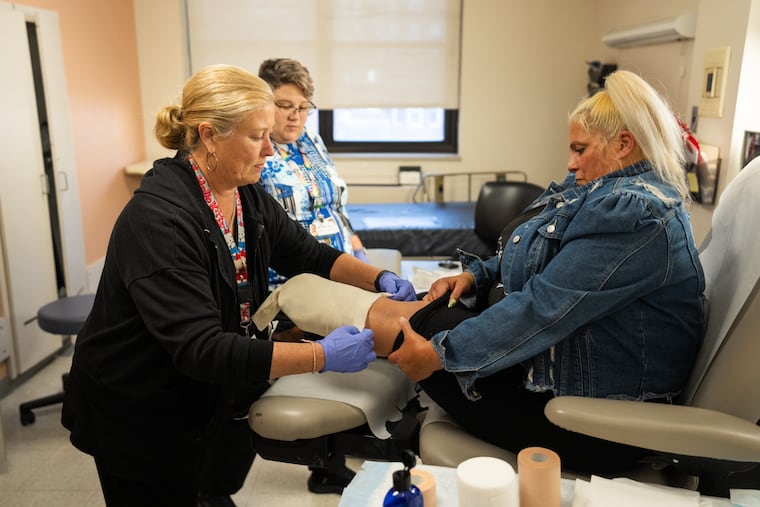
In hospitals, nurses keep patients safe. They work to get to know patients and families as individual people so they can better align their care with what is specifically important to them.
Multiple assaults on nursing inspired us to take stock and unify around our profession’s need to speak up.
Nurses are watchful 24/7, anticipating and preventing potential problems in patients at risk. They manage patient symptoms to give comfort and alleviate suffering. Nurses provide hands-on physical, therapeutic, and, when necessary, end-of-life care. They collaborate with interprofessional teams, coordinating the work of many.
They also help people understand what they need to know about their care, enabling them to better manage it at home. Nurses and patients alike thrive within the caring relationships that facilitate patient and family health and healing.
What’s more important than that? What else does the nursing profession need to do?
Looking forward to 2026, nurses need to let everyone in on their best-kept secret. Registered nurses provide the glue in our fractured healthcare system and are crucial to helping keep Americans healthy.
In 2026, we need a bold, united campaign that delivers evidence, action, and impact. To share what nurses know about their profession, and what patients and families know after experiencing their care.
Nursing must focus on developing health-centered metrics that matter to patients and families, and that clearly demonstrate nursing’s value to society and to the payers, accreditors, and credentialing bodies that fund or evaluate the work of nursing.
Developing better patient-centered outcomes through our work in hospitals will allow us to provide more informed care to the right patients at the right time. While current Centers for Medicare and Medicaid Services (CMS) measures aligned with nursing, like rates of hospital-acquired infections, are important, they are narrow in scope and only call attention to the absence, not the presence, of stellar bedside nursing.
Challenges of AI
In 2026, nursing needs to lead in the thoughtful implementation of artificial intelligence to optimize patient and family care. AI can unburden healthcare professionals from tasks that can — and should be — automated so nurses can better focus on the empathy and experience that inform quality care. AI can be used to help predict untoward events, keeping patients safer while freeing nurses to provide the one-to-one human interaction that technology simply cannot.
In primary care, the U.S. healthcare system faces a shortage of providers, rising healthcare costs, and an increasing number of people with chronic health conditions like obesity, diabetes, asthma, and heart disease. Imagine a healthcare system in which nurse practitioners provide the majority, not just 20%, of primary care, better helping patients and families stay healthy.
To make this a reality, we must remove restrictive practice barriers and allow nurse practitioners to directly bill for their services. Nurse practitioners already help guide patients through complex transitions from acute care to palliative care and end-of-life. Nurse-run virtual clinics have successfully provided just-in-time consults that replace more costly emergency room visits. Nurse-run specialty clinics help manage long-term illnesses, such as diabetes and asthma, by coordinating care with specialists to prevent exacerbations.
Registered nurses, working in primary care, can help mitigate these challenges and strengthen America’s healthcare system by providing care, education, and support to all people, regardless of their level of health.
In the community, nurses partner with local leaders to design safety nets like vaccination clinics and disaster relief programs. They run urban community clinics, providing care to people who need help, including the homeless, the uninsured, and the marginalized. Imagine school-based registered nurses not only helping educate children about health, but also managing their chronic illnesses like asthma and mental health needs.
The future will require bold and collaborative action from nurses to combat the oncoming healthcare crisis. Millions of Americans will suffer the consequences of our government’s inaction to pass a comprehensive health bill in 2024 or shore up the Affordable Care Act in 2025.
As America approaches its 250th anniversary, registered nurses have been — and remain — a vital national asset. In 2026, nurses are the solution for delivering compassionate and evidence-based healthcare in America, and a driving force for the well-being of the public they serve.
Our healthcare system is stressed, but it can be sustained with empathetic leadership, investing in nursing research, expanding practice authority, and designing innovative models of care that recognize the value of nurses and their critical, myriad contributions to the nation’s health.
Martha A.Q. Curley is a registered nurse and professor of pediatric nursing at the University of Pennsylvania School of Nursing. Connie M. Ulrich is a registered nurse and professor of nursing and of medical ethics and health policy, and Mary D. Naylor is a registered nurse and professor of gerontology and nursing, both also at Penn’s School of Nursing.