George Washington tried to warn us about putting party before country
As we celebrate our 250th anniversary, shouldn’t we listen to our founding president?
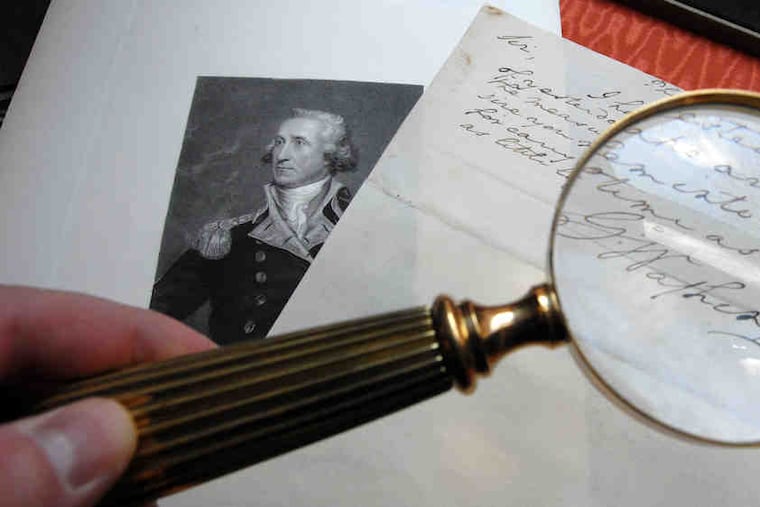
Two hundred and thirty years ago, as he prepared to leave office, George Washington delivered what may be the most ignored and important speech in American history.
In his Farewell Address of 1796, Washington warned the young republic about “the baneful effects of the spirit of party.” He feared that political factions would eventually place loyalty to party above loyalty to nation. Washington wrote that partisan division could become “a frightful despotism” capable of undermining liberty itself.
Today, his warning feels more like prophecy than history.
Americans no longer just disagree about policy. We distrust one another’s motives and question one another’s patriotism depending on the political label. Washington feared political parties would create a “spirit of revenge” in which each election became an attempt not merely to govern, but to punish opponents. He warned that partisan conflict would lead citizens to become “ready to commit the most horrid enormities.”
That is exactly where we are heading these midterms.
A recent survey from the Pew Research Center found that a majority of Americans now hold unfavorable views of both the Republican and Democratic Parties. Americans are not rallying around either party. They are growing weary of both. At the same time, an increasing number of Americans are identifying as independents rather than as loyal members of either political party.
America does not need less conviction. It needs more character.
Trust in Congress has also collapsed. According to Gallup’s confidence in institutions polling, Congress continues to rank near the bottom of U.S. trusted institutions.
The message from the American public is clear: Trust in our political system is all but vanished, and, honestly, can anyone blame us?
Every national crisis now becomes another excuse for partisan warfare. Immigration is not treated as a national challenge requiring wisdom and compromise; it becomes campaign ammunition. Economic pain becomes a political weapon instead of a shared concern. Public health, education, race, crime, and even disaster relief are all filtered through partisan political considerations.
Ordinary Americans are exhausted. Researchers at Johns Hopkins University’s SNF Agora Institute have warned that younger Americans are increasingly losing confidence in democratic institutions and becoming more disconnected from traditional political parties. Many Americans now feel politically homeless — alienated by the extremes of both sides while struggling simply to raise families, pay bills, and preserve some sense of national loyalty.
Washington understood something most modern politicians have forgotten: A republic cannot survive without a shared commitment to the common good. He believed parties would eventually tempt leaders to place ambition above principle and emotion above reason.
In his Farewell Address, Washington warned Americans against “cunning, ambitious, and unprincipled men” who could manipulate division for personal power. The quote now sounds hauntingly contemporary.
Political scientists increasingly describe America as suffering from “affective polarization,” meaning citizens do not simply disagree politically, but actively dislike and fear one another.
Social media algorithms amplify outrage because outrage generates profit. Cable news thrives on conflict because conflict drives ratings. Politicians raise money faster by making Americans angry than by helping them think. The result is a nation where many citizens no longer even share the same facts, much less the same vision of America.
The annual Edelman Trust Barometer has repeatedly warned about declining trust in government, media, and civic institutions. One recent report described a growing collapse of “shared reality,” in which citizens increasingly consume entirely different streams of information and truth. That may be the greatest crisis facing the nation — not simply disagreement, but the disappearance of common ground itself.
And yet, there is still reason for hope.
I believe most Americans are not extremists. Most Americans still want safe communities, economic opportunity, fair elections, accountable government, and dignity for their neighbors. Most Americans still believe in American ideals, even while losing faith in the people currently managing it. This is why Washington’s warning matters now more than ever. He was not calling Americans to abandon convictions. He was calling them to place the country above party.
Strong democracy requires vigorous disagreement. But disagreement without mutual respect becomes mutual destruction. When every opponent becomes an enemy, the republic itself becomes collateral damage.
America does not need less conviction. It needs more character.
We do not need blind nationalism, nor do we need cynical despair. We need citizens willing to tell the truth, reject manipulation, and recover the difficult work of loving a country enough to correct it without destroying it.
Washington saw the danger before America had even fully begun. The tragedy is not that he failed to warn us. The tragedy is that we stopped listening.
The Rev. Dr. Michel J. Faulkner, a former NFL player, community leader, pastor, and registered Republican, is chair of the board of directors of the Philadelphia Council of Clergy.