An educational program that helped uplift a million Pa. students is under attack
HB 2632 proposes significant changes to the Educational Improvement Tax Credit that will undermine scholarship opportunities for Pennsylvania kids.
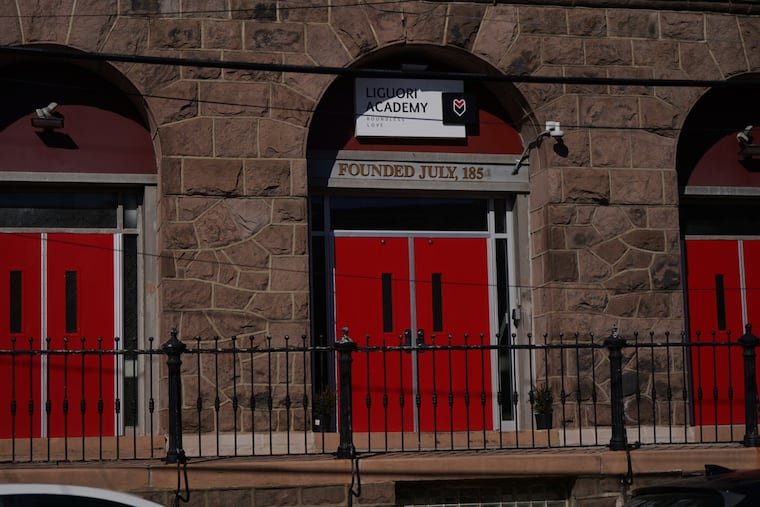
As president and chairman of a private school, we might seem out of place commenting on public policy. But recent state legislation that would undermine a vital Pennsylvania program — one that thousands of families and students depend on — compels us to speak up.
Conversations about education often focus on learning loss and declining academic performance, but students at our school, Liguori Academy, are moving in the opposite direction. Our students often arrive several grade levels behind, but they quickly recover and often surpass their peers.
And we have the numbers to back that up. This year, between 67% and 72% of our students, depending on grade level, demonstrated measurable growth in reading, gaining one and a half to more than two grade levels in a single school year. Many are now reading at a college level. In mathematics, between 58% and 74% of students also improved, with our ninth graders posting the strongest gains.
Watching those students, who were so far behind academically, gain confidence, earn industry certifications, secure internships, and prepare for college and careers is a reminder of what is possible when students are given the support and opportunities they deserve.
And what has made this educational growth possible? It’s simple, really: Pennsylvania’s Educational Improvement Tax Credit program.
Unfortunately, state lawmakers may gut this life-changing program. The Pennsylvania House Education Committee passed legislation that would decimate the state’s wildly popular tax credit scholarship programs. Originally, House Bill 2632 proposed slashing $102 million from the Educational Improvement Tax Credit and robbing Pennsylvania kids of about 30,000 scholarships.
State lawmakers should take note: Pennsylvania families are demanding more, not fewer, scholarships.
A committee amended the bill to avoid the cuts, but the updated bill still cuts tax credit levels, eliminates supplemental scholarships, hamstrings student eligibility, and imposes onerous taxes and regulations on scholarship organizations.
Critics of these programs — including many of the lawmakers sponsoring and supporting HB 2632 — will wrongly characterize this as a public vs. private issue. They claim the Educational Improvement Tax Credit “robs” funding from public education.
But nothing could be further from the truth. Although it may appear like a line item in the state budget, the Educational Improvement Tax Credit doesn’t use public funds. Instead, it relies on donations to scholarship organizations and the donors who receive a tax credit for their charity. Without the generosity of these donors, the Educational Improvement Tax Credit wouldn’t exist. If it went away, so would the philanthropy that funds it.
The timing of this bill is interesting, to say the very least. The Educational Improvement Tax Credit recently celebrated its 25th anniversary, having served more than 101,000 scholarships to kids across the state in conjunction with its partner program, the Opportunity Scholarship Tax Credit. Over their lifetime, these programs have awarded more than one million scholarships.
Despite this volume, there aren’t enough scholarships to go around. Even after awarding a record-level number of scholarships last year, nearly 70,000 scholarships went unfulfilled. But this isn’t because the students weren’t eligible; rather, state-legislated caps limit the number of available scholarships.
State lawmakers should take note: Pennsylvania families are demanding more, not fewer, scholarships.
These scholarships change lives and fuel academic success. The Children’s Scholarship Fund Philadelphia, one of the largest scholarship organizations in Pennsylvania, commissioned a report showing scholarship recipients from both programs outperforming their public and private school peers academically.
These scholarships provide equity for families struggling financially. The average household income for Liguori families, for example, is about $37,000, which is barely above the federal poverty line.
None of this happens without the Educational Improvement Tax Credit.
That is why what happened in Harrisburg recently should alarm every Pennsylvanian who believes every child — regardless of zip code or income — deserves a chance. This newly introduced legislation would take away much-needed scholarships not only from Liguori kids, but also from tens of thousands of Pennsylvania kids who worked hard to better themselves educationally.
As school leaders, we understand and welcome accountability. If scholarship programs are going to continue, schools must be prepared to demonstrate strong academic outcomes, sound financial stewardship, and compliance with program requirements.
But we have also seen the difference educational choice makes. We have watched students who arrived years behind their peers grow into young people ready for college and the workforce. That transformation is real — and the Educational Improvement Tax Credit made it possible.
Pennsylvania should be building more doors like ours, not slamming them shut.
Michael Marrone is the president and founder of Liguori Academy. Joseph Marano is chairman of the board of Liguori Academy.