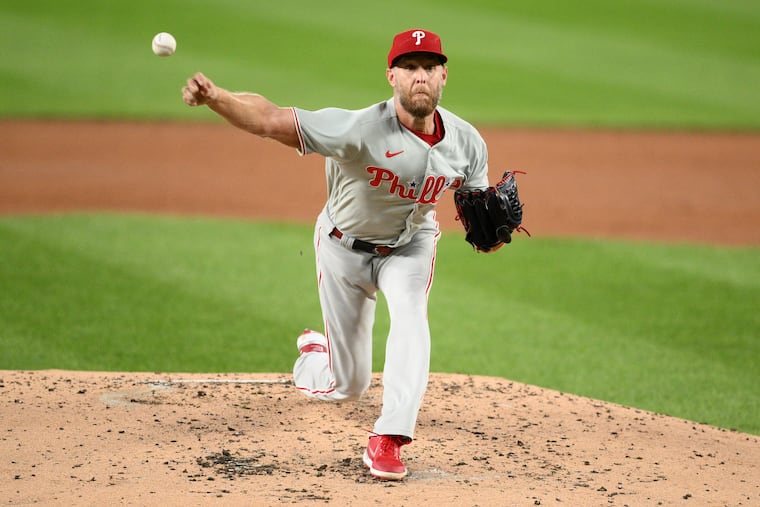
The Phillies’ ‘run it back’ plan was an insult to fans. It just backfired.
After a pattern of diminishing returns, the front office misread its most important asset: the emotional investment of its supporters. Dan Perry with a fan’s take on the firing of manager Rob Thomson.
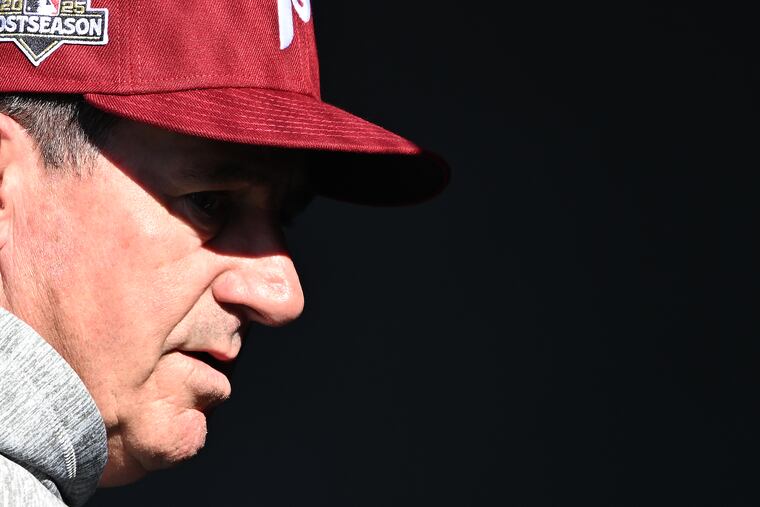
The firing of Rob Thomson was, in one sense, inevitable. A 9-19 start will do that. But to understand why this moment feels to many fans less like a course correction and more like a reckoning, you have to go back — not just to April, but to a pattern the Phillies chose to ignore. Each year under Thomson, the team moved one step backward.
In 2022, a surprising run to the World Series ended in defeat by Houston. In 2023, they fell in the National League Championship Series, blowing a 3-2 advantage over Arizona, at home, in a winnable series that slipped away in frustrating fashion. In 2024 against the Mets, it was an earlier exit — the Division Series, again a squandered opportunity.
And in 2025, the bottom dropped out: another Division Series elimination, this time at the hands of the hated Dodgers, punctuated by a surreal, almost farcical error that seemed to capture something deeper about a team losing its edge. This is a trajectory — and one that seems designed by the baseball gods to infuriate a rabid fan base that, yes, expects a lot.
The logical next step in such a trajectory would be missing the playoffs entirely. It was time to break the back in order to course-correct. Faced with that, the Phils chose continuity. They “ran it back.” That decision was not merely conservative when aggressive creativity and laser focus were needed.
It was, to many fans, an insult. Because it rested on an assumption — never stated, but clearly felt — that the revenue side of the equation would take care of itself. That the stadium would fill. That the jerseys would sell. That the broadcasts would draw. That the fan base, effectively captive, would absorb disappointment without consequence.
Yes, they are spending. Yes, they went after Bo Bichette (while ignoring the fans in parting with Harrison Bader). Yes, they are navigating the constraints of the luxury tax. And yes, any front office must be careful about what it reveals publicly. But there is a difference between necessary discretion and a posture that suggests the audience doesn’t matter.
Fans notice that. Fans notice everything. It’s true that Phillies fans have no other baseball team. But they do have other sports, and other loyalties, and other ways to spend their time. Emotional investment can be withdrawn. If that happens, the people who actually cover the luxury tax will find another pastime. Which would be a business problem.
You could feel the exasperation at being taken for granted: in the stands, on talk radio, in bars, across social media. The front office seemed to operate with a sealed-off confidence, making decisions with little explanation and projecting a quiet arrogance about the results.
Call it karma if you like. A complacent front office breeds a complacent dugout. A team that feels stale plays stale. A clubhouse that lacks urgency reflects it. The 9-19 start didn’t come out of nowhere. It felt, to many, like a culmination.
And so Thomson goes.
By many measures, he was a successful manager. His record, his speed to key win thresholds, his ability to steady the team amid turbulence — all that is real. But he also came to embody something that increasingly grated on the fan base: an unflappable loyalty to sulky players that bordered on denial. A reluctance to confront underperformance. A steadiness that can look like calm – but also mutate into indifference.
In that sense, he mirrored the broader tone of the organization. At a moment when fans were demanding urgency, accountability, and visible change, the Phillies projected patience. Where supporters saw a closing window, the team behaved as though time were on their side. Where the crowd wanted truth, it got platitudes.
That dissonance could not hold — and Thomson’s firing resolves it, at least superficially. It signals that something has changed. But unless the underlying mindset shifts, it won’t nearly be enough. Because the real issue isn’t lineup construction or bullpen management. It’s a misreading of what a sports franchise actually is.
In the narrow sense, sure, it is a business. But in the only sense that truly matters, it’s something else: a repository of memory, identity, and shared experience. Their value is measured in the intensity of the bond they sustain with their fans. That bond is not guaranteed — but when it happens, it is overpowering.
When I was a little kid, about 50 years ago, my family had just moved to the Philadelphia area. A kindly and elderly neighbor, Mr. Laufer, knocked on our door and asked my dad to let me go with him to an Eagles game at the Vet. Those were different times, and my dad instantly agreed. I knew nothing about football and was excited about the plan.
The next morning, the old man was gone — felled by a sudden stroke. I asked my father what this meant. You’re not going to the stadium, he said, but you will watch this game on TV. You will learn this sport. You will love these Eagles. And in that way, you’ll honor Mr. Laufer.
And so I did. And when the spring arrived, I moved on to the Phillies, and have loved both teams with a passion ever since. As I roamed the world as a foreign correspondent, apps have made it possible for me to watch their games, often at 3 a.m. My daughters, born nowhere near Philly, sometimes wear Phillies gear. My wife thinks I’m nuts.
When the Phils decided to “run it back,” I declared to my brother, Ron, that I was done with these bums. He laughed. And when late March rolled around, he was proven right: I couldn’t stay indifferent. That’s how fandom works. Not as a transaction, but as a chain of memory — passed from one person to another, across years and generations.
Teams hold that in trust. Or they squander it. The Phillies seemed to forget the difference. Let’s hope the lesson has been learned.
Dan Perry is the former Cairo-based Middle East editor and London-based Europe/Africa editor of the Associated Press, the former chairman of the Foreign Press Association in Jerusalem, the author of two books, and a long-suffering Philly sports fan. Follow him at danperry.substack.com.