Slavery was central to the presidency. The President’s House should say so.
George Washington’s home in Philadelphia stood on hallowed ground where the ideals of liberty were articulated alongside the daily practice of human bondage.
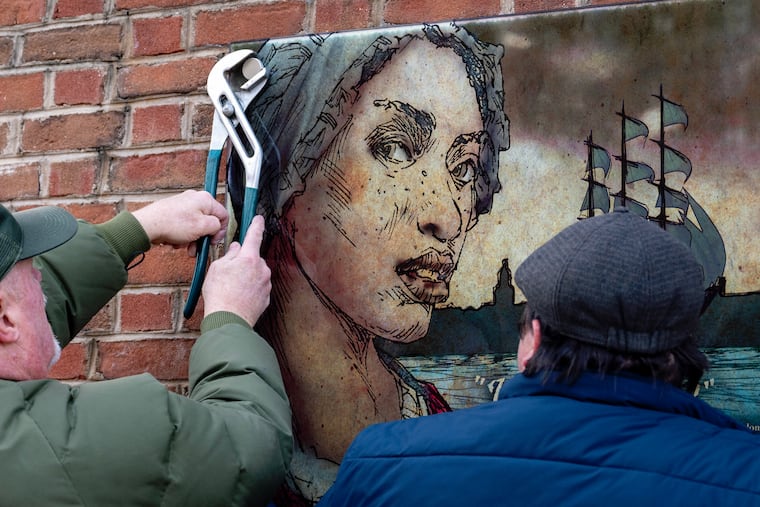
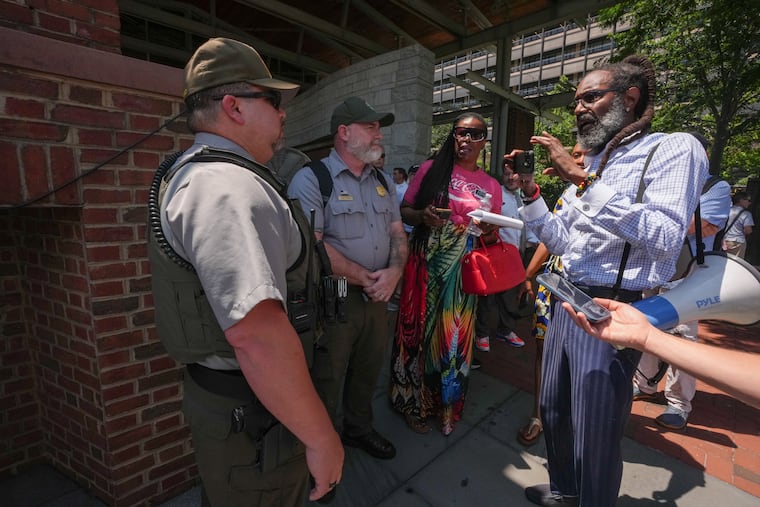
Last Thursday, the National Park Service removed a series of informational signs about slavery from the President’s House Site at Sixth and Market Streets in Old City Philadelphia.
Installed when the site opened in 2010, the signs documented the lives of the enslaved people who lived and labored in the home of Presidents George Washington and John Adams. Their removal occurred without consultation with the city, despite a 2006 agreement requiring the parties to meet and confer before any changes were made to the exhibit.
The City of Philadelphia responded by filing a federal lawsuit seeking to have the signs restored. According to the suit, the National Park Service and the U.S. Department of the Interior made unilateral changes in violation of those long-standing agreements. At stake is not simply a set of panels, but whether the public will continue to confront an essential historical truth: Slavery was central to the American presidency.
Philadelphia is the wrong place for historical amnesia.
The President’s House stands on ground where the ideals of liberty were articulated alongside the daily practice of human bondage. During Washington’s presidency, the executive mansion functioned simultaneously as a seat of republican government and a site of enslavement, even as Philadelphia emerged as a center of abolitionist thought and Black civic life. The exhibit that opened in 2010 was the result of years of advocacy by historians, community members, and activists who insisted that the enslaved people in Washington’s household not be erased from public memory.
Slavery was not incidental to Washington’s presidency. It was essential to it.
Washington enslaved people from childhood, inheriting human property at the age of 11 and expanding his holdings through purchase and marriage. By the time he became president in 1789, he was a Virginia planter whose wealth, household, and public standing depended on enslaved labor. That dependence followed him north.
When Washington relocated to Philadelphia, he encountered Pennsylvania’s Gradual Abolition Act of 1780, which allowed enslaved people to claim freedom after residing in the state for six months. Rather than comply with the law’s intent, Washington devised a deliberate strategy to evade it.
Enslaved people in his household were sent out of Pennsylvania just before the deadline and then returned, resetting the clock. He was careful to keep this arrangement private, instructing aides that it should not become public.
Among the enslaved people living in the President’s House was Ona Judge, who belonged to Martha Washington and served as her personal attendant. As historian Erica Armstrong Dunbar has shown through meticulous research, Judge understood the possibilities and dangers of freedom in a city like Philadelphia. In May 1796, after learning she was to be given away as a wedding gift, Judge fled the President’s House and escaped north.
Committed to slavery
Washington’s response reveals the depth of his commitment to slavery.
Within days, an advertisement appeared on the front page of the Philadelphia Gazette and Universal Daily Advertiser. It announced that Judge had “absconded from the household of the President of the United States.” Placed by the steward of the President’s House, the notice described her appearance in detail, warned ship captains not to assist her escape, and offered a reward for her capture and return.
The language matters. It explicitly tied the presidency itself to the pursuit of an enslaved woman who claimed her freedom.
Washington pursued Judge for years, dispatching friends, relatives, and officials to recapture her. He never succeeded, but his actions make clear that slavery was not a peripheral contradiction in his life. It was a system he actively defended while serving as president.
At the same time, Black Philadelphians were building institutions that challenged slavery not in theory, but in practice.
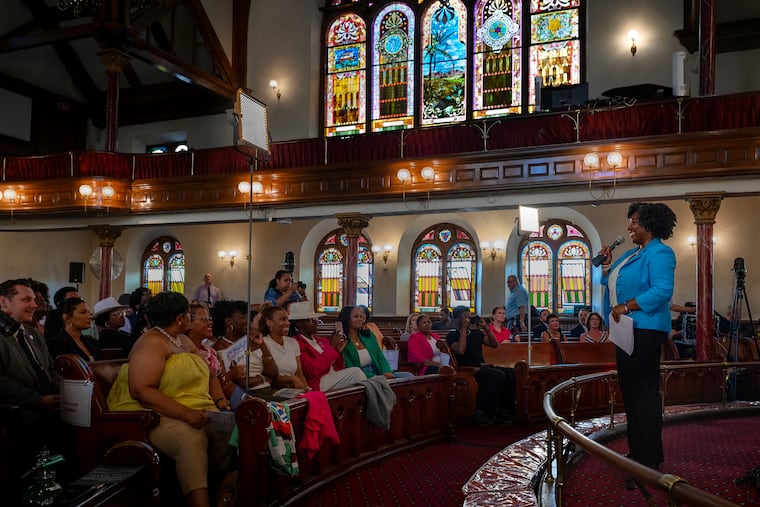
Only a few blocks from the President’s House, Richard Allen and Absalom Jones organized mutual aid through the Free African Society, laying the groundwork for what would become Mother Bethel African Methodist Episcopal Church. Born from the violence of segregation in white churches, Mother Bethel became a cornerstone of Black autonomy in the early republic — a place where abolition was preached, freedom was practiced, and Black civic life flourished.
The ironies of Philadelphia’s founding moment are unavoidable. The same Washington who pursued Judge and signed the Fugitive Slave Act also contributed financially to Allen’s efforts to build an African church. These contradictions were not hidden from contemporaries. They were preserved.
More than a century after the American Revolution and Washington’s presidency, the association between presidential authority and enslaved labor had not faded from public memory.
During Washington’s presidency, the executive mansion functioned simultaneously as a seat of republican government and a site of enslavement.
In 1883, a widely circulated illustrated history depicted Washington walking along a cobblestone street with a Black “servant” following several steps behind him in livery, carrying his coat. For Americans who could not read — or who absorbed history visually — such images conveyed meaning powerfully. Even generations later, Washington was still remembered in proximity to enslaved labor.
That illustration is not an abstraction. It survives today in the holdings of the Library Company of Philadelphia, where I direct the Program in African American History. Despite contemporary efforts to erase or soften this past, the evidence remains materially present. The Library Company holds the largest collection documenting the Black presence in Philadelphia — more than 13,000 items spanning the 18th through 20th centuries.
These materials document slavery, but they also trace the Black community’s sustained fight to advance abolition, and the enduring ways Black Philadelphians confronted the afterlives of slavery across the 19th and 20th centuries.
Preserving memory
The archive does what removed signage cannot. It insists on memory.
It shows how Black political thought, religious life, and institutions developed alongside — and in opposition to — slavery. Mother Bethel AME Church, which continues to stand today, hosted abolitionists, organized resistance to colonization schemes, supported the Underground Railroad, and later aided Black migrants during emancipation, Reconstruction, and the Great Migration. This is not peripheral history. It is Philadelphia’s history.
Removing slavery interpretation from the President’s House is therefore not a neutral curatorial decision. It contradicts the historical record, violates agreements requiring consultation with the city, and risks teaching the public that the presidency can be understood without reckoning with slavery.
It cannot.
This moment is especially fraught as the nation approaches the 250th anniversary of 1776. That commemoration will invite renewed storytelling about founding ideals and national origins. If we enter that moment by stripping slavery from public history sites, we will be manufacturing historical amnesia precisely when historical clarity matters most.
Philadelphia has another choice. In February, the Library Company of Philadelphia, in partnership with the American Philosophical Association, will host a conference titled “Black Declarations of Independence: Before and After 1776.” The premise is straightforward: Black claims to freedom, dignity, and self-determination were not marginal to the founding era. They were central to it — and they continue to shape the nation’s unfinished project.
Restoring the President’s House signs would be a modest but meaningful step in that direction. It would affirm that Philadelphia will confront its history honestly as it prepares to commemorate 1776 — and that it will not celebrate independence by forgetting those whose bondage, resistance, and perseverance make the meaning of independence intelligible in the first place.
Jim Downs is a historian and Guggenheim Fellow, a professor of history at Gettysburg College, and director of the Program in African American History at the Library Company of Philadelphia.

Inquirer Opinion Newsletter