Telling and preserving the full story of American history is our obligation to the ancestors who never lost faith
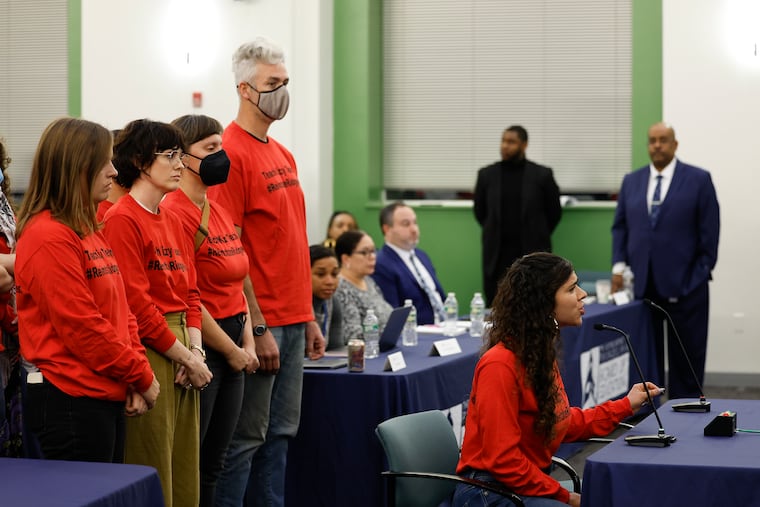
Today, as in the past, activists are raising their voices in protest of efforts to whitewash American history.
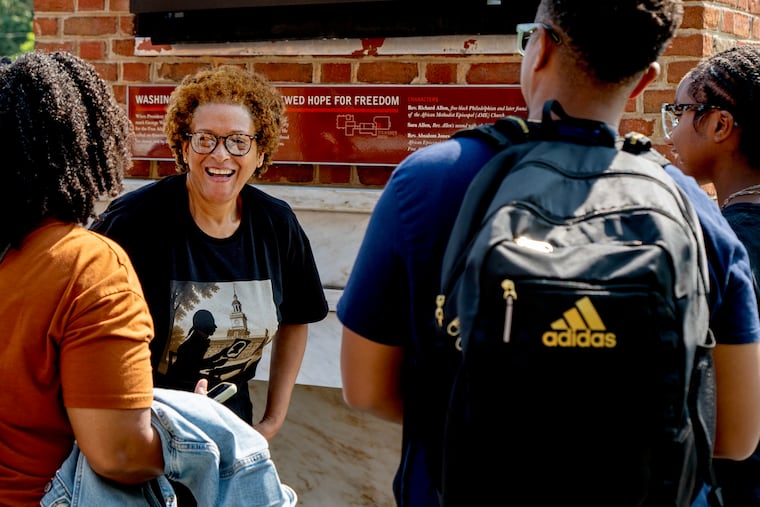
I was at Sixth and Market Streets on that cold and frigid day when the permanent exhibit, “The President’s House: Freedom and Slavery in the Making of a New Nation,” opened on Independence Mall on Dec. 15, 2010. I had moved to Philadelphia a few months earlier. So at the time, I was unaware of the yearslong protests to recognize the nine Black people enslaved by President George Washington in the shadow of the Liberty Bell.
Elite universities and law firms that obey in advance are not like us. Resistance is in African Americans’ DNA. We have been fighting the erasure of our history ever since our ancestors were brought here in the bowels of slave ships. Telling and preserving the full story of American history is not just about the past. It is our obligation to the ancestors who never lost faith.
Before the Civil War, it was illegal to teach enslaved people how to read or write. The ancestors passed down history in their music. In The Second Book of Negro Spirituals, published in 1926, “Lift Every Voice and Sing” lyricist James Weldon Johnson wrote:
I curated an exhibit on Black music from the 1770s to the 1970s, “Message In Our Music,” which is currently on view at the Historical Society of Pennsylvania. One of the objects in the exhibit is a book, Befo’ de War Spirituals: Words and Melodies. The collection includes the spiritual “Free At Las’.”
Long before the Rev. Dr. Martin Luther King Jr. delivered his iconic speech at the 1963 March on Washington for Jobs and Freedom, the ancestors sang, “T’ank Gawd a’mighty got free at las’.” The ancestors used the only tool they had — their voices — to tell their stories.
Today, as in the past, activists are raising their voices in protest of efforts to whitewash American history. As a lifelong activist, I am doing my part to preserve Black history for current and future generations.
» READ MORE: Trump’s foolish attempt to rewrite history at the National Museum of African American History and Culture | Opinion
I joined the Data Rescue Project and attended webinars led by Archiving The Black Web (ATBW). Inspired by the freedom schools of the civil rights movement, ATBW organized the Freedom School for Web Archiving, a series of webinars that will train “new generations of memory workers to preserve and steward online content that reflects the Black experience.”
Equipped with new digital tools, I am saving websites and webpages related to Black history to the Internet Archive before they disappear.
In a different kind of preservation effort, I‘m planning to collaborate with architects, technologists, historians, and activists to create a digital replica of the Robert Morris House, better known as the President’s House. President’s House.ai will reconstruct the building in its 18th-century splendor without concerns about the lot size or political compromise. We will use software that was not available in 2010 to tell the story of the nation’s complicated and contradictory history to a global audience.
In its winning proposal for the President’s House memorial site, Kelly Maiello Architects wrote that “[t]he families of the presidents, their political associates in the new government, their servants, and their enslaved people all come back vividly to life.”
Now, I‘m planning to work with the team at Kelly Maiello to create a digital 3D model of the original President’s House and the structures on the property grounds, including the quarters for the enslaved people Washington held captive. Troy C. Leonard, principal of Kelly Maiello, told me:
Along with the digital reconstruction of the President’s House, I will collaborate with historians to create AI-generated avatars of the nine people enslaved by President Washington.
» READ MORE: Black music is about more than entertainment. It’s a first draft of history. | Opinion
The avatars will be based on their descriptions in historical documents. For example, George Washington Parke Custis described President Washington’s cook, Hercules, as a “dandy” who wore a “blue cloth coat with velvet collar and bright metal buttons, silk waistcoat, fine white linen shirt, black silk knee breeches, and silk stockings, with a cocked hat. He wore polished shoes with large buckles and carried a watch with a long chain and a gold-headed cane.”
Visitors to President’s House.ai will be able to hold real-time conversations with AI avatars of Austin, Christopher Sheels, Giles, Hercules Posey, Joe, Moll, Ona Judge, Paris, and Richmond. Prompt engineers will train the avatars to respond based on primary and secondary sources. There will be guardrails to ensure reliable interactions. The AI recreations of the ancestors will not be able to comment on events that happened after their death.
While historical documents will be used to program AI-generated avatars, President Donald Trump wants the American people to reject well-documented truths.
Truth be told, Washington enslaved 123 Black people, nine of whom were rotated in and out of Philadelphia to prevent their manumission under the 1780 Act for the Gradual Abolition of Slavery.
The review of content at the President’s House is an Orwellian descent into censorship. It’s interpretive panels and books today. Will it be National Park Service videos and trading cards tomorrow?
The ancestors had faith they would be free at last. It is our obligation to those who bequeathed us a legacy of resistance and resilience to preserve their stories in public memory — whether in person on Independence Mall or virtually at President’s House.ai, which will be launched in 2026.
Faye Anderson, founding director of All That Philly Jazz, is project director for President’s House.ai. She can be contacted at andersonatlarge@gmail.com.