The redistricting war is coming to Pennsylvania. Here’s how Josh Shapiro should respond.
What policy solution would a smart politician propose at this white-hot political moment that would appeal to a majority of Pennsylvania voters, including the all-important independent voters?
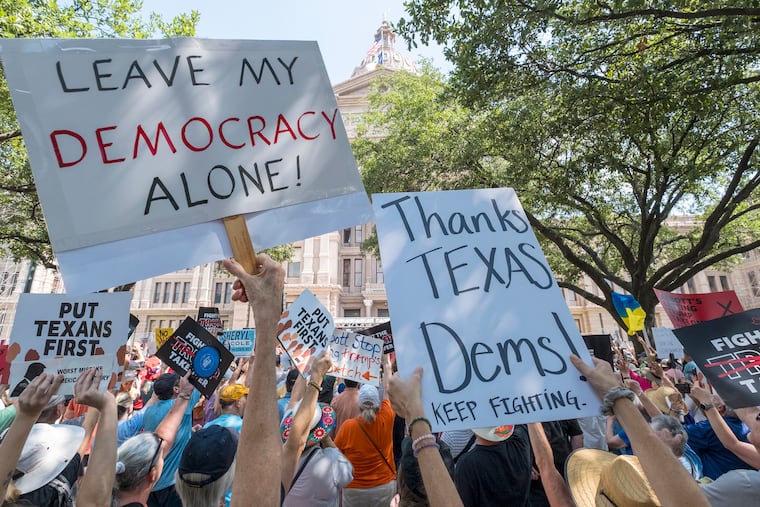
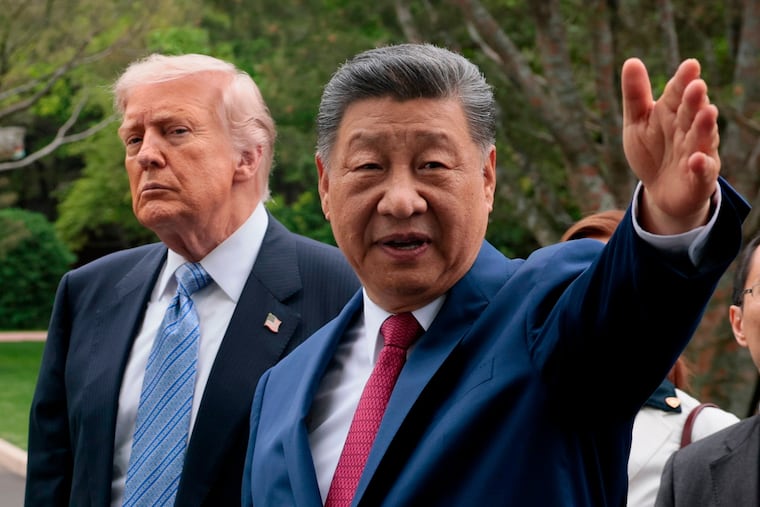
President Donald Trump recently launched a high-pressure campaign designed to preserve a Republican majority in the U.S. House of Representatives for the remainder of his term in office. Trump has insisted that the Texas legislature enact a new congressional map before the 2026 midterm election. Other Republican-led states are also being targeted for redistricting to produce more Republican seats.
It used to be an accepted norm that electoral maps for the House were only changed once every 10 years based upon population shifts measured by the decennial census. There have been exceptions to this normal practice, most notably the 2003 mid-decade remapping of congressional districts in Texas orchestrated by former Republican House Majority Leader Tom DeLay and then-Gov. Rick Perry.
Democratic governors have responded to Trump’s new initiative in various ways, depending mostly upon whether they have 2028 presidential ambitions or their party controls both chambers of the state legislature. Pennsylvania Gov. Josh Shapiro clearly falls into the former category, but not the latter since Democrats hold an extremely slim 102-101 majority in the state House, and Republicans control the Senate.
Shapiro is widely perceived as a smart and cautious politician who rarely takes public positions that might alienate voters of either major political party. In short, there is no reason to expect Shapiro will openly support efforts by any state, including Pennsylvania, to redraw congressional lines before the 2030 Census.
But that should not be the end of the story.
What should our state’s policy position be in this battle that has monumental implications for the future of elective politics here and across the nation?
If, as Shapiro has said, it is “shameful” for a state to redraw congressional districts mid-decade for the sole purpose of maintaining political power, what is to prevent that from happening in Pennsylvania if Shapiro loses reelection in 2026 and Republicans gain a seat in the state House?
In 2018, the state Supreme Court, with a Democratic majority, struck down a congressional map that was widely considered to be one of the worst gerrymanders in the country at the time. The court then proceeded to adopt its own map, which most experts deemed to be more fair overall, but which also resulted in more seats won by Democrats in subsequent elections.
This year, three Democratic justices are up for retention election, and both political parties and their allies are gearing up to spend millions of dollars to influence the result. If Republicans gain control of the Supreme Court and the state House, Pennsylvania voters could be faced with a new congressional district map as early as 2028, well before the next scheduled round of redistricting.
Imagine a different scenario where Democrats hang on to their Supreme Court majority this November, Shapiro is reelected in 2026, and their party gains control of the General Assembly. Imagine the political pressure directed at Shapiro, in the midst of a Democratic presidential primary election, to join the hyper-partisan fight and redraw a congressional map that potentially cements a U.S. House Democratic majority for his first term as president.
So, what policy solution would a smart politician propose at this white-hot political moment that would appeal to a majority of Pennsylvania voters, including the all-important independent voters who actually decide elections for governor and other statewide offices?
The answer is to remove legislators and the governor from the redistricting process and turn it over to an independent commission made up of voters from both political parties, as well as independent and third-party voters. Other states that use independent commissions have typically produced fairer electoral maps, according to experts.
Enacting an independent citizens’ commission does not guarantee an end to political chicanery. Politicians will always strive to control redistricting at both the state legislative and congressional levels. Witness what is now occurring in California, whose Democratic governor is plotting to redraw a congressional map approved by an independent commission.
If Texas and California are successful, will that discourage other states and reform advocates from pursuing citizen-led redistricting in the future? A better question might be: How much more of this bitter political divisiveness are voters willing to take before they start to check out and give up any remaining hope that things will ever get better?
This is a moment that cries out for strong leadership, particularly among the nation’s governors. It is not enough and too easy to criticize governors in other states for their efforts to gain or keep political advantage in Congress. It is not enough to say it won’t happen here, because it could. Pennsylvania voters should expect more from their leaders.
There is an old maxim that says, “Good government is good politics.” Shapiro should take a lesson and push hard for an independent redistricting commission in Pennsylvania.
Patrick Beaty is a retired attorney in Huntingdon Valley. He served more than 20 years in Pennsylvania state government, including as legislative counsel to Gov. Robert P. Casey. He was also the volunteer legislative director for Fair Districts PA from 2017 to 2022.