Our response to today’s refugees betrays the lessons of the Vietnam War
We have the same moral responsibility to save today’s refugees as we did the Vietnamese 50 years ago.
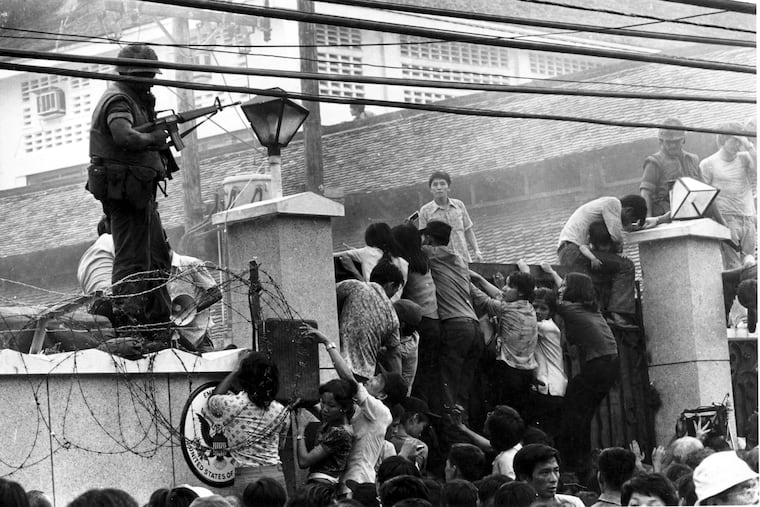
Fifty years ago, Saigon fell. In the aftermath, hundreds of thousands of Vietnamese fled the country. They feared persecution — being held as political prisoners, forcibly relocated, or killed.
The United States airlifted out some in the rushed days leading up to the collapse of the Republic of South Vietnam. Others were forced to board small, rickety boats, risking the South China Sea in hopes of safety. Thousands died making the journey, their pleas for help ignored by passing ships.
Many of these Vietnamese refugees were our wartime allies: They served alongside American troops, only to find themselves left behind to face the fallout. To abandon them would be a moral failing.
On May 7, 1975, President Gerald Ford, a Republican, made a heartfelt appeal to the nation, urging Americans to welcome 130,000 Vietnamese refugees. He reminded us of our nation’s immigrant history and the moral obligation to support those who had stood with us during the war.
In response to this humanitarian crisis, the United States welcomed over 300,000 Southeast Asian people.
Yesterday’s refugees and their descendants are now part of the American mosaic.
However, this achievement exposed that we had no robust approach to refugee resettlement. Our response to refugees was haphazard, predicated on the notion of each crisis as an aberration. Vietnamese refugees were admitted on parole, which is mainly governed by custom, not law. They relied largely on the generosity of charitable organizations to start their new lives in America.
The 1980 Refugee Act was born to respond to this need, creating a system to select refugees to bring to the United States and welcome them upon arrival. It codified the definition of a refugee as someone who has fled their country due to a well-founded fear of persecution on account of their race, religion, political opinion, nationality, or membership in a particular social group.
Yesterday’s refugees and their descendants are now part of the American mosaic.
The 50th anniversary of the fall of Saigon reminds us of the sacrifices made by Vietnamese refugees and the efforts of everyone who laid out the welcome mat for them, from U.S. government partners to refugee workers.
Over the years, the U.S. refugee program has received resounding bipartisan support. Our dedication to helping those seeking safety from persecution is a testament to the United States’ commitment to protecting freedom everywhere.
This year, the U.S. refugee program was halted.
Refugees who were approved for travel found themselves mired, contemplating spending another decade in the purgatory of camp life, where food rations are short and access to clean drinking water unreliable.
We have the same moral responsibility to save today’s refugees as we did the Vietnamese 50 years ago. To learn from the lessons of history, we should open our arms to the stranger in need of refuge and treat them as our own.
Eskinder Negash is the president and CEO of the U.S. Committee for Refugees and Immigrants. He was formerly the director of the Office of Refugee Resettlement.