We can’t wait for Harrisburg: Philadelphia needs a rideshare tax now
This moment is about more than one tax. It is about whether we are finally ready to fund our schools in a way that matches our values.
Philadelphia loves to call itself an “eds and meds” city, while treating pre-K-12 education like an afterthought.
Right now, we are facing a choice that makes that contradiction impossible to ignore.
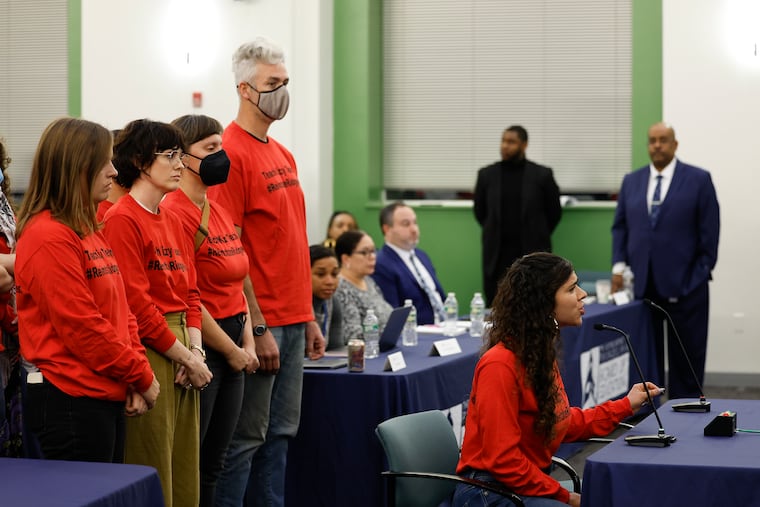
Philadelphia is on track to lose hundreds of educators — and we can prevent it. That is the reality facing City Council as members consider Mayor Cherelle L. Parker’s proposed rideshare tax, which the administration says could raise more than $50 million annually and help save roughly 340 school-based positions.
For me, it is a no-brainer.
As a lifelong educator and Philly native, I have seen what this looks like up close. During the Corbett administration, my school at the Shoemaker Campus lost $1 million. We lost teachers. Class sizes ballooned. Programs disappeared. Students lost the stability of the adults they trusted. Educators did not leave because they wanted to. They were forced out.
Philadelphia has lived this before.
We are now on the brink of repeating that history. The district faces a structural deficit large enough to tear hundreds of professionals away from their students unless local leaders act. But this moment is about more than one tax. It is about whether we are finally ready to fund our schools in a way that matches our values.
Systemic inequity
Inequity is built into Pennsylvania’s school funding system. By overrelying on property taxes, poor communities carry some of the highest tax burdens while still receiving the fewest resources. The Commonwealth Court ultimately ruled that Pennsylvania’s funding system is unconstitutional because it systematically deprives students in low-wealth districts of an adequate education.
But families in Philadelphia did not need a court ruling to tell them what they have lived for decades: In Pennsylvania, a child’s access to opportunity is still determined by the wealth of their zip code.
Districts like Philadelphia are expected to compete with a ball and chain attached to their ankles.
This is also about race. Research has shown that whiter districts often receive more state funding relative to their “fair share,” while districts serving more Black and Latino students receive less — even controlling for poverty and local tax effort. Communities of color are asked to do more with less in a system that masquerades as neutral.
Due credit
Philadelphia leaders have stepped up before. During the Kenney administration, the city committed roughly $1.5 billion in additional local funding for public education. Council repeatedly dedicated local revenues to keep schools afloat when Harrisburg stalled.
The city also invested in the broader conditions children need to learn. The Philadelphia Beverage Tax helped expand community schools and fund pre-K access for more than 17,000 children across the city.
State leaders have moved, too. Gov. Josh Shapiro and Democratic lawmakers increased school funding following the court decision. That progress matters. But Pennsylvania remains nowhere near adequately or equitably funding public education.
Both things can be true: Leaders have made meaningful investments, and Philadelphia’s children still do not have what they need.
Why it matters
Against this backdrop, the rideshare tax is not a random money grab. It is one of the tools available to prevent immediate harm.
The mayor’s proposal would add $1 to rideshare trips originating in the city, generating roughly $48 million annually for the school district and helping avoid cuts to hundreds of school-based positions from schools.
Some will argue that people are already struggling and cannot afford another tax. That concern is real. But in this case, the data tell a different story. The administration has cited census figures showing that fewer than 1% of Philadelphians earning under $50,000 use rideshares or taxis to commute to work.
The rideshare tax will not solve decades of underfunding. But it can keep educators in classrooms and support staff and programs intact while the larger fight continues in Harrisburg.
So, the real question is whether we are willing to ask people and corporations with more resources to contribute slightly more so our schools do not lose hundreds of educators and staff.
If we cannot bring ourselves to levy a $1 fee on trips most low-income residents are not even taking, how serious are we really about progressive school funding?
The rideshare tax will not solve decades of underfunding. But it can keep educators in classrooms and support staff and programs intact while the larger fight continues in Harrisburg. That matters.
Finnish model
People love talking about Finnish schools without talking about Finnish taxes.
Finland’s outcomes are not the result of vibes or slogans. They are the product of sustained public investment, broad taxation, and structural decisions that treat education as a universal public good.
Meanwhile, Pennsylvania still relies heavily on local property taxes, allowing wealthy communities to maintain stronger schools while lower-wealth districts struggle to meet basic needs. We cannot romanticize Finland’s outcomes while rejecting the investment required to produce them.
Education is not a cost to be managed down. It is the engine of the city we claim to want to be.
A clear choice
Philadelphia must continue demanding that Harrisburg meet its constitutional obligation while also using every responsible local tool available to protect students and educators right now.
Education is not a cost to be managed down. It is the engine of the city we claim to want to be.
Philadelphia has already shown that it can act creatively for children. The city taxed soda to expand pre-K, grew community schools, and stepped in when the state would not. But across Pennsylvania, the message to children has too often been simple: You only deserve the education your community can fund.
That is what needs dismantling.
Generations of Philadelphia’s students have waited long enough. The next chapter of this city will be written either by our investments or by our excuses. City Council should pass the rideshare tax — not as the final answer to school funding, but as proof that when Philadelphia says it values children, it is willing to act on it.
Sharif El-Mekki is the chief executive officer of the Center for Black Educator Development.

Inquirer Opinion Newsletter