I worked with Robert Mueller. His dedication to public service is an example for all.
I was saddened to hear of Mueller’s passing, but what I mourn most is the seeming loss of the ethos he represented at a time when our institutions are under siege.
The first time I met Bob Mueller, the reclusive, strait-laced FBI director who passed away recently, he was at a boisterous Washington, D.C., cocktail party with a drink in his hand. This was unheard of.
Never the backslapping, socializing type, he had come to a colleague’s party for the same reason he did almost everything: out of a sense of duty. Waving his glass for emphasis, he politely interrogated me about what he and the FBI could do better. In Mueller’s world, public service was the mission, and there were no days off.
Mueller’s impact on shaping the bureau after the terrorist attacks on 9/11 is well known, as was his restraint in the investigation of Russia’s influence on the 2016 U.S. presidential election. What is less obvious, but just as impactful, is Mueller’s impact on generations of public servants whose careers touched his. Every day, he taught a master class on how a true leader inspires others.
Not long after our first encounter, Mueller invited me into the inner sanctum of his personal office on the seventh floor of FBI headquarters. He was seated in a leather armchair framed by tall windows overlooking the majestic edifice of the U.S. Department of Justice and the iconic Washington Monument. But Mueller had not called me there to impress me with his power, nor to intimidate me. In a way, he wanted to continue our conversation from the party. He told me about a thorny problem he faced, and he wanted to know if I could help him solve it.
Our discussion hadn’t felt like a job interview, although I promptly came to work for him. Instead, he was asking me two simple questions, the same two questions often implicit in conversations with Mueller: Could I contribute to his never-ending campaign to improve our government (and himself)? And would I join him in the highest calling for any American — to serve one’s country before oneself?
Mueller’s clarity of purpose and the model of his own example made me say yes. Not just on that day, but in the decade that followed. Others who worked with him can attest to experiences just like mine. While Mueller was not a saint — he had plenty of contentious conversations and made some controversial decisions — for the most part, the director supported us even when we made mistakes. He challenged us to find problems to fix, even when all seemed well. He incessantly thought about the future and how to plan for, rather than react to it. He even occasionally confided in us — not to make him feel better, but to give us strength.
One day, several years into my time at the bureau, everything seemed to be going wrong. I was letting down my colleagues, not to mention the director. After a long, difficult meeting, Mueller took me aside. I was waiting for a scolding.
Instead, he spoke to me about his service as a Marine in Vietnam. He was a 20-something blue-blood from Philadelphia mired knee-deep in a senseless, hellish guerrilla war. He recalled the helpless feeling when his men would refuse his orders, saying, “What are you going to do … send us to ‘Nam?”
He had earned a Bronze Star and a Purple Heart for his courage, but the war story he told me was about his own failings. He reminded me that we all suffer, we all stumble, we all feel inadequate sometimes. And we all need to keep going. He was also saying stop taking yourself so seriously and stay focused on the greater mission, not your own everyday troubles.
Although I was saddened to hear of his passing, I’m grateful for his life as one of our nation’s greatest public servants. What I mourn most is the seeming loss of the ethos he represented.
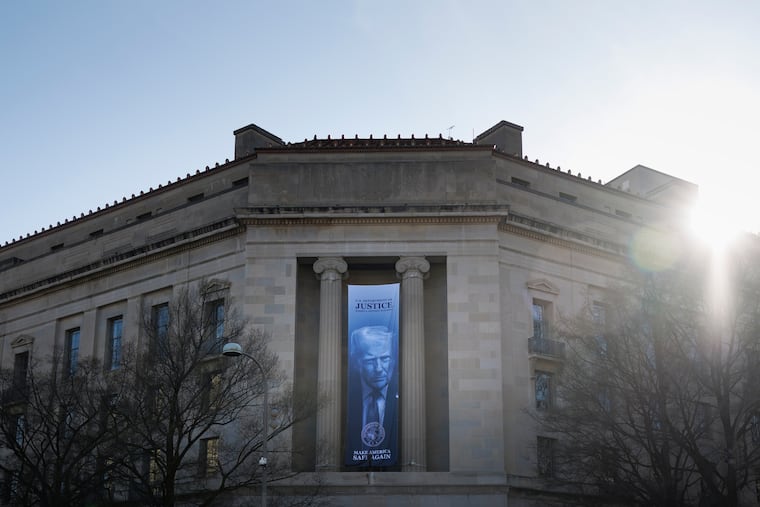
Mueller’s passing is particularly poignant now, when our government institutions are under siege, and the call to public service is so often questioned. I fear our political divisions not only force Americans apart, but also focus us inward, where we risk losing sight of our common mission as a nation.
While all of us are called to self-sacrifice, privilege can sometimes muffle that call — wealth, status, or success can make it easier to excuse ourselves from our obligation to others. The real tragedy would be if the ideals Mueller represented die with him.
May he remain an inspiration to us all.
Stephen D. Kelly worked with Robert Mueller as an assistant FBI director from 2010 to 2015, and as part of the special counsel investigation from 2017 to 2019. He is now retired and serves as the board chair of Citizens for Responsibility and Ethics in Washington (CREW), a nonprofit, nonpartisan organization committed to making government more accountable, transparent, and ethical.

Inquirer Opinion Newsletter