How the shadow of Roy Cohn continues to loom over Trump — and poisons perceptions about the practice of law
As counsel to Sen. Joseph McCarthy and a mentor to a future president, Cohn helped pioneer a style of character assassination that stains the legal profession to this day.
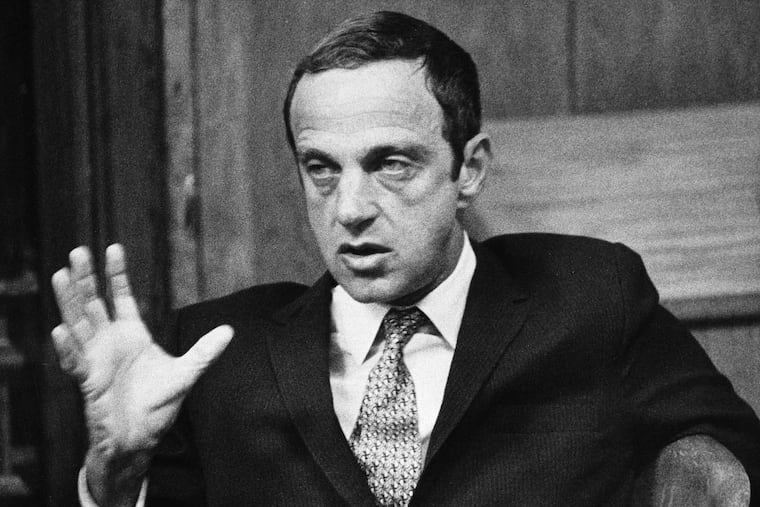
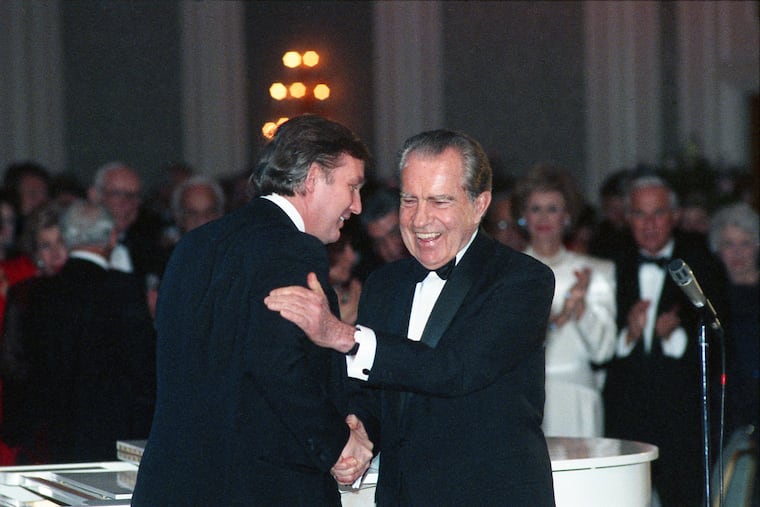
Long before Donald Trump catapulted from a reality TV show to the presidency, he was the ultimate apprentice to a very dark master: Roy Cohn.
A notoriously ruthless attorney, Cohn clawed his way into the spotlight in the mid-1950s as chief counsel to Joseph McCarthy when the then-junior senator from Wisconsin pursued his “Red Scare” witch hunts of suspected communists. During those infamous hearings, Cohn helped pioneer a style of character assassination that showed deep contempt for objective truth, morality, and the law.
Trump and Cohn crossed paths in 1973, when the federal government sued Trump and his father for allegedly refusing to rent apartments to Black applicants.
While most counsel would have sought a quiet resolution, Cohn advised Trump to punch back. He famously encouraged his apprentice to “tell them to go to hell,” subsequently launching a frivolous $100 million countersuit against the government.
Though the court threw it out, and the Trumps eventually settled the housing discrimination lawsuit, the headlines served their purpose: They established Trump as a man who would never back down. To Cohn, the legal system wasn’t a pursuit of justice; it was a battlefield where one used the law as a blunt force instrument.
The “Cohn creed” was a master class in professional misconduct: never apologize, never admit a mistake, and always retaliate with 10 times the aggression you received.
He didn’t just represent clients; he manipulated the media to poison the well of public opinion and built a stronghold of absolute loyalty, cultivating fear to both protect his position and dominate those around him.
Trump was an eager student of this scorched-earth philosophy. Decades later, as president, when his own government lawyers refused to act as his personal fixers, Trump would vent his frustration with the haunting question: “Where is my Roy Cohn?”
As the head of the Philadelphia Bar Association, I’ve seen firsthand how this brand of lawyering has left a stain on our profession that persists to this day. When licensed attorneys provide cover for unethical or illegal conduct, they don’t just win a news cycle — they pollute the entire administration of justice.
These “Cohn-istic” maneuvers have fostered a systemic disrespect for the rule of law. What we do in our practice, both inside and outside the courtroom, impacts the integrity of our society long after a case is closed. As we trace the arc from Cohn’s 1970s tactics to the legal circus of the 2020s, his shadow remains an unfortunate burden on our justice system.
We must remember that our license to practice law is not a permit for anarchy. The American Bar Association’s Model Rule 8.4 and the Pennsylvania Rule of Professional Conduct 8.4 explicitly state that it is professional misconduct to engage in behavior that is prejudicial to the administration of justice. As officers of the legal system, we have an ethical obligation to uphold institutional norms rather than subvert them for a client’s ego.
Ultimately, Cohn’s personal story is a tragedy, not a triumph. He died in 1986, a pathetic and isolated man, drowning in debt. He was disbarred just weeks before his death for, among other transgressions, attempting to defraud a dying client — a final act of corruption that even his influence could not mask.
“Cohn-istic” maneuvers have fostered a systemic disrespect for the rule of law.
As we look at the modern landscape, Cohn’s ignominious end serves as a cold warning: The legacy of the corrupt enabler does not bode well for those currently following his lead.
We are fortunate in the Philadelphia Bar Association to be guided by leaders and members who reject the Cohn creed in all its forms. Further, we are actively standing against efforts to subvert the rule of law, including amicus briefs on behalf of four law firms targeted by Trump administration executive orders.
After seeming to drop its defense of those orders in recent weeks, the U.S. Department of Justice later asked to “undismiss” the case, reportedly at President Trump’s request.
Fidelity to the rule of law requires more than private virtue; it demands public courage. We cannot be silent when our government leaders weaponize fear and target the vulnerable. Each of us must commit to practicing at the highest level of professional ethics — scrupulously honest in our pleadings, measured in our rhetoric, and steadfast in our duty to the courts — while also speaking clearly and confidently in defense of those unfairly targeted. Silence in the face of intimidation is acquiescence.
The oath we took compels us not only to represent our clients zealously within the bounds of the law, but also to stand together as guardians of the constitutional order. Last year, the bar association invited members of Philadelphia’s legal community to join us outside City Hall on May 1, Law Day, to reaffirm our attorney’s oath — more than 400 people joined us. We will do so again this year at our April 30 Law Day event.
Our bar association has long stood for the simple but powerful proposition that the practice of law is a public trust. We do not measure success by volume, vengeance, or viral headlines, but by fidelity to the Constitution, respect for the courts, and honesty with clients, adversaries, and the public.
In Philadelphia, we understand that our reputations are built case by case, word by word, and that the strength of our justice system depends upon lawyers who choose integrity over intimidation.
If Roy Cohn’s shadow reminds us how low the profession can fall, the daily work of the lawyers of this bar proves how high it can rise.
Ezra Wohlgelernter is the 2026 chancellor of the Philadelphia Bar Association.