School closures demonstrate the urgency of educational choice
After years of forcing students to attend schools based entirely on their zip code, officials seem unprepared when those schools disappear.
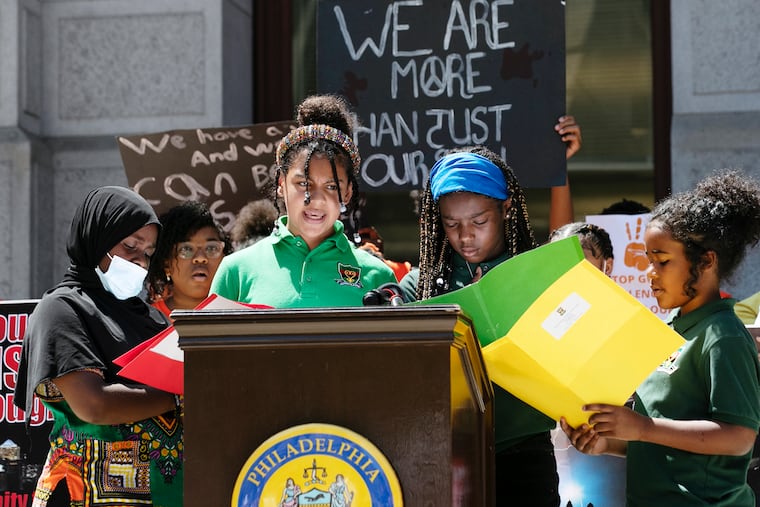
Nearly 5,000 Philadelphia students face a tough decision after the recent announcement of school closures in the district. As they begin searching for a new school, many will find the process overly fraught and needlessly complicated due to bad policies that have limited their choices.
Charter schools are one popular option. About 41% of Philadelphia’s public school students have chosen these kinds of schools — including both cyber and brick-and-mortar charters.
But transferring to a charter school isn’t a sure thing. In fact, charter schools host lotteries for interested students. For the 2025-26 school year, nearly 26,000 students applied, but only about 10,000 across the district were lucky enough to win a seat. The rest went on a waiting list.
Parents should be empowered to choose the learning environment that best meets their needs.
Philadelphia School District officials created this bottleneck. Despite the high demand for these schools, the school board has denied new charter school applications year after year. Even after approving its first charter school in nearly a decade, the board negated this progress by proposing to close several more charters.
Harrisburg isn’t helping, either.
Pennsylvania lawmakers continue to gut another popular alternative: cyber charters. This year’s budget robbed cyber charters of almost $178 million, which many bad-faith partisans euphemistically called “savings.” And as if those cuts weren’t enough, Gov. Josh Shapiro offered more doublespeak in his recent budget address, proposing to “redirect” another $250 million away from cyber charters.
So, how about transferring to a private school?
Last year, Pennsylvania awarded more than 101,000 tax credit scholarships to students seeking private alternatives to their neighborhood schools. Almost one-third of those scholarships went to Philadelphia students. Locally, the Children’s Scholarship Fund Philadelphia (CSFP) provides more than 6,800 scholarships to low-income K-8 students in the city. In December, CSFP held its own lottery day, calling hundreds of parents to tell them the good news.
But many more families weren’t so lucky — all thanks to bad politics.
Scholarships needed
Statewide, nearly 70,000 tax credit scholarship applicants were turned away due to program caps. Demand for these scholarships has outpaced supply, leaving far too many students stuck in schools that don’t work for them.
Lifeline Scholarships could have filled this gap. This transformative program would have awarded $100 million in scholarships to students attending Pennsylvania’s lowest-achieving schools — 35% of whom live in Philadelphia.
This program nearly became a law. But Shapiro, who promised that “every child — no matter their zip code — has the opportunity to succeed,” unceremoniously vetoed the program.
The governor has also fumbled a new federal opportunity: the Education Freedom Tax Credit (EFTC). He has yet to commit to participating in this new program, which enables donors to contribute dollar-for-dollar tax-deductible scholarships up to $1,700. Projections estimate the EFTC could provide $483 million in scholarships for Pennsylvania students.
So far, 27 states have indicated they will opt into the EFTC. Even Shapiro’s Democratic colleague, Colorado Gov. Jared Polis, officially opted in, calling the decision a “no-brainer.”
Time after time, public officials have denied educational opportunities for students who need them the most. Moreover, these policymakers have painted themselves into a corner: After decades of forcing students to attend schools based entirely on their zip code, the powers that be seem unprepared when those schools disappear.
Families need genuine options. Parents should be empowered to choose the learning environment that best meets their needs — whether that’s a local district school, a charter school, a private school, a cyber school, a microschool, or homeschooling.
Lawmakers must reverse course and empower families with educational opportunity. This means expanding the commonwealth’s successful scholarship programs, enacting new ones like Lifeline Scholarships, opting in to the federal tax credit, and ending the ongoing war against charter schools.
School choice recognizes that a one-size-fits-all system isn’t realistic. And judging by the declining enrollment of public schools and the rising popularity of their alternatives, Pennsylvania families have already sent an unambiguous message to policymakers: They want more educational choices.
It is incumbent upon us to give it to them.
Andrew Lewis is president and CEO of the Commonwealth Foundation, a free-market think tank. David P. Hardy is the president of Girard College and a distinguished fellow at the Commonwealth Foundation.