To strengthen science, institutions must reward collaboration
The problems science is expected to address are too large and too interconnected for any one lab to tackle alone. Our research spaces and academic reward systems must evolve to reflect that reality.
In the United States, we are witnessing a slow-motion reordering of the academic scientific enterprise.
Federal research budgets are under sustained pressure, other countries are aggressively recruiting our best scientists, and new barriers to bringing in international trainees and established investigators are straining our workforce. For many academic scientists, it feels as if the ground is shifting underfoot — and that feeling is real.
Alongside advocating for federal funding to prevent American science from shrinking, we should also ask what kind of research culture will carry us forward and deliver faster results to improve lives.
From a vantage point of more than 30 years in academic science, I see the strain on the current system, but also something more encouraging — a generation of scientists and leaders ready to strengthen the way we work together if given the structures and incentives to support it.
Academic science has been largely organized around the individual. We recruit promising people, set them up with their own labs, and measure success one person at a time — even when those individuals sit within themed departments or shared areas of interest. The focus is on their grants, their papers, and their awards. That model has produced extraordinary results, deserves respect, and remains essential.
At the same time, the problems science is now expected to address are too large and too interconnected for any one lab to tackle alone. Our research spaces and academic reward systems must evolve to reflect that reality.
History offers a blueprint. When the United States committed to winning World War II and putting a person on the moon, it built shared spaces to house interdependent teams with shared goals. The Apollo space program did not succeed on the strength of any single brilliant engineer; it succeeded because thousands were intentionally organized to pull in the same direction. More recently, sequencing the human genome and combating the HIV epidemic have proven again that mission-driven collaborative teams produce results no collection of solo efforts can match.
Beyond funding, we should ask what kind of research culture will carry us forward and deliver faster results to improve lives.
The opportunity today is to bring that same spirit into everyday academic life — redesigning institutions so that curiosity, creativity, and individual imagination have stronger pathways to connect, combine, and scale.
At the Wistar Institute’s new Research Centers in Philadelphia, senior leadership has begun doing exactly that.
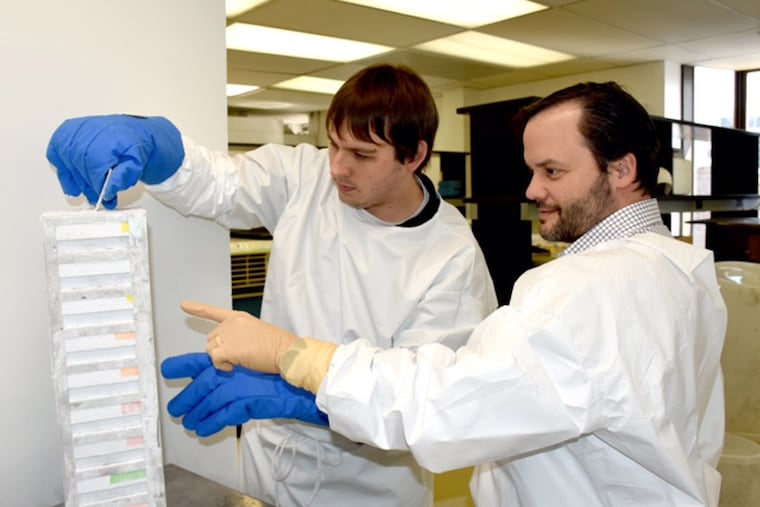
I mention this because the experience has made the lesson concrete: Local experiments can help inform a national conversation. Collaborative faculty tracks have been created, and outstanding investigators are recruited into programs designed to encourage interdependence. Wistar scientists share laboratories and common spaces, and are incentivized to set new collaborative goals as they advance.
What we have learned is that collaboration takes root when the systems around talented people actively encourage it: How we design access to shared spaces, how we hire, how we expect people to interact, how we assess promotion, how we allocate resources. This model also changes how an institution thinks about itself — its hiring priorities, its investments, its identity, its mission.
Shared spaces and shared goals within Wistar have fueled major interinstitutional initiatives connecting dozens of researchers globally. The result has been more individual creativity, because people are free to focus on what they do best within a larger enterprise that none of them could build alone.
The most creative scientists I know are looking for settings where their ideas can connect with others and grow into something larger. The larger and more capable the network, the more powerful the science.
This matters urgently because the next generation is watching. Young researchers today are as talented and driven as any who came before them, and they are already drawn to environments where collaboration is the norm. If we want them to build their futures in American science rather than accept offers abroad, we need to show them something worth staying for — an academic culture that actively restructures its values, invests its resources, and actively rewards collaborative teams.
Universities and research institutes across the country are starting to move in this direction, even if the pace is uneven. The question is how quickly we will recognize the urgency of the moment and commit, in earnest, to rewarding cooperative work — so American science remains positioned to deliver discoveries worthy of the public’s trust.
Luis J. Montaner is a viral immunologist and research leader at the Wistar Institute in Philadelphia.

Inquirer Opinion Newsletter