The next 250 years of American science depend on ordinary persistence, and the funding to sustain it
As funding for American scientific research dries up, fewer promising ideas move forward.
In the sweltering Philadelphia summer of 1776, cobblers, printers, dockworkers, and farmers continued their daily labor amid political upheaval and outbreaks of disease, sustained by the belief that steady work undertaken together could shape a different future. That ordinary persistence would eventually give birth to a revolution.
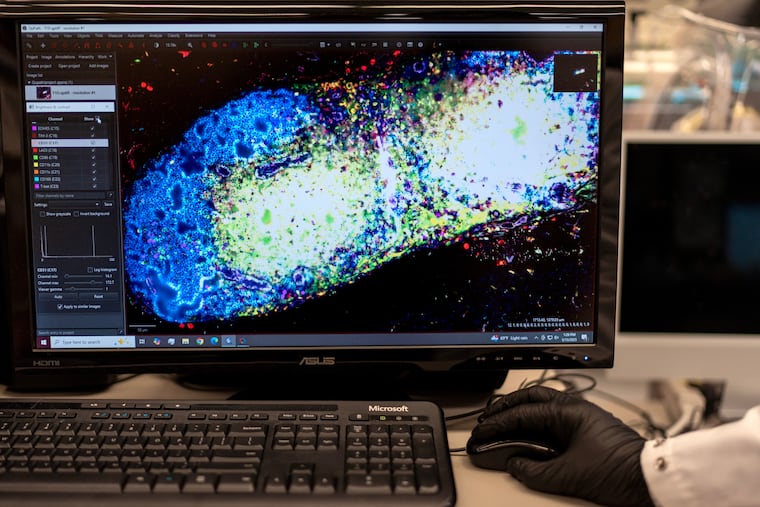
In laboratories across the country today, that same ethic continues to stir. Researchers return each day to careful, steady work that rarely produces immediate answers but over time builds a foundation that changes what medicine can do.
In the 250 years since independence was declared in Philadelphia, the United States has also built global leadership in scientific discovery. That leadership, however, is not guaranteed, and today, we are at risk of losing it.
What’s at stake is best understood through the breakthroughs that sustained investment has already made possible.
The mRNA vaccines that helped end the COVID-19 crisis emerged from decades of federally supported research that, for years, appeared uncertain and commercially impractical.
Cancer immunotherapy, including CAR-T approaches, has demonstrated that the immune system can be redirected to attack disease in ways once thought impossible. CAR-T therapies were not the product of a single breakthrough moment, but of years spent understanding how immune cells recognize and respond to disease.
Checkpoint blockade for cancer, which has saved more than one million lives, was the result of years of work in basic preclinical models of disease. Moreover, today we sit on the precipice of revolutionary new treatments for pancreatic cancer and other cancers driven by the gene KRAS, due to investments in fundamental science around this gene and related pathways.
And, just recently, a child diagnosed with a rare genetic disorder was successfully treated with a customized CRISPR gene editing therapy by a team at Children’s Hospital of Philadelphia and the University of Pennsylvania.
From humble beginnings in studies of bacterial defense systems to correcting genetic disorders in children, these approaches have their origins in federally funded basic science research.
However, even that investment is beginning to erode. Adjusted for inflation, National Institutes of Health funding today remains below its 2003 peak, and recent budgets have struggled to keep pace with the rising cost of doing science. As resources tighten, fewer promising ideas move forward, and the pipeline of discovery narrows.
For example, the remarkable GLP-1 class of drugs, such as Ozempic, expected to slash diabetes and obesity rates across the country, was derived, in part, from NIH-sponsored basic research on the venom of the Gila monster, a lizard native to the U.S.
Researchers, including those at the Colton Center for Autoimmunity, are now applying ideas similar to these breakthroughs to autoimmune conditions, opening the door to treatments that are more precise, more durable, and less reliant on broad immune suppression. These include CAR-T cells for autoimmunity, advances in treatment for multiple sclerosis, and new promising research on treatments for rare but devastating diseases like retinal vasculopathy with cerebral leukoencephalopathy.
This is the promise of precision medicine: not one-size-fits-all care, but interventions shaped by each patient’s biology.
Federal research support reflects a national decision that knowledge serving the public good is worth sustaining even when the payoff is distant.
None of this happened by accident.
Many of the breakthroughs now transforming medicine were built on years — often decades — of federally supported basic research, long before their practical application was clear. Nearly all of the drugs and therapies later brought forward by industry trace their origins back to federally supported basic research, undertaken long before their eventual medical or commercial value could be known.
This is how discovery works. The most important advances often begin as hard questions in laboratories, without a clear timeline or commercial payoff.
Scientific leadership may not always be seen as a measure of national strength, but it should be. The immune system sits at the center of many of the most pressing challenges in medicine, from cancer and infectious disease to chronic inflammation, autoimmunity, and even aging and neurodegenerative diseases. Advances in immunology are changing what medicine can do, moving us from managing disease to predicting it earlier, targeting it more precisely, and, in some cases, reprogramming the body to fight back on its own.
Federal support for research is also an economic engine: In fiscal year 2025, NIH funding generated $2.57 in economic activity for every $1 invested and supported more than 390,000 jobs nationwide.
That progress is neither automatic nor inevitable.
If the United States pulls back from long-term investment in research, talent, and scientific institutions, innovation will slow, discovery and drug development will move overseas, and America risks losing its preeminent place as a scientific leader. Federal research support reflects a national decision that knowledge serving the public good is worth sustaining even when the payoff is distant.
Ordinary persistence means carrying on in the face of uncertainty and hardship, continuing the work even when progress is slow, and success is not assured. It is a tradition woven deeply into the country’s history: The belief that steady effort, sustained over time, can lead to lasting change.
As we mark the nation’s founding in the city where it began, we should also make a shared pledge for the next 250 years: to recommit to that fundamental ideal of sustaining the patient, collective work of discovery.
In Philadelphia, that tradition helped shape the nation’s founding. The next 250 years of American science will require the same ordinary persistence still practiced every day in laboratories, clinics, and classrooms across the country.
E. John Wherry is director of the Colton Center for Autoimmunity and the Institute for Immunology and Immune Health at the University of Pennsylvania’s Perelman School of Medicine, where his research focuses on harnessing the immune system to better understand, treat, and prevent disease.

Inquirer Opinion Newsletter