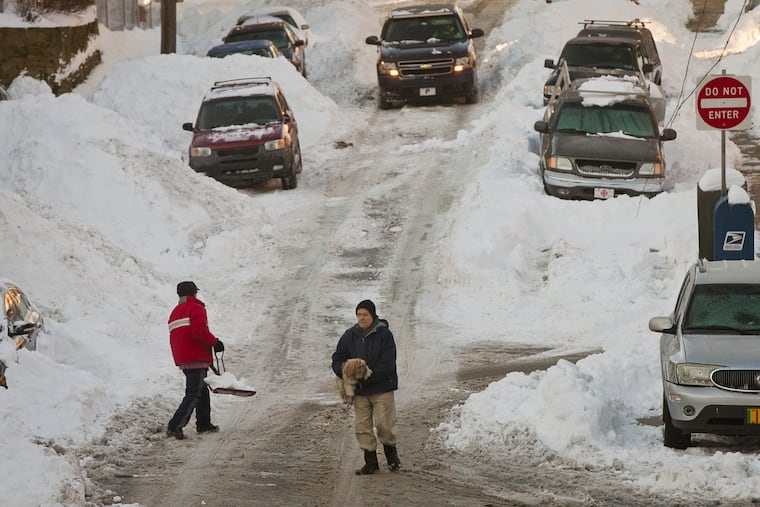
Cuts to science funding will create a flood of challenges in our coastal communities
Progress toward supporting safer, more affordable coastal communities in the face of climate change is at risk from a storm of cuts to U.S. scientific funding.
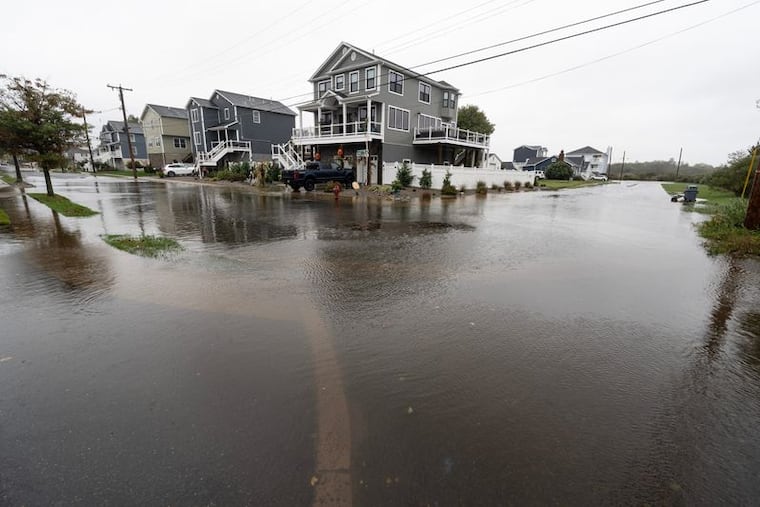
Since 1980, the U.S. has been impacted by more than 400 weather and climate disasters costing at least $1 billion each; nearly half of these events have happened in just the last decade.
Hurricanes are regularly among these costly events, as residents of Philadelphia and New Jersey well know, considering Hurricanes Sandy (2012) and Ida (2021) rank as the fifth and sixth overall costliest U.S. weather and climate disasters.
My own research has shown how such storms are becoming more dangerous as our planet warms: Atlantic hurricanes are strengthening more quickly, changing storm tracks are amplifying hazards for East Coast communities, and flood heights are worsening in New York and New Jersey, largely due to rising sea levels.
For years, the U.S. has funded and supported many of the world’s most talented scientists as they worked to understand and address the challenges that such hazards present to coastal communities. Consider the National Oceanic and Atmospheric Administration’s (NOAA) Hurricane Forecast Improvement Program. With funding of $250 million from 2009 to 2019, this program contributed to forecast improvements that are estimated to have saved about $5 billion per hurricane landfall over a similar period.
The National Weather Service (NWS) also represents an excellent return on investment, with an estimated $73 value for every $1 invested by U.S. taxpayers. The U.S. has furthermore helped fund and lead about a third of all global sea-level change projection studies, improving coastal planning abilities.
Now, however, this progress toward supporting safer, more affordable coastal communities in the face of climate change is at risk from a storm of cuts to U.S. scientific funding.
Proposed cuts include the complete elimination of NOAA’s Office of Oceanic and Atmospheric Research (which housed the aforementioned Hurricane Forecast Improvement Program, among many other vital research initiatives) and more than a 50% reduction in funding for the National Science Foundation (which, for more than 75 years, has driven U.S. scientific progress).
Proposed funding cuts place the health and safety of coastal residents and visitors at risk by reducing funding to support critical forecasts and research that enable forecast improvements.
Hurricanes, for instance, have become more damaging as our planet has warmed, but research improving forecasts and warning times has actually reduced the death toll from hurricanes around the world — from over 350,000 lives lost (1970s) to less than 20,000 (2010s).
Local communities pay the price when indispensable tools and resources are taken away from the scientists predicting and planning for such extremes. This is a harsh reality that has already been realized in Kerr County, Texas, when devastating 2025 floods led to unspeakable disaster at a time when key vacancies existed in local NWS offices due to federal cuts.
Reduced science funding also worsens the affordability crisis. Consider Hurricane Sandy: Research has shown that higher sea levels alone led to approximately $8 billion more damage than would have occurred otherwise. In many coastal communities, homes are either “uninsurable” or unprotected due to the high cost of flood insurance. In New Jersey, where tourism brought in over $51 billion in 2025, the impacts of coastal hazards threaten devastating economic impacts.
Federal funding to understand coastal hazards, and better predict them, is crucial to ensuring the future economic health of local coastal communities.
Losing scientific funding will also mean an irreplaceable loss of future scientific talent.
Federally supported geoscience programs train the workforce behind key services from weather prediction to disaster risk reduction. When we weaken or even collapse the programs that inspire future scientists — those who would continue to innovate and advance solutions — we are not only providing less opportunity for future generations, but also creating a self-inflicted wound from which it will take decades to recover.
In New Jersey, where tourism brought in over $51 billion in 2025, the impacts of coastal hazards threaten devastating economic impacts.
The U.S. has spent years investing in science to track, plan for, and protect our coastal communities from extreme events. Now, we must fight to keep the benefits science has produced, and to continue building expertise that will inspire groundbreaking solutions to future coastal challenges.
Scientists know this all too well and have worked to prevent devastating funding cuts that will harm not only our research but, more importantly, our local communities.
But we cannot continue to act alone. The time has come for everyone, and anyone, who cares about the safety, economic viability, and future prospects of our local coastal communities to make their voices heard and urgently fight to keep the federal support that has allowed U.S. science to benefit us all.
Andra J. Garner is an associate professor in Rowan University’s department of environmental science, where she studies the impacts of a warmer world upon coastal hazards.

Inquirer Opinion Newsletter