Supreme Court does not hold U.S. gun manufacturers accountable for impacts of trafficked weapons. But we should.
A SCOTUS ruling last week may have offered impunity to American gun manufacturers whose products are trafficked to Mexico, but from a business ethics standpoint, moral responsibility may still apply.
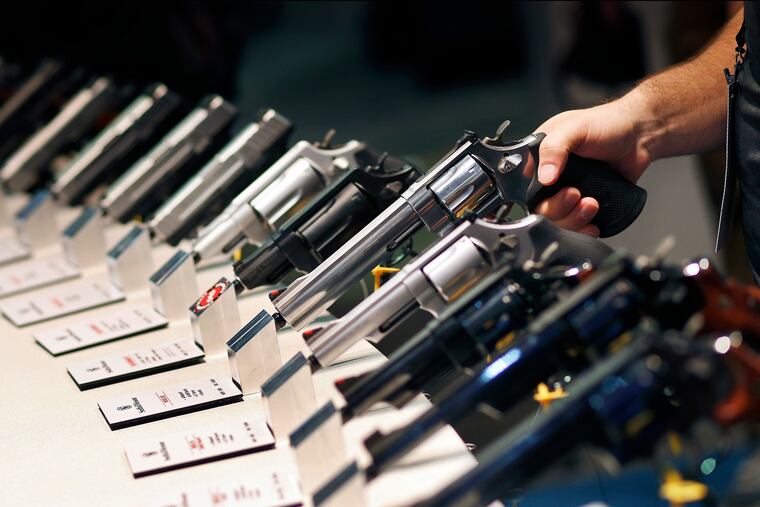
A 2019 article in the Economist puts in stark terms a gun violence stat Americans rarely think about: A U.S.-made gun is more likely to kill a Mexican than an American.
That startling and counterintuitive reality was at the heart of Smith & Wesson Brands Inc., et. al., Petitioners v. Estados Unidos Mexicanos — a lawsuit brought by the Mexican government against American firearm manufacturers in 2021 — which the U.S. Supreme Court ruled on June 5, finding in favor of the domestic arms manufacturers.
The Mexican government had sought legal relief for decades of harm to its civilians, who never consented to the influx of weapons and cannot protest against the business practices of the American firearm manufacturers, but suffer the tangible harms. SCOTUS, in the unanimous ruling, cited that Mexico did not “plausibly allege that the defendant gun manufacturers aided and abetted gun dealers’ unlawful sales of firearms to Mexican traffickers.”
The decision did not come as a surprise. For decades, the American gun industry has been sidestepping domestic lawsuits, even as the death toll of gun violence rose. Further, the passage of the 2005 Protection of Lawful Commerce in Arms Act continues to grant broad immunity to federally licensed manufacturers, dealers, sellers, and importers of firearms for the unlawful misuse of their products by consumers.
Combined with the Tiahrt Amendment prohibiting firearm tracing data collected by the Bureau of Alcohol, Tobacco, Firearms and Explosives (ATF) from being released to independent researchers, local governments, and the public, there is a well-established and seemingly impenetrable legal barrier for gun manufacturer accountability.
But for those of us invested in business ethics, there is a counterpoint to the status quo of manufacturers being held responsible only for harms caused by product defects. The work of Georgetown University researcher and professor George G. Brenkert outlines how his social products liability framework applies to “a non-defective product does what it is designed to do, but because of the social circumstances in which it comes to be used, imposes significant harms.”
In other words, moral responsibility may still apply even when the law offers immunity.
According to Brenkert, four conditions can determine whether a company bears moral responsibility: harm and costs, contribution, foreseeability, and effective alternatives. Unsurprisingly, the American firearm industry fulfills each one.
Harm is by far the easiest condition to fulfill, considering the ability of the product to produce harm to people and costs to society in a particular area or region. According to the lawsuit, Mexico has only two gun stores and estimates that 90% of its recovered firearms to have originated from the United States. But the numbers associated are staggering: six women are murdered every day with a firearm, two million migrants plead at the border after experiencing “persistent and unrelenting gunfire,” and two out of every three murders are committed with guns.
The second condition — contribution — centers on the way a business encourages or abets the process leading to harm. This can be gauged by the extent to which manufacturers are facilitating the process of harm through product design and advertising techniques. American manufacturers have employed a strategy aimed at catering to the consumer preferences of Mexican criminal groups, manufacturing everything from firearm models named “El Jefe,” “El Grito,” and the “Emiliano Zapata Centennial” to the Soviet-inspired Kalashnikovs known as “chivitos.”
Foreseeability is the form of social product liability in which evidence against gun manufacturers is most indisputable. Since 2016, the ATF has published U.S.-sourced firearm tracing data from Mexico. Both news sources and the Mexican Secretariat of National Defense have published graphs and figures citing the top gun brands seized in Mexico. The American gun industry has the knowledge and ability to foresee the illicit trafficking of its guns into Mexico.
The final condition of social product liability — effective alternatives — argues that responsibility can only be assigned when an agent has the capacity to act to prevent harm or reduce its costs. Whether by refusing to reinstate magazine disconnects to prevent unintentional shootings or by failing to enforce stricter standards to deter straw purchasers, the American gun industry remains negligent.
By using this social products liability framework in business ethics, our country can finally begin to assign responsibility for the harms caused by gun manufacturers here and in Mexico.
If the courts will not hold them accountable, then the public and the business sector must.
Seo Yoon “Yoonie” Yang is a graduate of the Wharton School at the University of Pennsylvania, where she was part of the dual-degree Huntsman Program in international studies and business.