Michael Coard: When it comes to the President’s House, justice delayed is not always justice denied
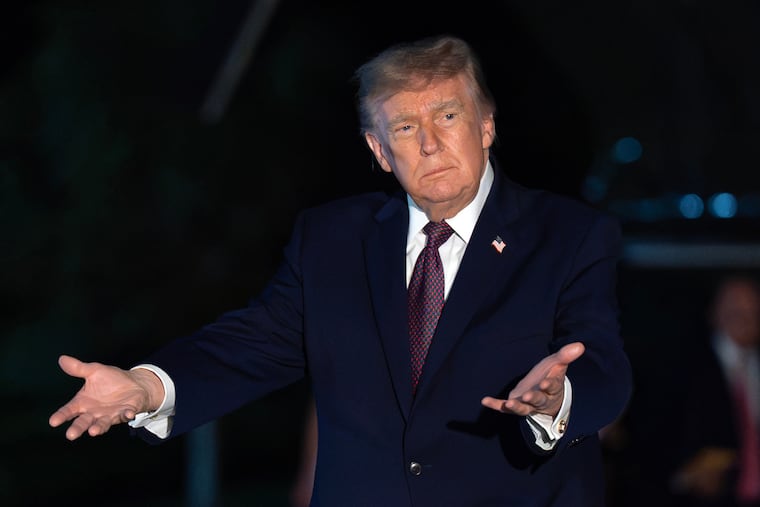
Trump does not believe in telling the truth, the whole truth, and nothing but the truth about American history. But the Avenging the Ancestors Coalition is not deterred.
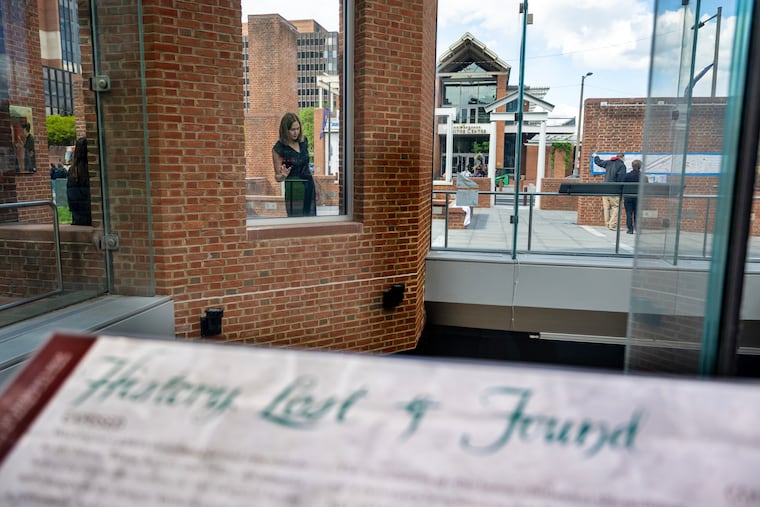
The version of history President Donald Trump intends to tell at the President’s House Site on Independence Mall racially whitewashes, at best, and “racistly” censors, at worst, the abject evil of slavery.
It offensively and outrageously claims, for example, that it provided “a modicum of autonomy” in Philadelphia relative to the South — despite the fact that slavery, by definition, provides no autonomy whatsoever. The revisionist text asserts that slavery caused George Washington “discomfort” despite the fact that he enslaved 316 Black human beings at his Mount Vernon, Va., plantation, and transported nine of them to Philadelphia, where he illegally held them from 1790 to 1797 — in violation of Pennsylvania’s 1780 Gradual Abolition Act and its 1788 amendment.
Yet, that view was endorsed by the Third Circuit Court of Appeals in its June 18 ruling restoring the Trump administration’s right to remove 34 panels about the people enslaved by President Washington.
The group I founded and lead, the Avenging the Ancestors Coalition, is one of the groups appealing the decision — a ruling that called to mind one of the author James Baldwin’s most profound statements: “To be Black and conscious in America is to be in a constant state of rage.”
If you’re Black and conscious in America, you know about slavery and sharecropping and convict leasing and lynching and Jim Crow and disenfranchisement and gerrymandering and redlining and police brutality and mass incarceration — and therefore you are necessarily enraged.
Allow me to expand upon the aforementioned slavery awareness part.
Although American slavery was birthed in 1619 in Virginia, it was not unique to that colony or state or to the South. It also happened in the North, including in Philadelphia.
Slavery was a key component of daily life here.
On the southwest corner of Front and High Streets — now Market Street — stood the London Coffee House, which opened in 1754 with funds provided by 200 local merchants. It was where shippers, businessmen, and local officials — including the governor — socialized, drank coffee and alcohol, and ate in private booths while making deals.
It was where, on the High Street side, auctions were held for carriages, foodstuffs, horses, and African girls, boys, women, and men who had just been unloaded from ships that docked right across the street at the Delaware River.
Slavery was a key component of daily life here in Pennsylvania generally, and Philadelphia particularly.
In the 1760s, nearly 4,500 enslaved Black people labored in the colony. About one of every six white households in the city held at least one Black person in bondage. This cruel institution began here in 1684 when the “slave” ship Isabella from Bristol, England, anchored in Philadelphia with 150 captured Africans.
A year later, William Penn himself held three Black people in bondage at his Pennsbury Manor estate, 20 miles north of Philly.
The story of slavery on federal property in Philadelphia is especially important now that America is celebrating its 250th anniversary. Accordingly, the truth, the whole truth, and nothing but the truth must now be told about this country’s history. And that truth includes the following:
On July 4, 1776, when the edited version of the Declaration of Independence was formally adopted by the Continental Congress in Philadelphia, 41 of the 56 signers of that historic document — as confirmed by Chuck Huggins, former communications specialist at U.S. Army Military Intelligence — enslaved Black folks.
One of those 56 white men, the drafter of the Declaration of Independence, namely Thomas Jefferson, enslaved 175 Black men, women, and children in 1776, and increased that number to 267 by 1822.
When that historic document was adopted in 1776, slavery was legal in all 13 colonies, which means 20% of the population was enslaved. Despite the claim in the second paragraph of the Declaration of Independence that “All men are created equal,” there were more than 500,000 enslaved Black persons in the 13 colonies from 1776 to 1800.
And slavery wasn’t just a Southern sin. During the time of the Declaration of Independence, approximately 40,000 Black people were held in bondage in the North, as documented by James M. Velo, a researcher at the Encyclopedia of History. Census records from 1780 show 6,855 of those 40,000 were in Pennsylvania, with 539 in Philadelphia.
With the 1788 U.S. Constitution, which ultimately resulted from the 1776 Declaration of Independence, the position of president was officially created. Twelve presidents at some point in their lives enslaved Black human beings: Martin Van Buren, one; Ulysses S. Grant, five; Andrew Johnson, eight; William Henry Harrison, 11; James K. Polk, 25; John Tyler, 70; James Monroe, 75; James Madison, approximately 100-125; Zachary Taylor, approximately 150; Andrew Jackson, approximately 150-200; Thomas Jefferson, 267; and George Washington, 316.
And speaking of Washington, he’s the very same person who in 1784 — which was just six years before he arrived in the city — had teeth from enslaved Black adults “transplanted into” his mouth, as documented in An Imperfect God: George Washington, His ‘Slaves,’ and the Creation of America by award-winning author, historian, and Library of Virginia board of trustees member, Henry Wiencek.
Moreover, five years later in 1789, a dentist in Philadelphia made Washington’s first set of total dentures from teeth that were “yanked from the heads of his ‘slaves,’” as documented in George Washington’s Teeth: An Unconventional Guide to the Eighteenth Century by Robert Darnton, a cultural historian and professor who served as the American Historical Association’s president, Harvard University‘s library director, and a New York Public Library board member.
Washington didn’t have wooden teeth, as we were all taught in elementary school; he actually had enslaved Black folks’ teeth. This is just one of many reasons why the truth, the whole truth, and nothing but the truth must be told about American history.
But Trump does not believe in telling the truth, which is why on Jan. 22 at 2:50 p.m., he had the 34 interpretive panels about slavery removed. Or, better stated, “desecrated,” because purging constitutes the debasement of an essential part of historic hallowed ground at Sixth and Market Streets.
Trump committed an action that Republican-appointed federal District Court Judge Cynthia Rufe, in her Feb. 16 opinion ordering complete restoration of all 34 panels, described as “Orwellian.”
In her blistering 40-page opinion, Rufe wrote: “As if the Ministry of Truth in George Orwell’s ’1984′ now existed, with its motto ‘Ignorance is Strength,’ this court is now asked to determine whether the federal government has the power it claims — to dissemble and disassemble historical truths when it has some domain over historical facts. It does not.”
Her reference to 1984 is absolutely on point because it immediately conjured Big Brother’s ruling party, which had (like Trump’s ruling party obviously has) the slogan: “Who controls the past controls the future. Who controls the present controls the past.”
But that’s not America’s ideal. That’s not America’s promise. And that’s not what any political party in America should advocate at any time, but especially not during America’s Semiquincentennial.
But a panel from the Third Circuit now says Trump’s federal government can exercise that kind of control.
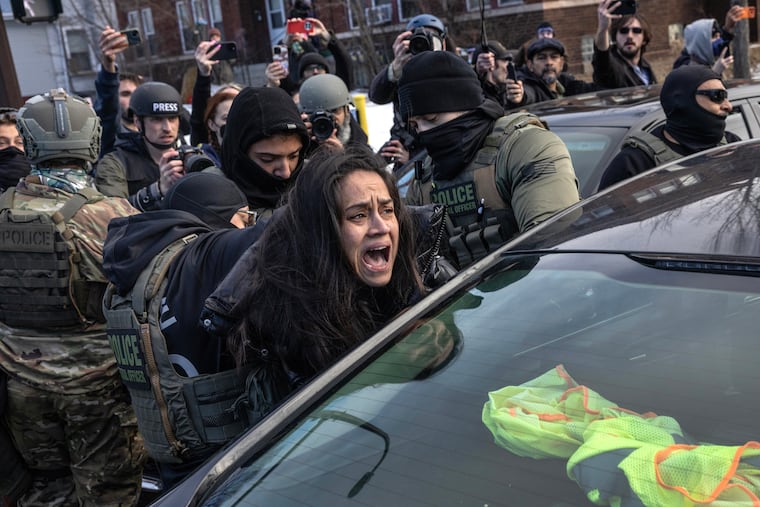
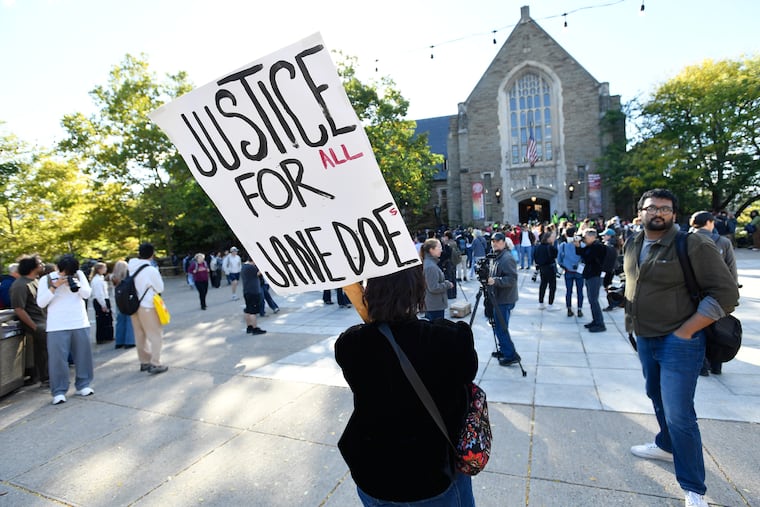
The coalition has taken a page from the book of the civil rights activists of the 1950s and 1960s who sent protesters into the streets to raise hell and attorneys into the courtrooms to raise issues.
Despite that, the Avenging the Ancestors Coalition is not deterred. Although we want justice and we want it now, we are students of history, and therefore know that African descendants in this country and African Americans here have never achieved success without struggle and delay.
Remember the clarion call of Frederick Douglass, who proclaimed: “Power concedes nothing without a demand. It never did and it never will.” And that is exactly why he also commanded: “Agitate! Agitate! Agitate!”
The coalition has taken a page from the book of the civil rights activists of the 1950s and 1960s who sent protesters into the streets to raise hell and attorneys into the courtrooms to raise issues. They eventually won — and we, too, will eventually win.
The victory, theoretically, could come from a Third Circuit panel rehearing and reversal, or from a Third Circuit ruling involving all 14 members of the court in a reversal of its three-member panel’s decision.
It could, theoretically, result in the U.S. Supreme Court granting relief after petitioning, or could result from the filing of a completely new lawsuit.
Or it could theoretically result from some other legal action. But no matter what is ultimately decided by the Third Circuit Court of Appeals or any other federal court, the Avenging the Ancestors Coalition will relentlessly continue to demand justice.
That justice may not come today or tomorrow, but it will come eventually if we continue to agitate for it.
Today, tomorrow, next week, next month, next year, and forever. After all, justice delayed is not always justice denied.
Michael Coard is a civil rights attorney and founder of the Avenging the Ancestors Coalition (ATAC), which led the successful effort to establish the President’s House slavery memorial at Independence National Historical Park in Philadelphia. Although he has been a trial lawyer for three decades, he authored this commentary in his role as founder of Avenging the Ancestors Coalition and not in his role as an attorney.

Inquirer Opinion Newsletter