Build the Sixers arena uptown instead
A perfect uptown site is the southwest corner of Broad and Lehigh.
Downtown Philadelphia is not the best site for a massive and mostly empty Sixers arena. Center City already has numerous large attractions east of Broad Street: Reading Terminal, City Hall, and the Convention Center, to name a few. An arena that is vacant all but approximately 75 days of the year and shoehorned into an historic neighborhood will not be a “catalyst” for economic development. One need only look at the Convention Center, with its large footprint and poorly designed ground level, to understand that.
What the area does need is more housing and office workers. A tired mall will revive when numerous people are looking to support their daily lives with shopping, services, and related forms of consumption. The “market” would respond to a steady population increase and end the decades of disinvestment on East Market Street.
Yet, the Sixers’ owners are triple teaming City Council to force a buzzer beater move from South Philadelphia. They don’t necessarily need a new arena, but they want to be in a more densely urban context and have a larger share of profit.
Instead of a downtown “brick,” the Sixers should be looking to rebound uptown.
A perfect uptown site is the southwest corner of Broad and Lehigh. Located at the top of a hill, the site is larger than 10th and Market Streets and is ripe for development. One can easily envision fans entering from a large pedestrian apron on the north side, with game-day activities and new elevator access to the Broad Street Line. A skybridge across Broad Street from North Broad Station would create a gateway with spectacular views down Broad Street to City Hall. An animated east facade facing Broad Street, which has the potential to stretch nearly four basketball courts in length, would glow with visual delight. There is more than sufficient room for parking garages and a loading area on West Huntingdon Street.
Unlike the constrained downtown site, the Uptown Arena could accommodate 22,000-plus fans and ample ground retail, with the “and one” of room for a rooftop Sixers museum. It would be a perfect shared location for a Philadelphia WNBA team. One can imagine North Philly’s own Dawn Staley coaching there.
An arena would continue the North Broad renaissance and bring more long-term jobs and investment to the area. It also has the potential to attract federal and state tax incentives and spark an economic empowerment zone. The adjacent former car production buildings are poised to be renovated into hotels, offices, residential buildings, and light manufacturing facilities that would operate year-round. A block away is a building that would be perfect for a food hall. Just look at the success of Temple University, the Divine Lorraine Hotel, and the Met.
Some have argued that the downtown location provides easy access to public transit and the bridges from New Jersey. But it also promises gridlock for commuters in already busy Jefferson Station and surrounding streets on game days. The Uptown Arena is directly across the street from the North Philadelphia subway station, which is the Broad and Lehigh stop on the orange line, and a potential Roosevelt Boulevard subway would expand the reach. Septa bus routes 4, 15, and 54 already go there. Regional rail is accessible using the Lansdale/Doylestown and Manayunk/Norristown lines. The Amtrak North Philadelphia stop is a 10-minute walk south and connects the Sixers’ competition from Washington, D.C., New York City, and Boston — a model that has already proved successful with the Celtics’ TD Garden.
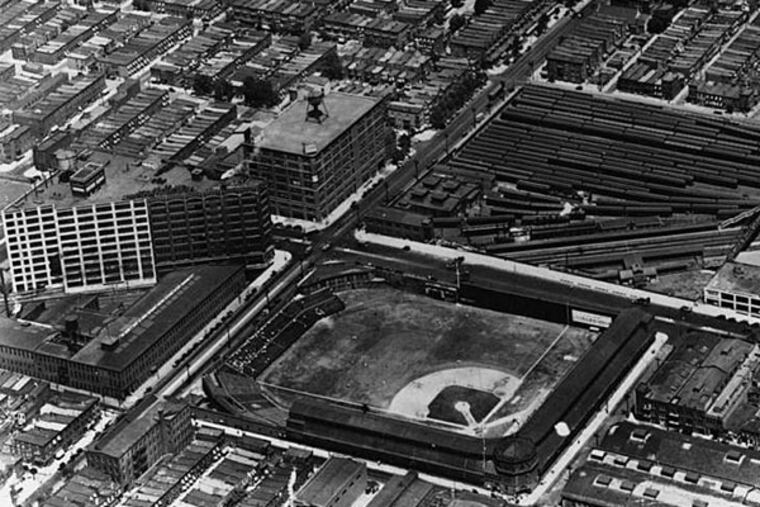
The clincher is that the Uptown Arena is the site of another sports legend: The Baker Bowl housed the Phillies there from 1887 to 1938 and the Eagles for a few of those years. The buildings that are there now have no historical significance and could be acquired with ease.
The Uptown Arena is a slam dunk: It will preserve one neighborhood and revitalize another. The Sixers will have a better, more accessible site with abundant room to grow and will demonstrate their dedication to the city. We just need a new mindset — not a compact and problematic downtown arena, but an Uptown Arena with a myriad of economic opportunities.
Jason Lempieri has a bachelor of architecture degree from Pratt Institute and a master’s degree in industrial design from the University of the Arts. A devout urbanist and city resident, he is the principal and owner of the design firm RethinkTANK and the brand Tombino. He has taught architecture and design at local universities including the University of Pennsylvania and the former Philadelphia University and UArts, and has contributed architectural criticism to Hidden City.