Pennsylvania's highest court confirmed what we already knew about skill games. Now lawmakers must act.
Pennsylvania legislators have a matter of days to decide whether this year’s budget will finally bring skill games into the same regulatory and tax framework that governs licensed casinos.
When Gov. Ed Rendell first championed casino gambling in Pennsylvania more than two decades ago, the promise was straightforward: Regulated gaming would boost the economy, modernize the state’s entertainment industry, and create jobs. For years, it did exactly that.
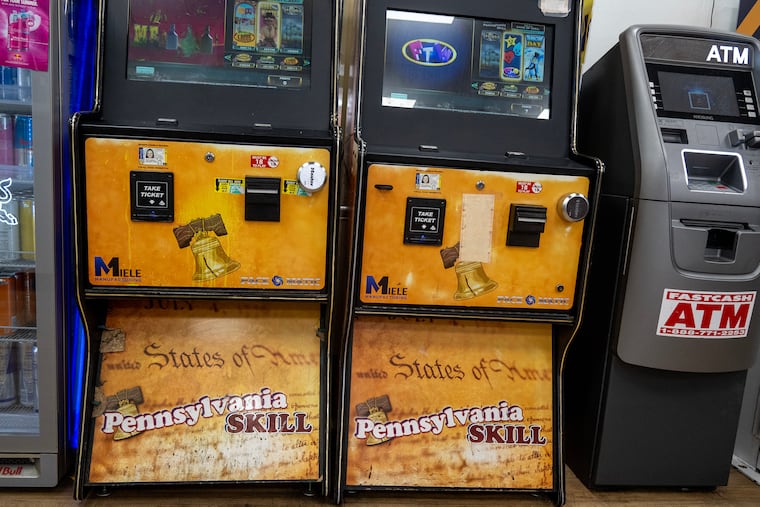
But something went wrong along the way. Skill games, devices that look, sound, and function like slot machines, spread to thousands of bars, restaurants, gas stations, and clubs across Pennsylvania, completely unregulated and untaxed. Meanwhile, as brick-and-mortar casinos paid their fair share to the commonwealth and submitted to oversight from the Pennsylvania Gaming Control Board, skill game operators avoided both. The playing field wasn’t level. It was tilted, and Pennsylvania workers at licensed casinos paid the price.
This was always a fairness problem. The Pennsylvania Supreme Court has now confirmed it is also a legal one.
On June 15, the state’s highest court ruled that skill games are slot machines under Pennsylvania law, “several times over,” in the court’s own words. The justices found that Commonwealth Court’s previous rulings to the contrary were “deeply flawed” and “incorrect on both points.” What the skill games industry spent years arguing in court, that their machines were fundamentally different from slots, was rejected at the highest level.
This is not a surprise to anyone who has watched these machines proliferate across the commonwealth while casinos absorbed the competitive damage.
The Philadelphia region knows this story well. Between 2019 and 2025, Harrah’s Philadelphia lost 616 jobs, a 51% decline. Rivers Philadelphia lost 446 jobs, a 28% decline. Valley Forge Casino lost 627 jobs, a 62% decline. Parx Casino lost 344 jobs, a 15% decline. Combined, these four Philadelphia-area casinos shed more than 2,000 jobs during a period when skill games were expanding freely across the state without paying a dollar in gaming taxes or answering to a single regulator.
These are not abstract figures. These are men and women in this region who lost livelihoods while an unregulated industry built a 70,000-machine footprint across Pennsylvania.
Statewide, the picture is equally stark. From 2019 to 2025, the 12 casinos operating in Pennsylvania during that period saw a 27% reduction in employment, dropping from 15,400 employees to 11,200. More than 4,000 jobs gone across the commonwealth, in cities and rural communities that could least afford to lose them.
While the Supreme Court has provided a 120-day window to act on skill games, the practical reality is far more urgent. Pennsylvania’s budget deadline of June 30 is rapidly approaching, and skill games are already part of that conversation.
Getting it right means more than finding a tax rate that fills a budget gap.
Lawmakers don’t have until October to figure this out. They have a matter of days to decide whether this year’s budget will finally bring skill games into the same regulatory and tax framework that governs licensed casinos, or whether the issue gets punted again while the clock the court has set continues to run in the background.
But getting it right means more than finding a tax rate that fills a budget gap. Gov. Josh Shapiro has projected more than $2 billion in annual gaming revenue if skill games are brought into the fold, and that revenue is badly needed. Republicans in the state Senate have proposed a 35% tax rate; Shapiro’s budget calls for 52%, closer to the 55% casinos already pay. That debate is legitimate and worth having.
What cannot get lost in that debate is the human cost of the last several years. Pennsylvania’s casinos did everything right. They accepted regulation, paid taxes and employed thousands of people in good-paying jobs. They were then forced to compete against an unregulated industry that played by none of the same rules. The Supreme Court has now said that was wrong. Lawmakers have the opportunity and the obligation to correct it.
This is the time for lawmakers to address not just the problems with skill games, but to address the broader policy inequities as it relates to how gaming policy impacts economic development, job creation, and community impact.
The four major forms of gaming in Pennsylvania — casinos, online gaming, sports betting, and skill games — have dramatically different tax rates and economic impact. The fact is that only casinos create major economic development through employment, local spending on goods and services, and community engagement. Our state policy should encourage this type of economic development.
As this year’s budget negotiations intensify, I urge the General Assembly to prioritize the workers who built Pennsylvania’s gaming industry and who have borne the cost of unfair competition for too long. A fair tax structure is a start. But the final product should be judged not just by how much revenue it raises, but by whether it begins to reverse the job losses that should never have happened in the first place.
The court did its job. Now it’s time for the legislature to do its job.
David Black was a deputy secretary at the Pennsylvania Department of Community and Economic Development in the administration of former Republican Gov. Tom Ridge.

Inquirer Opinion Newsletter