The World Cup is a stress test for our public health system. We failed it even before kickoff.
Soccer matches across North America are attracting people from around the world who are crowding stadiums and public transit, places where infectious diseases can be easily and widely spread.
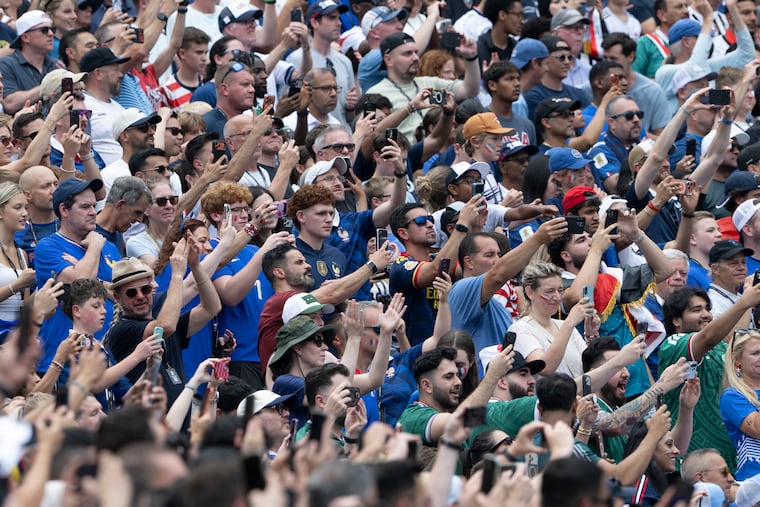
This summer, the largest sporting event in human history is moving across three countries, 16 cities, and 104 matches. Millions of people from every continent are passing through the same stadiums, the same airports, the same fan zones. As an infectious disease physician, I can tell you exactly what this is in epidemiological terms. It is a stress test.
Mass gatherings do not create new pathogens. They reveal the weaknesses present in the systems that receive them. I learned this in Ebola wards and in refugee camps, and I learned it again as the first chief medical officer for New York City during the first COVID-19 surge. The virus did not invent the cracks in our response. It found them, widened them, and poured through them.
So the right question about the 2026 World Cup is not “what new disease might appear.” It is “what is already broken, and what happens when we run a max-capacity crowd straight through it.”
Start with measles. The United States recorded its worst year for measles in more than three decades in 2025, and 2026 is on pace to be even worse. We have already crossed 2,000 confirmed cases this year. The country that declared measles eliminated in 2000 is now, by the assessment of its own scientists, likely to lose that status.
This is not a tropical import. This is a homegrown failure of vaccination, accelerated by official messaging that treats a settled question as an open debate. Measles is one of the most contagious pathogens known to medicine. A stadium is, by design, the most efficient room we have ever built for spreading it.
Now layer the rest. Three host nations means three health systems, three surveillance capacities, and three sets of rules that do not automatically talk to each other. Fans are crossing the Tijuana and El Paso corridors in volume. We will have a kaleidoscope of variable immunity without any uniform vaccine requirements or compliance, and thereby radically divergent vulnerability to infection.
Moreover, these systems are not connected. These countries rarely speak to one another and the current political climate has exacerbated it. A case detected in one country is only useful if the next country hears about it in time to act. During COVID-19, our data systems were often a week behind the virus. A week is a lifetime in an outbreak.
Then there is geography. Several Mexican host cities sit in dengue-endemic zones, and summer is peak mosquito season. Southern Hemisphere visitors are arriving mid-influenza season carrying strains our summer was not expecting. West Nile virus peaks in exactly the Southern U.S. cities hosting matches, in exactly these weeks.
None of this is exotic. All of it is predictable — which should worry us, because predictable means preventable, and preventable means that whatever goes wrong will be a choice, not an accident.
There is also what screening cannot see. Ebola is remembered as a disease of blood and isolation wards, but the virus can persist in survivors for months after recovery and can transmit sexually long after a patient is declared cured. Outbreaks have been seeded this way, quietly, by transmission that no fever check at an airport would ever catch. Record crowds could spread disease we have not thought to look for.
Here is the part that the risk charts miss. The people who will suffer most are not the ticket holders. They are the workers. The food handlers, the stadium cleaners, the hotel staff, the rideshare drivers, the street vendors. They are disproportionately low-income, often uninsured, frequently undocumented, and the least able to take a sick day or see a doctor.
When transmission runs through a city, it does not stop at the stadium gate. It follows the bus lines home to the neighborhoods with the least health infrastructure and the most people sharing the least space. This is the pattern of every modern pandemic. The pathogen is universal. The suffering is sorted by income.
The same sorting applies to the infections we never put on a risk chart. Sexually transmitted infections rise wherever large numbers of people gather, travel, and disperse, and they fall hardest on the people with the least access to testing and treatment. Syphilis is already at its highest level in the United States in decades. A surveillance system built around fevers and symptoms will miss these. What we fail to look for, we fail to find.
Stadiums, by design, are the most efficient way to spread infectious diseases.
We know how to prevent this. The tools are not mysterious. Real-time, trinational surveillance that shares data across the CDC, Canada’s public health agency, and Mexico’s IMSS. Vaccination campaigns that meet visitors and workers before they gather, not after they fall ill. Mosquito control in the cities where the vectors are already breeding. Food and water safety enforcement scaled to the size of the crowd. Medical teams embedded at venues, and clear, accurate public health messaging that treats people as adults rather than as a constituency to be managed.
None of that is expensive compared to the alternative. It is, however, unglamorous, and it requires a federal posture that takes infectious disease seriously rather than treating vaccine science as a matter of opinion. That is the variable none of us can predict. The mosquitoes will behave as mosquitoes do. The viruses will behave as viruses do. The open question is whether our institutions will behave as public health institutions are supposed to.
I have spent nearly three decades working in global health across dozens of countries, and I have watched leaders in resource-poor settings mount more coherent outbreak responses than wealthy nations that simply chose not to. Capacity is not our problem. Will is our problem.
The World Cup is a celebration. I want it to be one. But it is also a mirror, and it is going to show us exactly what we have built and exactly what we have neglected. We still have time to act on what it reveals. The kickoff has already happened. The reckoning is still a choice.
Tyler B. Evans is the author of “Pandemics, Poverty, and Politics,” founder and CEO of Wellness & Equity Alliance, and a public health policy expert focused on global health security and equity.

Inquirer Opinion Newsletter