Social media that could cure cancer and feed the hungry
Catastrophic losses to research and charity can be turned into wins if we rewrite the social contract of social media.

While those of us concerned about the future of our nation’s scientific institutions and safety net feel distraught without a way to protect them, we doomscroll and spiral out further. Yet, it is in that doomscrolling that a solution may lie.
Why are we giving away our attention to plutocrats, for free, when we could be investing it in the direction of the common good?
Meta, the parent company of Facebook and Instagram, made over $160 billion in advertising revenue last year, largely generated by our clicks, our scrolling, and the algorithms that entrap us and, too often, damage our children’s mental health.
That $160 billion flowed into a corporate machine with a primary duty to its shareholders, not to the public.
Gutting research
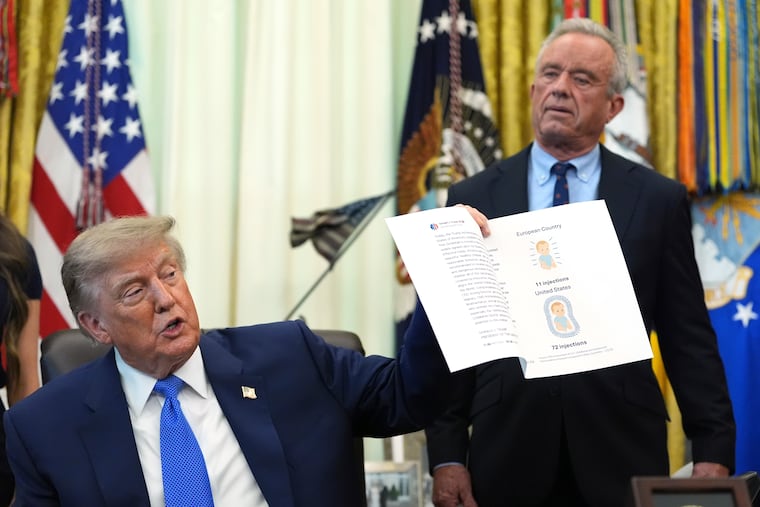
Meanwhile, the federal government canceled $8 billion in research grants to more than 600 colleges and universities through the National Institutes of Health and the National Science Foundation. And that was just in the first six months of the second Trump administration. That’s a mere 5% of Meta’s profits.
And while an exact figure for Donald Trump’s contested cuts to nonprofits remains elusive, he did try to cut $400 million from AmeriCorps, and tried to claw back $49 million in aid to the lawyers representing abused and neglected children. The nonprofit sector stands to lose even more if the president’s budget reinforces changes to the tax code.
That’s the bad news.
But we believe these catastrophic losses to research and charity can be turned into wins. We believe it is time to rewrite the social contract of social media.
Imagine a nonprofit social media platform run with input from universities, nonprofits, and research institutions — a competitor to Facebook, Instagram, TikTok, and X — where every dollar from advertising and sponsorship supports charitable missions and research.
The model is radical in its simplicity: users engage much as they do now, advertisers pay to reach them, sponsors chip in, and instead of profits accruing to billionaires, the revenue stream funds scientific research and humanitarian programs.
You like cat videos? Great — so do the researchers fighting pediatric cancer that your ad clicks just helped fund. Need a dopamine rush from someone liking a picture of your sandwich? So does the charity furnishing apartments for unhoused people. Why cede the attention economy entirely to the for-profit sector?
We can build an economic engine designed with community input and guardrails to serve the public good.
Imagine if even a fraction of Meta’s $160 billion in ad revenue were redirected into research into Alzheimer’s and other diseases. On a new social media platform, users could earmark the revenue they generate for particular causes or research institutions.
Critics will scoff: “You can’t compete with Facebook.” But Myspace once seemed unassailable. TikTok rose from nowhere to global dominance in under five years.
Attention is fickle. Platforms age. Generations shift. And when they do, new players emerge — players who can ride the next wave of interface design, AI integration, and community-driven features.
It doesn’t have to be this way
We can keep sending our collective attention and data into the coffers of corporations that owe us nothing, amplify misinformation, sow division to drive engagement, and knowingly ensnare our children’s attention spans in damaging ways.
Or, starting small but growing with time, we can build an economic engine designed with community input and guardrails to serve the public good.
Ours is not a utopian dream.
The infrastructure exists. The advertising market is there, especially among small local businesses and nonprofits. We don’t know yet what innovative features the platform can offer, but the human desire to connect online isn’t going anywhere. The only missing piece is the will to claim a piece of that market for purposes nobler than quarterly earnings.
The call here is straightforward: Help us build our social media platform, CommonLoop. We are starting off as a lawyer and a journalist with an email account, seeking an anchor sponsor and early participants.
If you’re a university president, a nonprofit director, a philanthropist, or simply someone with the resources and skills to help launch such a platform — now is the time. The start-up costs are real, but so is the prize: a self-sustaining system that turns the most lucrative business model of the digital age into a public trust.
Click, scroll, like — but this time, make it count.
Eric Jepeal is an attorney in higher education. Tina Kelley is a journalist and coauthor of “Almost Home: Helping Kids Move from Homelessness to Hope.”