From East Berlin to Philadelphia: Springsteen’s long arc of protest
His message has not changed. Power does not come from cruelty. The streets belong to everyone, or they belong to no one.
Philadelphia has always understood that music is never just music; sometimes rhythm becomes resistance. In this city, songs have spilled out of union halls and church basements, echoed off rowhouse walls, and marched alongside movements for labor rights and racial justice.
That tradition shows why Bruce Springsteen’s music, and his choices, still matter, decades after a summer night in East Berlin when rock and roll quietly challenged both sides of a superpower rivalry.
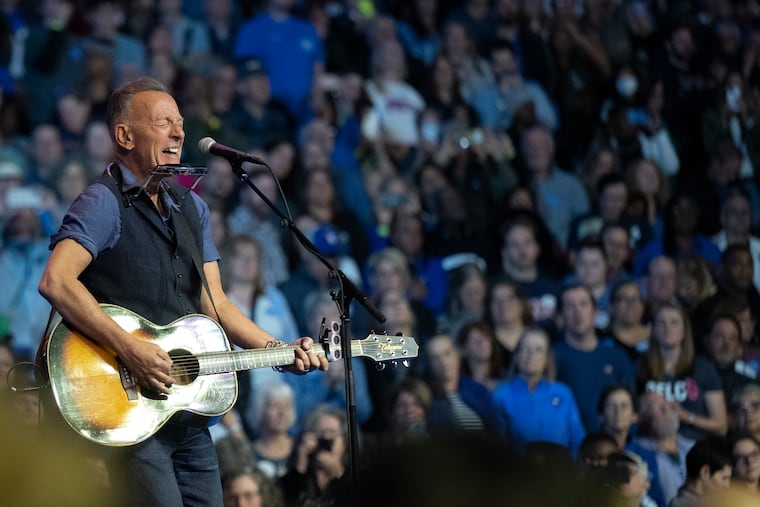
In 1988, nearly 300,000 young East Germans gathered for the largest rock concert in the history of the German Democratic Republic. The performer was Springsteen, a working-class songwriter whose music had already been widely misunderstood in the United States.
Ronald Reagan appropriated the pounding chorus of “Born in the U.S.A.” as a patriotic anthem while ignoring its verses — the story of a Vietnam veteran sent off “to go and kill the yellow man,” only to return home abandoned by the country he served.
In East Germany, those lyrics landed differently. Listeners heard the betrayal beneath the beat. They recognized themselves in the song’s moral tension. That understanding is why, unlike most Western rock stars, Springsteen was invited to play behind the Iron Curtain.
Pressure to stop the concert came from both sides of the Cold War. The U.S. Embassy urged Springsteen to cancel, fearing the show would legitimize a communist regime. At the same time, the East German youth organization sponsoring the concert — without Springsteen’s knowledge — advertised it as a “solidarity concert” for Nicaragua’s Sandinista government.
Springsteen refused both. He told U.S. officials he would not cancel. He told East German organizers he would not perform unless Sandinista banners were removed. His music, he insisted, belonged to ordinary working people, not to politicians.
Springsteen’s songs insist that the American dream is fragile. It collapses when dignity, accountability, and justice are denied.
About an hour into the concert, Springsteen stopped and addressed the crowd in halting German. “It’s great to be in East Berlin,” he said. “I’m not here for or against any government. I came to play rock and roll for East Berliners in the hope that, one day, all barriers will be torn down.”
He had wanted to say “walls,” but anxious officials begged him to soften the language. So he let the music finish the thought, launching into Bob Dylan’s “Chimes of Freedom,” a song written for the refugees, the silenced, the imprisoned, which Springsteen has lately reprised. A year later, the Berlin Wall fell. Many described the night as a widening crack — a moment when imagination briefly outran fear.
Late last month, Springsteen’s new song “The Streets of Minneapolis” reached No. 1 on iTunes in 19 countries. Written in response to police violence and racial injustice, the song was dismissed last week by the White House as “irrelevant.” Millions of listeners disagreed.
This pattern is familiar. Springsteen’s work has long been embraced by audiences while misread, or deliberately misunderstood, by power. His songs are moral arguments set to melody, like the Academy Award-winning tune “Streets of Philadelphia.” They insist the American dream is fragile. It collapses when dignity, accountability, and justice are denied.
That message resonates deeply in Philadelphia, a city shaped by labor battles, civil rights struggles, and ongoing demands for racial justice. It also resonates with the white working-class men who have always been at the center of Springsteen’s audience — many of whom now make up the backbone of the MAGA movement.
His message to them has never changed. Freedom does not come from walls. Power does not come from cruelty. The streets belong to everyone, or they belong to no one. Will this be the moment when they hear Donald Trump’s administration is destroying whatever is left of the American dream?
Music alone does not tear down barriers — or walls. But it shapes what people are willing to imagine, what they are willing to demand, and who they are willing to stand beside.
Springsteen’s music calls us to rise up against injustice, whether in the streets of Philadelphia, Berlin, or Minneapolis.
Kristen Ghodsee is a professor of Russian and East European studies at the University of Pennsylvania. She is the author of 12 books and is currently on academic sabbatical as an honorary fellow of the Einstein Forum in Potsdam, Germany. Susan Neiman has been the director of the Einstein Forum since 2000. She is a philosopher, essayist, and the author of 10 books.

Inquirer Opinion Newsletter