MAGA praised Elise Stefanik after she grilled Ivy League administrators — but Trump still left her out in the cold
A Harvard-educated moderate, Stefanik reinvented herself as an ardent apostle of the MAGA movement. It didn’t work out well for her.
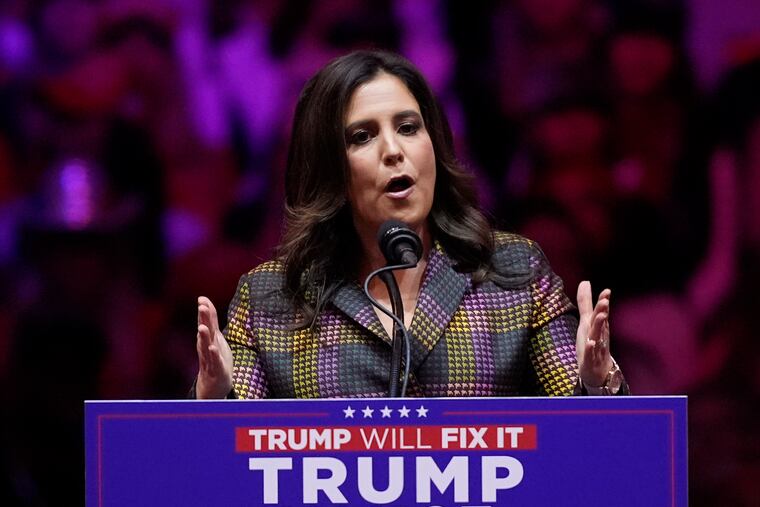
U.S. Rep. Elise Stefanik has referred multiple times to her new book as her “first,” implying more to come. For her next, I hope she tells the dramatic tale of her extraordinary political transformation and the dead end to which that ultimately led.
The youngest woman ever elected to the House of Representatives, Stefanik started out as the “model moderate millennial,” in the words of a New York Times profile. Her mentor was the establishment Republican Paul Ryan.
With the rise of Donald Trump, establishment Republicans had to make a choice. Ryan — then a still youthful speaker of the House and previously Mitt Romney’s vice presidential running mate — chose to withdraw from politics in 2018.
Stefanik — then in her second term — chose the other path. A prospective donor, I met her when one of her Harvard classmates arranged for her to visit my Manhattan office just a few months after Ryan’s announcement. Then a lifelong Republican sympathetic to the Ryan (and Romney) reaction to Trump, my questions were all about where she stood on that issue. As I wrote in my book, Surviving Wall Street, published last year, “her responses indicated much ambivalence and discomfort in making her stance clear.”
Transformation
Soon, that ambivalence was gone. Following the midterm elections just months after I met her, Stefanik was “sick of commuting to Washington from upstate New York and weary of dialing for campaign dollars,” according to the Times. What followed was “one of the most brazen political transformations of the Trump era,” something Ryan would refer to as one of the biggest disappointments of his political career.
“I am ultra-MAGA. I’m proud of it,” Stefanik said in 2022.
There was a price to her political transformation. The Times reported that “many of her oldest and closest friends” abandoned her. And after she showed sympathy for election deniers in the wake of the Jan. 6, 2021, riots at the U.S. Capitol, she was asked to step off the board of the Institute of Politics at her alma mater, Harvard.
From a purely career perspective at least, it looked initially like Stefanik’s unwavering loyalty to Trump was going to pay off. But that loyalty did not prove reciprocal.
New York not being a swing state, it was perhaps not surprising that she was passed over after consideration by Trump to be his vice presidential running mate. More painful was when she was nominated as ambassador to the United Nations shortly after Trump’s reelection, before that was quickly withdrawn due to the GOP’s razor-thin majority in the House.
Most painful was her recent, brief run for New York’s governorship. She entered the race after encouragement from Trump and others, “on the understanding that she would have the president’s early endorsement and avoid a costly primary,” as the Wall Street Journal recently put it.
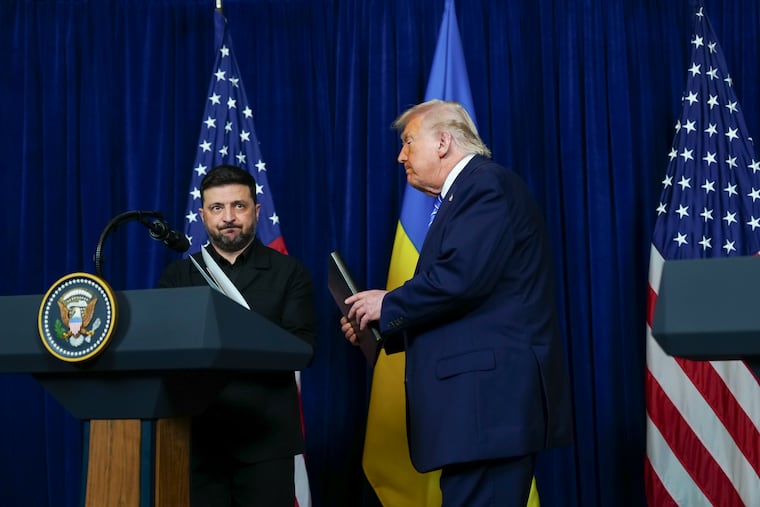
But Trump soon proved ambivalent toward her candidacy. Surprisingly, he even offered a kind of warm embrace to New York’s new mayor, Zohran Mamdani, the man whom Stefanik sought to caricature as a “jihadist” as a central theme of her campaign.
Lessons learned?
So, only weeks after formally announcing her bid for the GOP nomination, she abruptly withdrew, at the same time announcing she would retire from the House as well, at only age 41.
Any regrets? Lessons to be shared? We will have to wait for the next book to see.
For now, what we have is her newly released “first” book, Poisoned Ivies: The Inside Account of the Academic and Moral Rot at America’s Elite Universities. In it, she recounts the “greatest hits” from the glory days of her short career:
That the University of Pennsylvania, Harvard, and similar schools are “hotbeds of radical ideology” — producing students who are “uneducated, unemployable, radicalized” — when the data and my own observation make clear that these schools are better seen as vocational training programs for Wall Street, Big Tech, and Big Law.
That diversity, equity, and inclusion (DEI) — “a pseudo-religious movement” — runs rampant when the only remaining preferences at these institutions are for athletes and children of wealthy alumni.
That these schools are funded by hidden donations from hostile foreign governments, when the reality is that major donations — overwhelmingly coming from successful alumni — are celebrated publicly in real time.
That students and their parents are voting with their “feet and wallets” to go elsewhere for college, when data are clear that competition for a coveted spot at one of the “poisoned Ivies” is as intense as ever.
Stefanik makes much of campus protests in 2023-2024 following the Oct. 7, 2023, attack on Israel and its response in Gaza. But less than 1% of Penn’s students ever took part in a protest, and very few of those could be called “pro-Hamas,” a label Stefanik tosses around casually.
It looked intially like Stefanik’s unwavering loyalty to Trump was going to pay off. It didn’t.
Meanwhile, 1% of Congress (four members) has either just resigned or is under threat of expulsion for matters such as sexual misconduct or embezzlement. Perhaps Stefanik should have focused on cleaning her own “House” first.
The timing of Stefanik’s publication is unfortunate — although she can be thankful the ties between former Harvard president Larry Summers and Jeffrey Epstein came out in time for her to add a condemnation to her otherwise lavish praise for Summers.
Her attack on elite higher ed has not aged well. Initially, it gave her a fundraising windfall — setting a record, with help from alumni critics of Penn and Harvard, the quarter after the congressional hearing she made famous. But the so-called compact for higher education — written with help from Wall Street that she praises — has gone nowhere.
Free speech
Penn now finds itself tangling with the government over whether — to the dismay of its Jewish community — it must hand over a list of all Jews on campus. And “free speech” is more constrained on campuses today than at any time in recent memory. Even the conservative Wall Street Journal editorial board is divided over whether the GOP attack on elite higher ed was either legal or wise.
Stefanik is right that there should be no place for antisemitism on college campuses. But antisemitism is exactly what keeps cropping up in the GOP. Tucker Carlson celebrated her loss of the U.N. ambassador role by calling it a blow to the “Israel lobby,” as she “would have proudly brought the Israel First agenda to the U.N.” Again, perhaps her own house merited attention first.
Despite these concerns with this first book, I eagerly await Stefanik’s next, which I hope will tell a universal tale of character, leadership, loyalty, and betrayal.
Scott L. Bok is the former chair of the board of trustees of the University of Pennsylvania and the author of “Wall Street Survivor” on Substack.

Inquirer Opinion Newsletter