The Declaration of Independence is 250 years old. What does it mean now?
Two university professors say America’s birthday is the right moment to revisit the founding documents — and stop pretending we all agree on what they say.
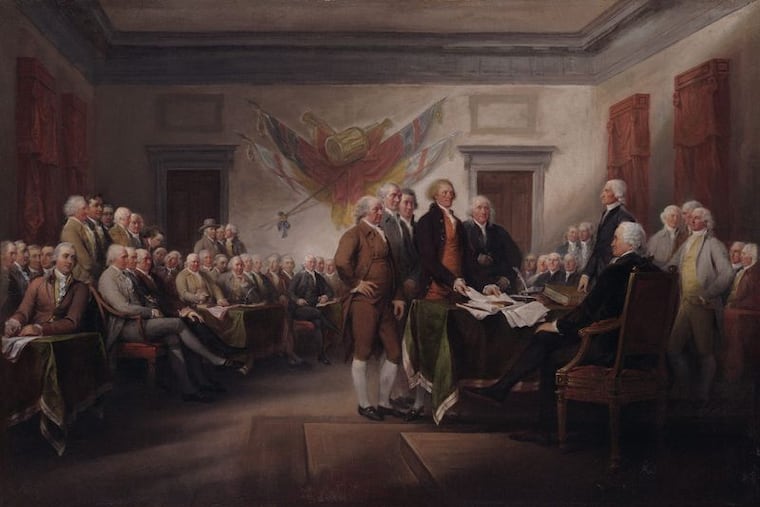
If you ask us, there’s no better way to honor America’s 250th birthday than by arguing vigorously.
After all, this nation was created amid raucous disagreement, which led to the drafting of the Declaration of Independence, and 11 years later, to the Constitution. And it is precisely because the founders debated so hotly that America has risen to such heights, as principled disagreement has given way to compromise and deeper understanding of what matters most.
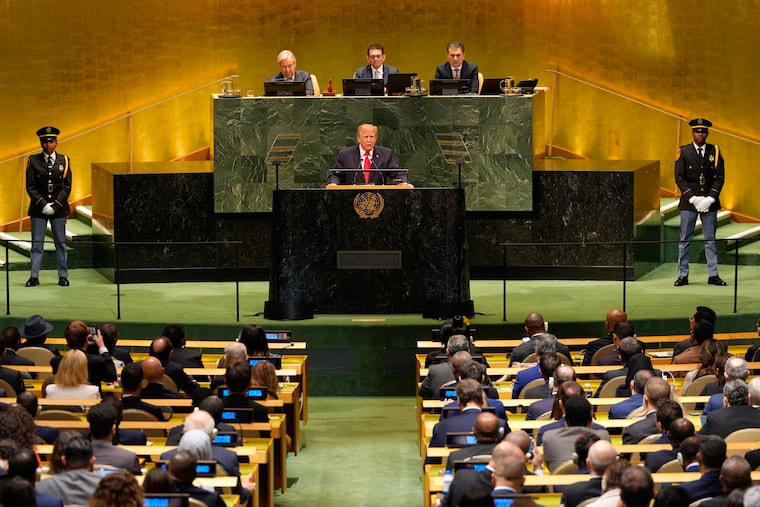
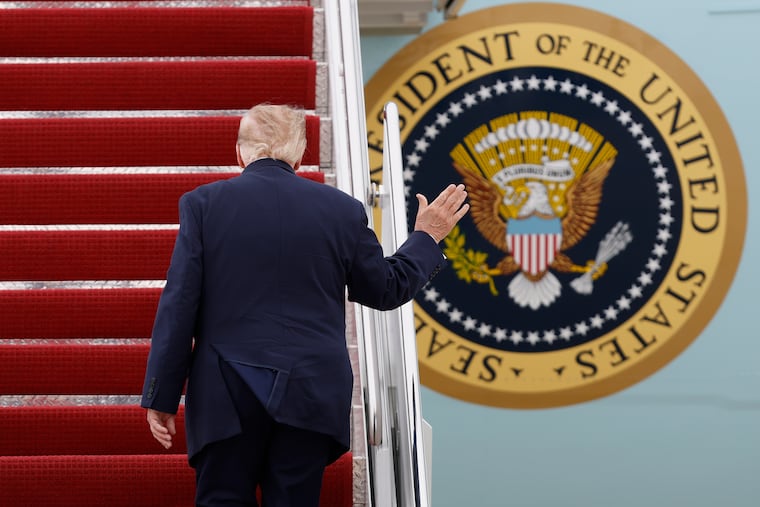
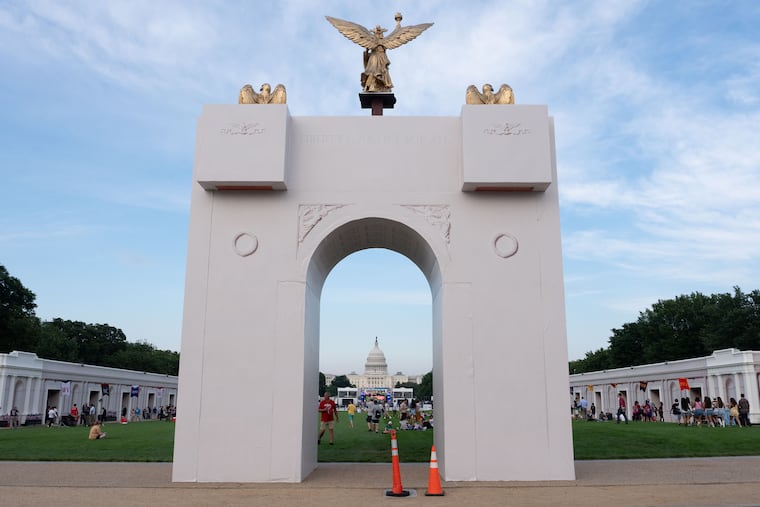
But not all arguments are created equal, and with respect to our fellow Americans, many of the loudest arguments happening right now are banal at best. In our nation’s capital and on social media, people are convulsed with disagreement about President Donald Trump’s concert turned rally on the National Mall, the attractiveness of the repainting of the Lincoln Memorial Reflecting Pool, and whether mixed martial arts matches should be held on the lawn of the White House. America is preparing to celebrate its Semiquincentennial, and we’re freaking out over concerts and paint colors?
This should be a time to argue over the meaning and importance of America’s principles, as enshrined in the Declaration of Independence. Are the founding ideals really self-evident? Where did they come from, what do they mean, and how do we fall short 250 years later? Younger Americans, in particular, ought to debate the answers to these critical questions, given they will play a pivotal role in charting America’s next 250 years.
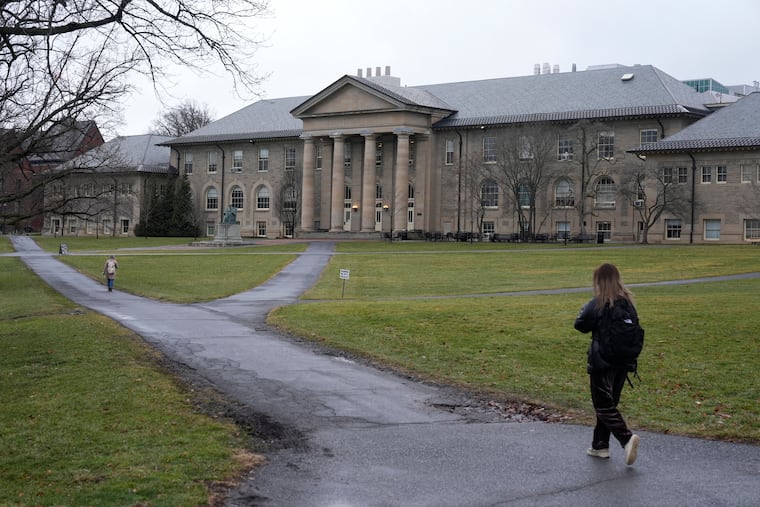
The two of us sought to kick-start that debate through three programs where we teach at Bucknell University this past academic year — programs that constituted the sum total of all activities at our university celebrating the 250th anniversary.
In one jointly taught class, we introduced more than 30 students to the foundational texts of the republic: the Declaration, the Constitution, the Federalist Papers, the Anti-Federalist Papers, and Common Sense. In two other classes, one of us — Paul Siewers — dove into the narrative of American history and took students deep into the ideas of the founding documents and the Gettysburg Address.
It is a sad indictment of K-12 education that virtually none of our students had meaningfully engaged with these texts before. Yet, we took heart from the students’ desire to learn, which manifested itself in high-spirited debates throughout the semester. Ideologically, the students ran the gamut, with a few die-hard conservatives, a few dyed-in-the-wool progressives, and a critical mass of centrists.
From the start, they disagreed about virtually everything, in the best possible way.
Take the most progressive student in one class, who reacted negatively when we introduced the concept of federalism. What good, she asked, could possibly come from letting states choose different paths? America, she said, needs uniformity, or else injustice will ensue. Yet, after debate, she had become a federalist. The disagreement had convinced her that diversity and inclusion flourish best when states can go their own ways.
The debates over equality and equity were fierce, as well. Most students initially saw them as one and the same, but after much boisterous discussion, the class broadly agreed they were fundamentally different and wholly incompatible. The students gained a deeper understanding of human dignity and the reality that opportunity dies when outcomes are assured or equalized.
At our joint course’s conclusion, we received anonymous reviews from the students. They praised the atmosphere of respectful, meaningful disagreement. One student wrote that hearing from those with different perspectives “strengthens my argument, and it also helps me see how I can better communicate with them.” Another wrote that “the class pushed me outside of my comfort zone” in terms of “speaking up and stating what I believed in.”
From the start, the students disagreed about virtually everything, in the best possible way.
The unspoken reality is that such intellectual debate about American ideals is something they don’t expect to encounter in the rest of their education, much less the real world.
But America urgently needs such debate, for a nation can’t endure if it doesn’t understand and apply its own principles. We need to debate the modern-day trade-offs between liberty and security. We need vociferous argument about the pursuit of happiness in the age of artificial intelligence. And with socialism and populism rising on both sides of the aisle, we need to seek understanding, through disagreement, about what’s truly compatible with the Declaration of Independence — and what isn’t.
With the Fourth of July approaching fast, it’s not too late to begin these debates around the dinner table, at bar trivia night, and on the whole panoply of social media platforms. And with the next academic year looming this fall, it’s not too early for parents and policymakers to demand the restoration of real civics education in the classroom — at both the K-12 and collegiate levels. America has always needed vigorous debate about our nation’s principles, purpose, and progress. We certainly need better than the shallow debates that currently dominate this momentous moment.
Charles Mitchell is an adjunct instructor at Bucknell University and cofounder and CEO of the Open Discourse Coalition. The Rev. Paul Siewers is an associate professor of English and chaplain at Bucknell University.